NASA's Commercial Lunar Payload Services (CLPS) was designed to seed a lunar economy, but its most consequential effect may lie well beyond the Moon. Starting next year, the agency intends to launch uncrewed missions to the lunar surface on a nearly monthly cadence. While these flights are primarily meant to deliver scientific instruments, they are quietly functioning as a subsidized transit system for the broader solar system — creating a predictable, repeatable logistics backbone that did not exist before.
For startups like Astroforge, which aims to mine asteroids for valuable metals, the economics of space travel have long been prohibitive. Most commercial launch capacity is clustered around Low Earth Orbit (LEO) or Geostationary Orbit (GEO), where the satellite industry generates reliable demand. A dedicated Falcon 9 mission for a translunar injection — the trajectory needed to escape Earth's gravitational neighborhood — can cost upwards of $80 million, a figure that dwarfs the $3.5 million price tag of a small, experimental spacecraft. Without a middle ground, deep-space exploration has remained the exclusive domain of national agencies and the most heavily capitalized private ventures.
A Rideshare Model for Deep Space
CLPS bridges this gap by offering a cost-effective alternative to the all-or-nothing launch model. Rather than requiring a startup to book an entire rocket, the program allows smaller payloads to ride alongside NASA-funded instruments headed for the lunar surface. Astroforge CEO Matt Gialich has noted that this arrangement lets his company avoid the bloat of building larger, more expensive spacecraft solely to justify the cost of a dedicated launch vehicle.
The structural significance of this arrangement extends beyond price. Federal regulations generally bar private payloads from hitching rides on traditional government launches — a policy rooted in concerns about liability, mission risk, and competition with commercial launch providers. CLPS, by contrast, was architected from the outset as a commercial procurement program: NASA buys delivery services from private lunar lander companies, and those companies are free to sell excess capacity to other customers. The result is that CLPS represents one of the only viable pathways for commercial entities to reach deep space without bearing the full cost of a heavy-lift launch.
The rideshare model itself is not new. SpaceX's Transporter missions have dramatically lowered the cost of reaching LEO by packing dozens of small satellites onto a single Falcon 9. What CLPS does is extend that logic past Earth orbit. The difference in difficulty is substantial — translunar trajectories require more energy, tighter thermal management, and longer mission timelines — but the economic principle is the same: aggregate demand to distribute fixed costs.
The Moon as Infrastructure, Not Destination
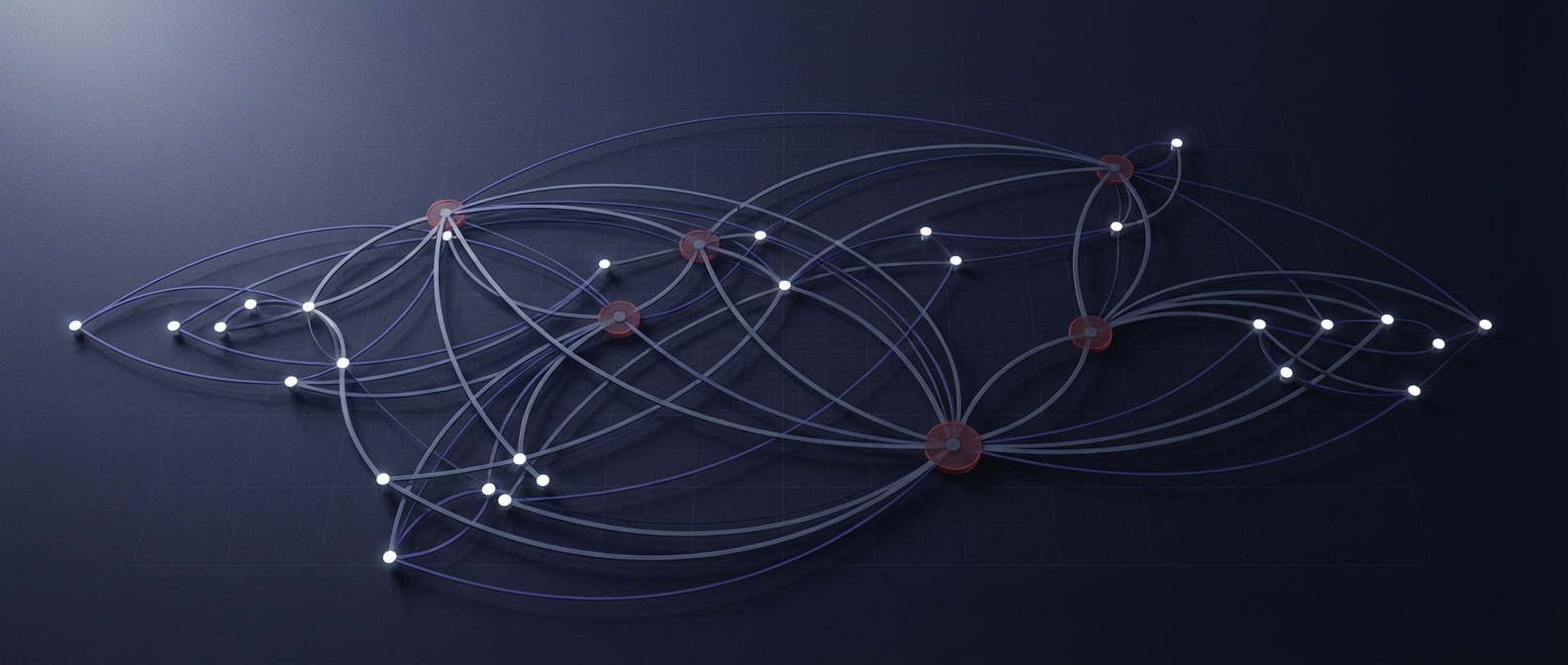
This shift marks a transition in how the Moon is understood within the broader architecture of spaceflight. For decades, lunar missions were framed as endpoints — destinations for flags, footprints, and scientific return. CLPS reframes the Moon as a strategic node in emerging orbital infrastructure. Regular, relatively affordable passage beyond Earth's immediate vicinity lowers the capital expenditure required for high-risk, high-reward ventures such as asteroid mining, where the potential resource value is large but the upfront investment has historically been disqualifying.
The analogy to terrestrial logistics is instructive. Transcontinental railroads did not merely connect two cities; they made viable entire categories of economic activity along the route that could not have justified building their own infrastructure. A predictable monthly cadence of lunar flights could play a similar role, turning what was once an extraordinary feat of engineering into a scheduled service.
Whether this nascent deep-space economy materializes depends on variables that remain unresolved. CLPS lander providers have experienced delays and mission failures in early attempts, and the program's monthly cadence is an aspiration, not yet a demonstrated reality. Asteroid mining itself faces formidable technical unknowns — from prospecting accuracy to in-space resource extraction — that no amount of affordable transit can solve on its own. And the regulatory framework for commercial activity beyond Earth orbit remains sparse, with questions of property rights, liability, and environmental responsibility largely unanswered.
What CLPS has done is remove one barrier — the cost of getting there — from a problem that still has many others. Whether that proves sufficient to catalyze a new class of deep-space enterprise, or whether it merely reveals the next bottleneck, is the question the coming years of lunar launches will begin to answer.
With reporting from Payload Space.
Source · Payload Space