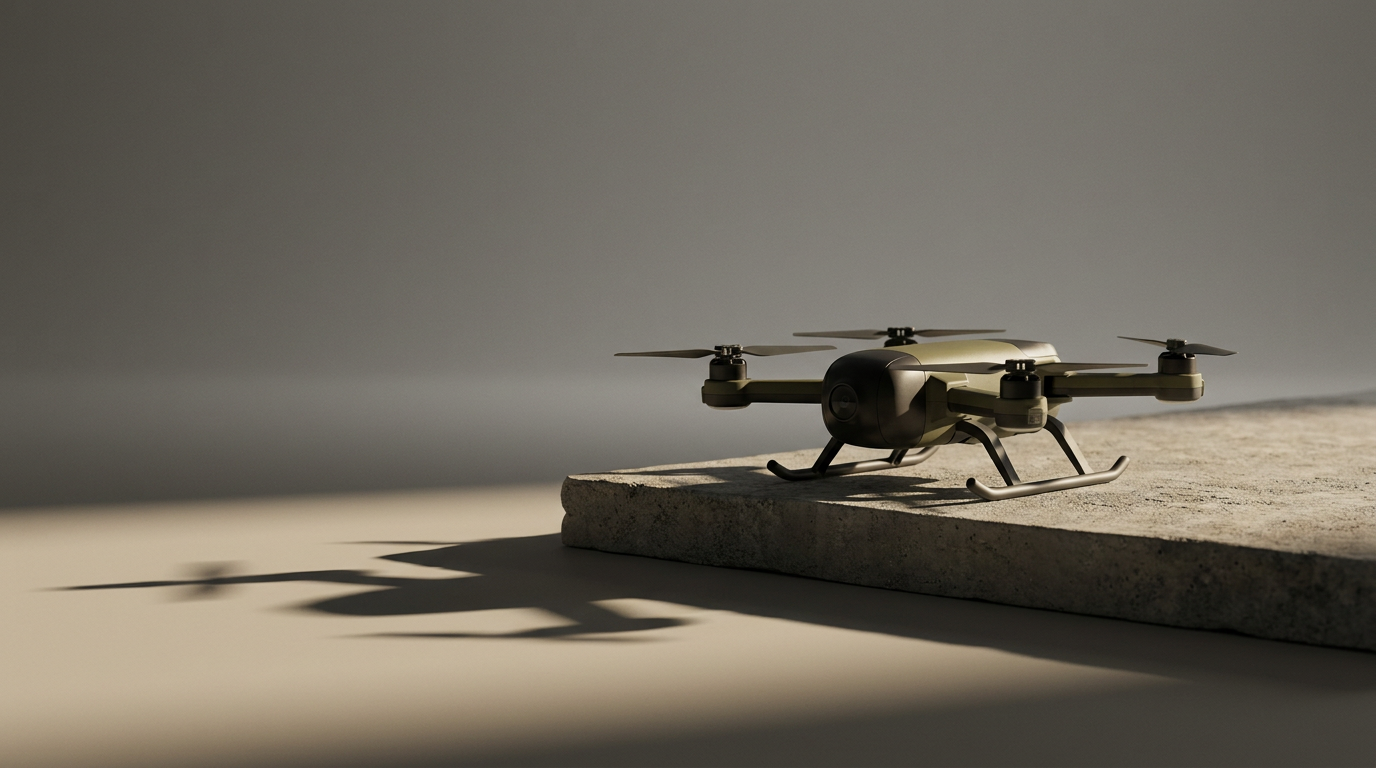
For nearly half a century, the American defense landscape was defined by a steady, predictable consolidation of "primes" — massive conglomerates like Lockheed Martin and Boeing that operated on decades-long procurement cycles. That era of hardware-first hegemony is now being challenged by a cohort of tech-native insurgents. Companies such as SpaceX, Palantir, and Anduril are not merely winning contracts; they are fundamentally altering the logic of how the Department of Defense acquires and deploys technology.
The shift is driven by a transition from "cost-plus" industrial manufacturing — a contracting model in which the government reimburses a contractor's expenses plus a guaranteed profit margin — to a software-centric model of rapid iteration. SpaceX has already upended the economics of orbit, but its Starlink network has become equally vital as a resilient communication layer in modern conflict. Palantir's data-integration platforms and Anduril's focus on autonomous systems, ranging from underwater vehicles to interceptor drones, suggest a future where the primary advantage on the battlefield is defined by code and artificial intelligence rather than the physical scale of the platform.
From Cost-Plus to Code-First
The traditional defense procurement apparatus was built for a different kind of threat environment. During the Cold War, the United States needed a small number of exquisitely engineered platforms — nuclear submarines, stealth bombers, aircraft carriers — produced over long timelines by a handful of trusted contractors. The cost-plus model suited that world: it incentivized engineering ambition and absorbed the risk of building things that had never been built before. Over time, however, the model also incentivized something else — bloated timelines, scope creep, and a structural aversion to the kind of iterative development that defines modern software engineering.
The companies now entering the defense market grew up in a fundamentally different culture. Silicon Valley's product development ethos — ship fast, gather data, iterate — stands in direct tension with the Pentagon's traditional requirements process, which can take years before a single prototype is fielded. Anduril, founded in 2017 by Palmer Luckey, has built its business model around developing products with internal capital before offering them to the military, inverting the usual sequence in which the government funds development from the outset. Palantir, which spent years building commercial data-analytics tools before securing large-scale defense contracts, followed a similar path. SpaceX's approach to reusable rocketry, developed largely with private funding and commercial revenue, demonstrated that the model could work at enormous scale.
The result is a procurement dynamic in which the government is, in some cases, buying finished or near-finished products rather than commissioning bespoke systems. That changes the power relationship between contractor and client in ways the legacy primes have not had to confront in decades.
Geopolitical Urgency and Institutional Friction
This disruption arrives at a moment when the slow-moving bureaucracy of traditional defense spending feels increasingly mismatched against the speed of technological change. The proliferation of low-cost drones, the growing importance of electronic warfare, and the centrality of satellite communications in contested environments all favor actors who can field new capabilities quickly. The conflict in Ukraine has served as a live demonstration: commercially developed systems, adapted for military use in weeks rather than years, have played a meaningful role on the battlefield.
Yet institutional friction remains substantial. The Pentagon's acquisition regulations, its testing and certification requirements, and the political economy of defense spending — in which major programs sustain jobs across dozens of congressional districts — all create resistance to rapid change. Legacy primes retain deep relationships with military leadership, vast lobbying operations, and the engineering capacity to deliver systems that no startup can yet replicate, particularly in domains like nuclear deterrence and large-scale shipbuilding.
The question, then, is not whether software-defined defense companies will replace the traditional primes entirely. It is whether the Department of Defense can integrate two fundamentally different industrial logics — one optimized for scale and durability, the other for speed and adaptability — without the bureaucratic friction neutralizing the advantages of either. The tension between those two models is likely to define American defense strategy for the coming decade, and the balance struck between them will shape not only how the United States builds its military, but how effectively it can respond when the next crisis demands capabilities that do not yet exist.
With reporting from The Economist.
Source · Hacker News