In the Brazilian architectural tradition, a house is often built to outlast its owner. Reinforced concrete, double-brick walls, ceramic tile roofs — the standard vocabulary of residential construction across much of the country reflects a philosophy of permanence, rooted in the expectation of generational continuity. Entrepreneur Júlio Monteiro has built a business around the premise that this cultural fixation on durability may be fundamentally at odds with modern wealth preservation. His venture, projected to reach R$ 44 million in revenue, helps Brazilian investors acquire residential real estate in the United States — not as a lifestyle purchase, but as a financial instrument.
The core proposition is a reframing of what a house is for. In Monteiro's formulation, Brazilian construction prioritizes physical longevity while American construction prioritizes financial performance: speed of delivery, energy efficiency, rental yield, and capital turnover. The distinction is not trivial. It maps onto two different relationships between property and wealth — one sentimental and generational, the other transactional and portfolio-driven.
From vacation homes to portfolio logic
Brazilian capital flowing into U.S. real estate is not a new phenomenon. For decades, Florida — particularly the Orlando and Miami corridors — has attracted Brazilian buyers seeking vacation properties, often purchased during periods of favorable exchange rates. What has shifted in recent years is the sophistication and intent behind these transactions. The profile of the buyer is evolving from the family seeking a second home near Disney World to the investor seeking dollar-denominated cash flow in a market with relatively transparent property rights, standardized financing, and deep liquidity.
Several structural factors reinforce this shift. Brazil's currency, the real, has experienced persistent volatility against the dollar over the past decade, making dollar-denominated assets attractive as a hedge. Brazilian interest rates, while high in nominal terms, have not always translated into real returns that outpace inflation and currency depreciation when measured in purchasing power abroad. For upper-middle-class Brazilians with capital to deploy, the arithmetic of holding wealth in U.S. residential property — where rental yields, property appreciation, and currency positioning can compound simultaneously — has become increasingly compelling.
Monteiro's business sits at the intersection of this demand and the operational complexity of executing cross-border real estate transactions. Navigating U.S. property law, tax obligations, financing structures, and property management from abroad requires intermediation. The venture appears to function as that bridge, reducing friction for Brazilian investors who understand the thesis but lack the infrastructure to act on it.
The construction philosophy gap
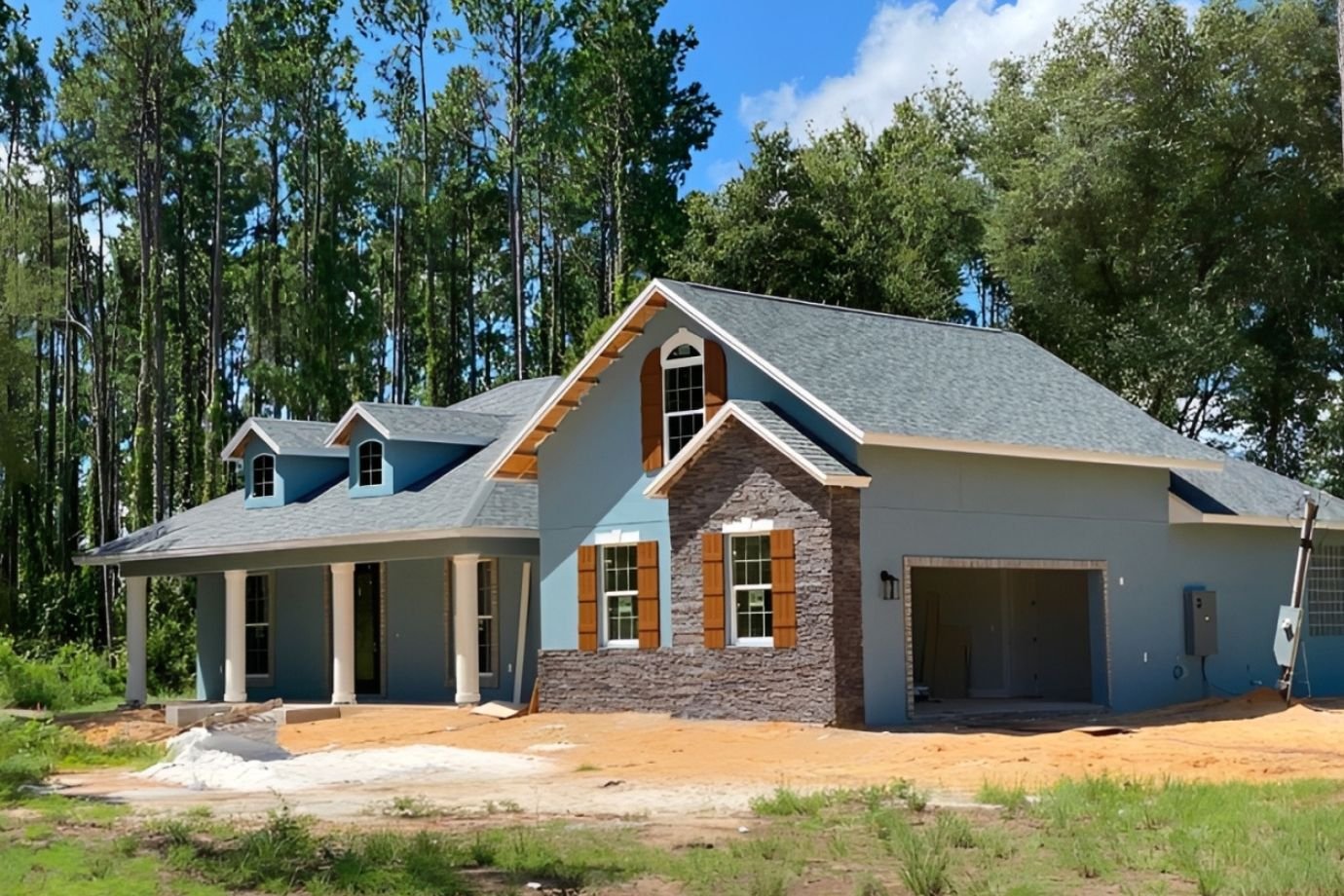
The cultural dimension of Monteiro's pitch deserves scrutiny beyond its marketing appeal. American residential construction — predominantly wood-frame in single-family housing — is indeed optimized for different variables than its Brazilian counterpart. Wood-frame construction is faster to erect, easier to modify, and cheaper per square meter. It also depreciates differently: in the U.S. tax code, residential rental property can be depreciated over 27.5 years, creating tax advantages that reinforce the treatment of housing as a performing asset rather than a permanent structure.
Brazilian construction methods, by contrast, produce buildings with longer physical lifespans but higher upfront costs and lower adaptability. The cultural preference for masonry is not irrational — it responds to different climate conditions, different labor cost structures, and a historical context in which property served as the primary store of household wealth in an inflationary economy. The shift Monteiro is facilitating is therefore not simply architectural but psychological: persuading investors to decouple the idea of durability from the idea of value.
Whether this reframing holds up over a full market cycle remains an open question. U.S. residential real estate has delivered strong returns over the past decade, but it is also subject to interest rate sensitivity, local regulatory risk, and maintenance costs that can erode yields — particularly for absentee foreign owners. The strength of the dollar, which currently flatters returns for Brazilian investors, is itself cyclical.
The tension at the center of Monteiro's business is a productive one: between the Brazilian instinct to build something that endures and the American instinct to build something that earns. How that tension resolves for individual investors will depend less on which philosophy is correct in the abstract and more on whether the operational execution — property selection, management, tax optimization — can sustain the promise of performance over time.
With reporting from Exame Inovação.
Source · Exame Inovação