The climate movement is navigating one of its more turbulent stretches. Political reversals in major emitting nations, funding uncertainty for green initiatives, and the sheer psychological weight of accelerating extreme weather events have combined to test the resolve of those working on decarbonization and adaptation. Yet a quieter, more structurally embedded form of climate action is gaining traction — one that operates not through grand international accords but through the professional systems people already depend on: healthcare, education, municipal planning, and capital allocation.
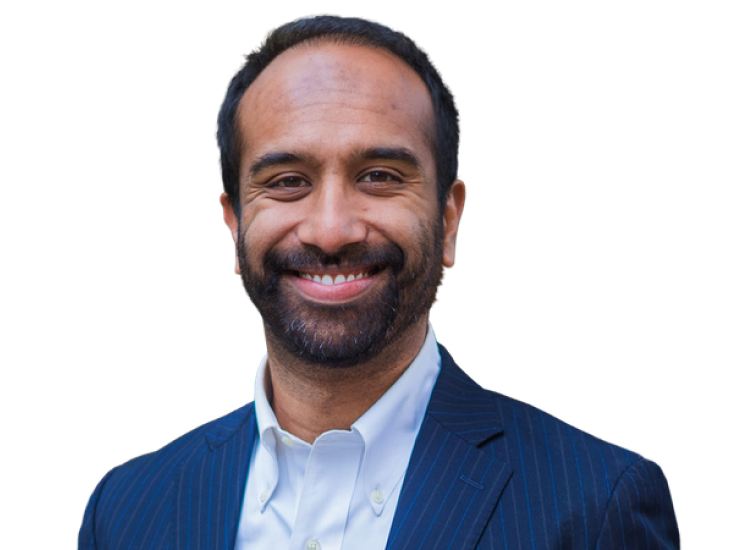
Gaurab Basu, a primary care physician and professor at Harvard Medical School, exemplifies this shift. Basu has described the 2018 report by the Intergovernmental Panel on Climate Change — the landmark assessment that outlined the consequences of warming beyond 1.5 degrees Celsius — as a turning point in his own practice. Since then, he has worked to weave climate literacy into medical training, arguing that physicians cannot adequately treat patients without understanding the environmental conditions shaping their health outcomes. Heat-related illness, respiratory disease exacerbated by wildfire smoke, vector-borne infections expanding into new geographies — these are not hypothetical scenarios but clinical realities already presenting in exam rooms.
Climate as a public health discipline
The integration of climate science into medicine reflects a broader intellectual migration. For decades, climate change was framed primarily as an environmental or energy problem — a matter of parts per million and megawatts. That framing, while scientifically accurate, often failed to generate the political urgency needed for sustained action. Reframing the crisis as a public health emergency changes the calculus. Health systems touch nearly every community, and physicians carry a particular form of institutional credibility that can cut through partisan noise.
This is not an entirely new idea. The public health profession has a long history of addressing upstream determinants of disease — clean water, sanitation, tobacco regulation — that required systemic rather than individual interventions. Climate change fits naturally into that tradition. What is newer is the deliberate effort to formalize this connection within medical education and clinical practice. When a medical school curriculum includes climate health, it signals that the profession considers environmental instability a core competency, not an elective concern.
The approach also carries strategic advantages. Local health systems operate with a degree of autonomy from national political cycles. A hospital network that invests in resilience infrastructure or screens patients for heat vulnerability does so within its own institutional authority. This "middle out" logic — building capacity through existing institutions rather than waiting for top-down mandates — offers a degree of insulation from the policy volatility that has characterized climate governance in recent years.
The limits and leverage of institutional embedding
There are obvious constraints to this model. Healthcare systems are themselves under severe financial and operational pressure in many countries. Asking overstretched institutions to absorb an additional mandate requires resources and coordination that may not materialize without policy support. The risk is that climate health becomes another unfunded priority layered onto systems already struggling with staffing shortages and cost inflation.
Yet the leverage is real. When climate action is embedded in institutions that serve broad populations — hospitals, schools, municipal utilities — it becomes harder to reverse through a single election cycle or executive order. It also changes who participates in the climate conversation. A physician discussing air quality with a patient is engaging a constituency that may never attend a climate rally or read an emissions report, but whose health is directly at stake.
The persistence of leaders like Basu suggests something about the current phase of the climate movement that raw policy scorecards may not capture. Progress is being measured less in legislative victories and more in institutional adoption — the slow, unglamorous work of changing how professions define their own responsibilities. Whether that institutional embedding can generate change at the speed and scale the physical climate demands remains the central tension. The atmosphere does not grade on a curve, and the gap between incremental professional reform and the pace of planetary warming is a question the movement has not yet resolved.
With reporting from Grist.
Source · Grist