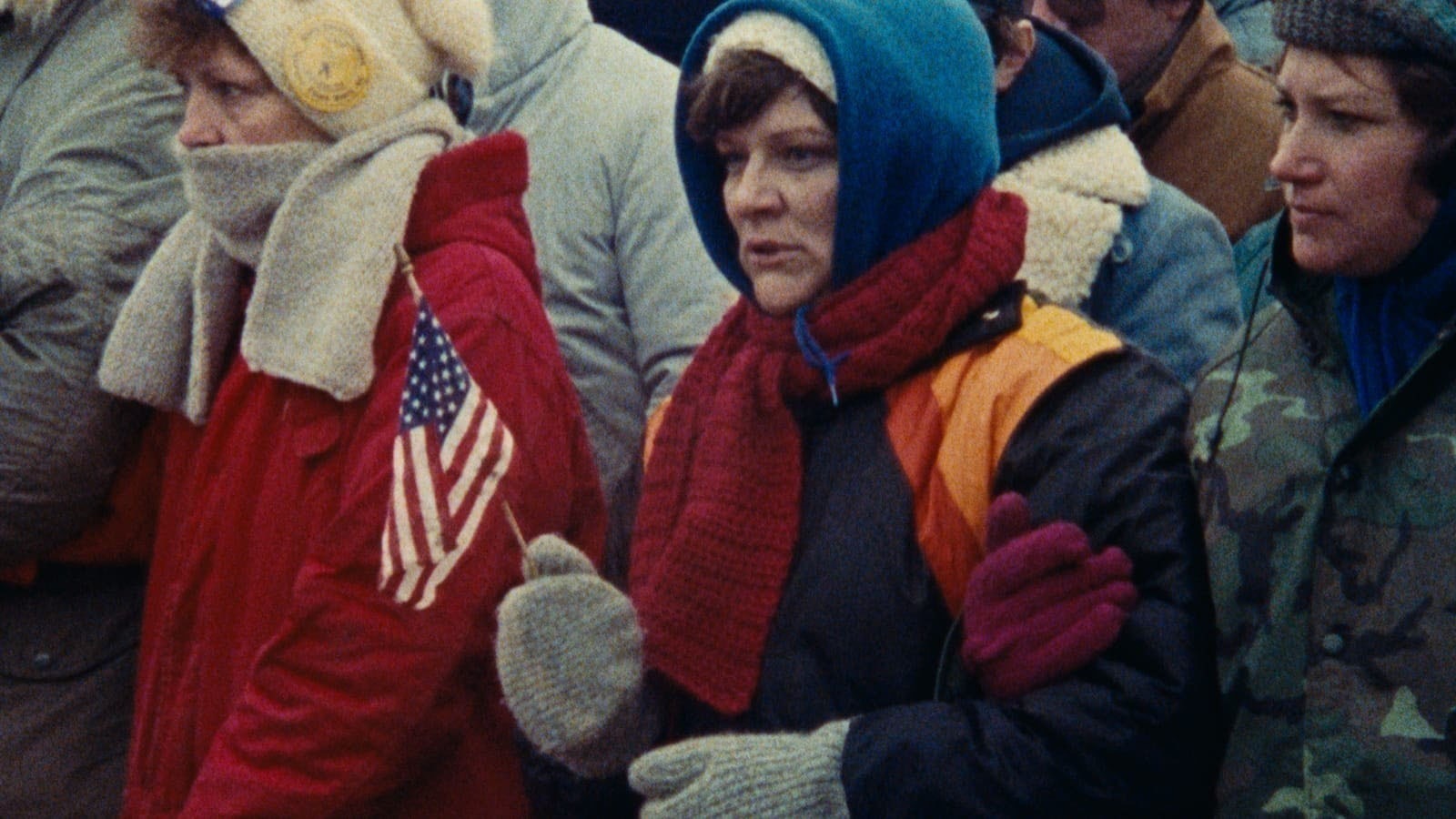
Documentary cinema often struggles with the lag between the event and the edit, but Barbara Kopple's work has long occupied what critics call a "persistent present tense." This week, the American Cinematheque's third edition of its "This Is Not a Fiction" festival brings Kopple to Los Angeles to discuss new restorations of her two Academy Award-winning films: Harlan County USA (1976) and American Dream (1990). The screenings offer a renewed look at the raw, unmediated friction of the American labor movement — and arrive at a moment when questions about organized labor, wage stagnation, and corporate consolidation have re-entered mainstream discourse with unusual force.
The festival, which runs through April 24, features forty-five films and dozens of guest speakers, but Kopple's presence serves as a vital anchor. Her career, spanning five decades, represents one of the most sustained engagements with working-class America in the history of nonfiction filmmaking. That both restorations are screening together provides an opportunity to trace the arc of American labor conflict across two distinct eras — and to ask what, if anything, has changed.
The Grammar of Immersion
Harlan County USA remains a foundational text of the documentary genre. Documenting a 1973 Kentucky coal miners' strike against the Eastover Mining Company, the film bypasses the tidiness of retrospective summary in favor of immediate, often terrifying immersion. It captures a landscape of gun threats, corporate coercion, and communal solidarity, punctuated by the haunting urgency of Florence Reece's anthem, "Which Side Are You On?" Kopple's lens does not merely observe the strike; it inhabits the precarious lives of those on the picket line.
What distinguishes the film from much of its contemporaneous nonfiction is its refusal of narrative distance. Kopple and her crew lived among the miners and their families for over a year, absorbing the rhythms of daily resistance. The result is a film that functions less as reportage and more as testimony — a distinction that has kept it relevant in documentary studies and labor history curricula alike. The direct cinema tradition pioneered by figures such as D.A. Pennebaker and Frederick Wiseman provided a formal vocabulary, but Kopple pushed it toward a more explicitly partisan engagement with her subjects, a choice that generated both admiration and debate within the documentary community.
American Dream, which follows the 1985 walkout at a Hormel meatpacking plant in Austin, Minnesota, operates in a different register. Where Harlan County depicts solidarity under siege, American Dream charts the fracturing of a union from within. The film documents the tensions between local workers and their national leadership, revealing how internal disagreements over strategy can be as corrosive as external opposition. The Hormel strike became a case study in the limits of organized labor during the Reagan era, when deregulation and corporate restructuring shifted the balance of power decisively toward management.
Labor on Screen, Labor in Context
Viewed together, the two films form a diptych that maps the transformation of American industrial relations across two decades. The miners of Harlan County fought a recognizable adversary — a coal company backed by local power structures. The meatpackers of Austin, Minnesota, faced a more diffuse set of pressures: concession bargaining, the threat of plant relocation, and a national union apparatus that did not always share their priorities. The shift from one film to the other mirrors a broader structural change in the American economy, one in which the terrain of labor conflict became harder to define and harder to win.
The restorations arrive during a period of renewed attention to labor organizing across multiple sectors. Warehouse workers, service employees, and creative professionals have all mounted high-profile campaigns in recent years, drawing comparisons to earlier waves of union activity. Whether these contemporary movements share the material conditions depicted in Kopple's films — or whether they represent something fundamentally different — is a question the restorations implicitly pose without answering.
Kopple's method, rooted in proximity and duration, offers a counterpoint to the speed of contemporary media coverage of labor disputes. Her films demand patience. They accumulate detail rather than compress it. In a media environment that tends to reduce strikes to headlines and outcome summaries, the restored prints remind audiences what is lost when the texture of lived experience is stripped away. The persistent present tense of Kopple's cinema is not a stylistic flourish — it is an argument about how labor struggles should be witnessed and remembered.
With reporting from Criterion Daily.
Source · Criterion Daily