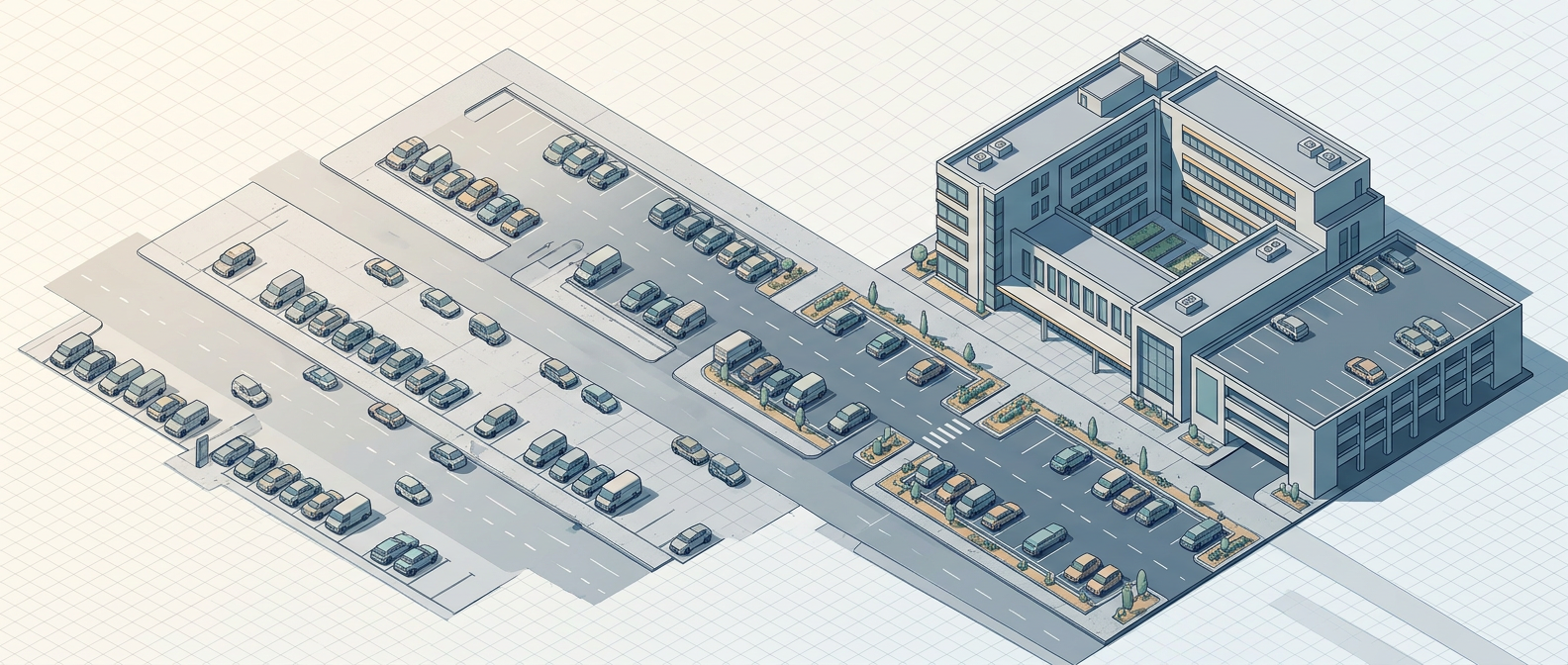
For 30 days at an airport extension site in Austin, Texas, a drum roller moved across 30 acres of dirt with no one in the cab. The trial, conducted by contractor Dynamic Site Solutions using technology from Crewline, a four-person startup, yielded a striking result: daily downtime plummeted from six hours to less than one. By removing the need for human breaks and manual coordination, the machine nearly doubled its productive hours while maintaining a perfect safety record.
The performance suggests a potential remedy for a systemic ailment in the American economy. While U.S. manufacturing productivity has surged over the last 50 years, construction productivity has moved in the opposite direction, falling by more than 30 percent since 1970. The gap is well-documented and widely lamented, yet it has proven resistant to intervention. Prefabrication, modular housing, and building information modeling have each promised to bring factory-floor discipline to the job site. None has managed to fundamentally alter the productivity curve for the industry's most elemental task: moving and compacting earth.
The Aftermarket Thesis
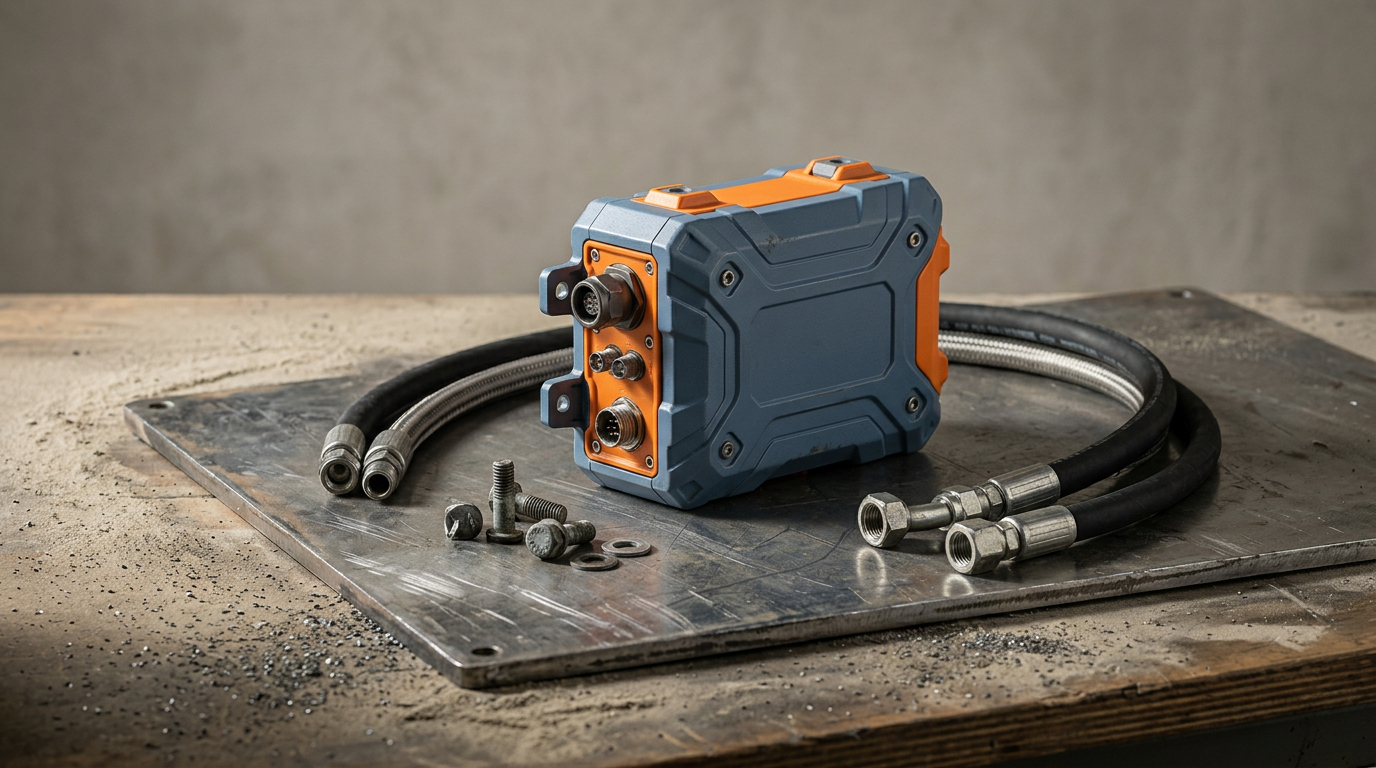
Crewline's approach, led by CEO Frederik Filz-Reiterdank and CTO Mohamed Sadek, is notable less for its ambition than for its restraint. Rather than designing a purpose-built autonomous machine — the path taken by several well-funded competitors in mining and agriculture — the startup offers an aftermarket "robotic brain" that can be installed on existing heavy equipment in roughly an hour without cutting a single wire. The kit layers perception, navigation, and task-planning software onto machines that were designed decades ago for purely manual operation.
The strategic logic mirrors a pattern familiar from other industries. In automotive, companies like Comma.ai have pursued aftermarket driver-assistance systems that retrofit existing vehicles rather than requiring consumers to buy new ones. In warehousing, firms have offered autonomous mobile robots that integrate with legacy shelving rather than demanding a full facility redesign. The common thread is a recognition that the installed base of equipment represents enormous sunk capital. Any technology that requires fleet replacement faces not only a cost barrier but an adoption timeline measured in decades. An aftermarket kit, by contrast, can propagate through an existing fleet at the speed of a purchasing decision rather than a capital cycle.
For construction, where firms tend to operate on thin margins and where equipment lifecycles stretch well beyond a decade, this distinction matters. A contractor does not need to justify a seven-figure purchase of a new autonomous roller; the calculus reduces to the cost of the kit against the labor and downtime savings it delivers.
Productivity's Stubborn Floor
The deeper question is whether the Austin trial represents a scalable shift or an isolated proof of concept. Soil compaction — the task performed by a drum roller — is among the more repetitive and geometrically predictable operations on a construction site. The machine moves in overlapping passes across a defined area, a workflow that lends itself to automation more readily than, say, grading irregular terrain or coordinating multiple machine types in a confined urban excavation.
Scaling from a single machine on an open airport site to a heterogeneous fleet on a congested urban project introduces layers of complexity: dynamic obstacles, mixed human-machine traffic, variable soil conditions, and regulatory frameworks that differ across jurisdictions. Construction's productivity deficit is not merely a technology problem; it is also a fragmentation problem. The industry comprises hundreds of thousands of small firms, each with idiosyncratic workflows and equipment mixes. Diffusing any innovation through that landscape is inherently slower than rolling out a software update to a centralized fleet.
Still, the Austin data point is difficult to dismiss. A reduction in daily downtime from six hours to less than one is not an incremental gain — it is a structural change in how a machine's available hours translate into productive output. If that ratio holds across machine types and site conditions, the compounding effect on project timelines and labor allocation could be substantial.
The tension worth watching is between the simplicity of Crewline's current offering and the complexity of the environments it will eventually need to enter. Aftermarket autonomy kits succeed when the task is bounded and the operating domain is forgiving. Construction sites, by their nature, are neither bounded nor forgiving for long. Whether a four-person startup can bridge that gap — or whether the aftermarket model itself becomes the template for larger equipment manufacturers to follow — remains the open question at the center of this experiment.
With reporting from Fast Company.
Source · Fast Company