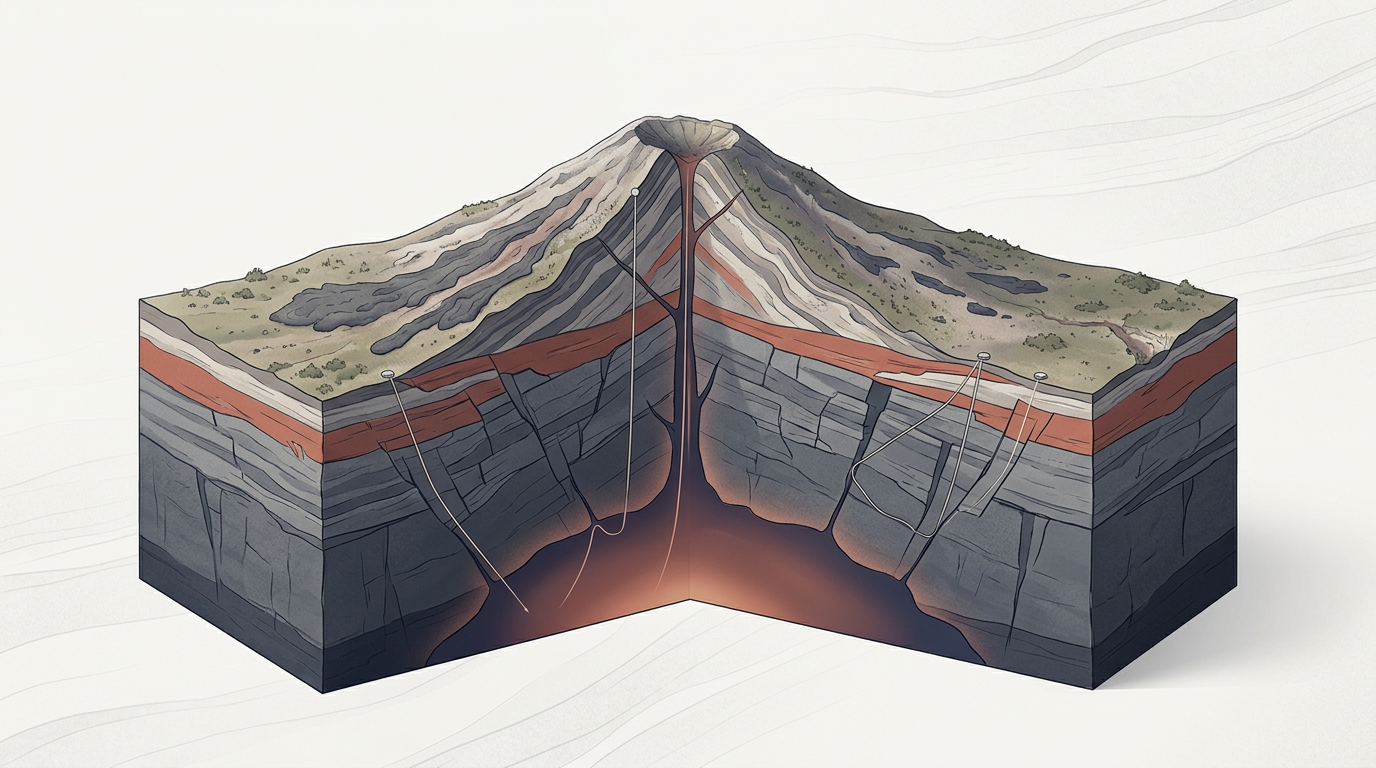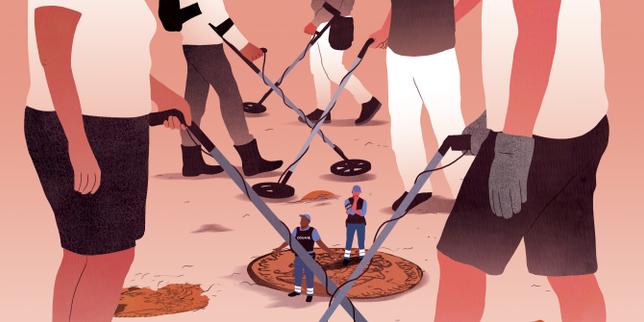
Archaeology is often a race against time, but in France, the clock is being accelerated by an industrial-scale illicit trade. Researchers and law enforcement officials are warning of a "patrimonial hemorrhage" as ancient coins and precious artifacts are systematically stripped from the earth. This is not merely a matter of theft; it is the erasure of history itself. When an object is ripped from its stratigraphic layer — the precise position within accumulated soil deposits that tells archaeologists when and how it arrived there — without documentation, it loses the vital context that allows historians to reconstruct the lives of those who left it behind.
France's archaeological record is unusually dense. Millennia of continuous habitation — Celtic, Roman, Merovingian, medieval — have left layers of material culture across virtually every region. Agricultural fields, construction sites, and forests all conceal deposits that professional excavations methodically decode. The country's legal framework reflects this richness: under French heritage law, archaeological finds belong to the state, and unauthorized excavation is a criminal offense. Yet enforcement has struggled to keep pace with the scale of extraction now underway.
Technology as Accelerant
The crisis is driven by a convergence of new technologies and digital accessibility. Modern looters are no longer just opportunistic hobbyists; they are increasingly equipped with sophisticated metal detectors capable of discriminating between types of metal at considerable depth, GPS devices for mapping productive sites, and drones for surveying terrain. What once required specialized knowledge and clandestine connections can now be facilitated through social media groups, encrypted messaging platforms, and online auction sites — some operating openly, others thinly disguised. Artifacts can move from a French field to a private collection on another continent in a matter of days.
The pattern is not unique to France. Across the Mediterranean and the Middle East, the digitization of the antiquities trade has lowered barriers to entry for both sellers and buyers. Italy, Greece, and Turkey have faced analogous surges in detector-driven looting over the past decade, each prompting legislative and enforcement responses of varying effectiveness. What distinguishes the French situation is the sheer breadth of vulnerable terrain — the country's archaeological potential extends well beyond designated heritage sites into ordinary farmland — and the relative ease with which objects can circulate within the European single market before crossing further borders.
The economic incentive structure compounds the problem. Ancient coins, fibulae, and small bronze objects may individually fetch modest sums, but volume makes the trade profitable. A single productive site can yield hundreds of items over repeated visits. For collectors, provenance is often secondary to aesthetics or rarity, creating a demand-side indifference to the legality of extraction that proves difficult to regulate.
The Enforcement Response and Its Limits
To counter this, a coalition of gendarmes, customs officers, and archaeologists is attempting to tighten the net. Their efforts focus not only on physical recovery but on disrupting the digital infrastructure that fuels the demand. Monitoring online marketplaces, infiltrating social media networks where looters share finds and coordinate outings, and building cases that can withstand judicial scrutiny all require resources and expertise that heritage enforcement units have historically lacked.
French authorities have pursued high-profile seizures in recent years, and the gendarmerie's specialized cultural heritage unit — the Office Central de Lutte contre le Trafic de Biens Culturels (OCBC) — has expanded its digital capabilities. But the asymmetry remains stark. Policing thousands of kilometers of open countryside against dispersed, mobile actors operating with consumer-grade technology is a fundamentally different challenge from guarding a museum or monitoring a known excavation site.
The deeper loss, however, is not material but informational. Every coin sold in secret represents a data point lost forever — a gap in the record of human civilization that no amount of modern forensics can fully restore. A Roman denarius in a collector's cabinet is a curiosity; the same coin documented in situ alongside pottery fragments, organic remains, and architectural traces is evidence of trade routes, economic networks, and daily life. The object survives, but the knowledge it could have yielded does not.
The tension, then, is structural: between a heritage framework built around professional excavation and public ownership, and a technological landscape that has democratized both detection and distribution. Whether enforcement adaptation can narrow the gap — or whether the accessible archaeology of the French underground will be substantially depleted before it does — remains an open question with no comfortable answer.
With reporting from Le Monde Sciences.
Source · Le Monde Sciences