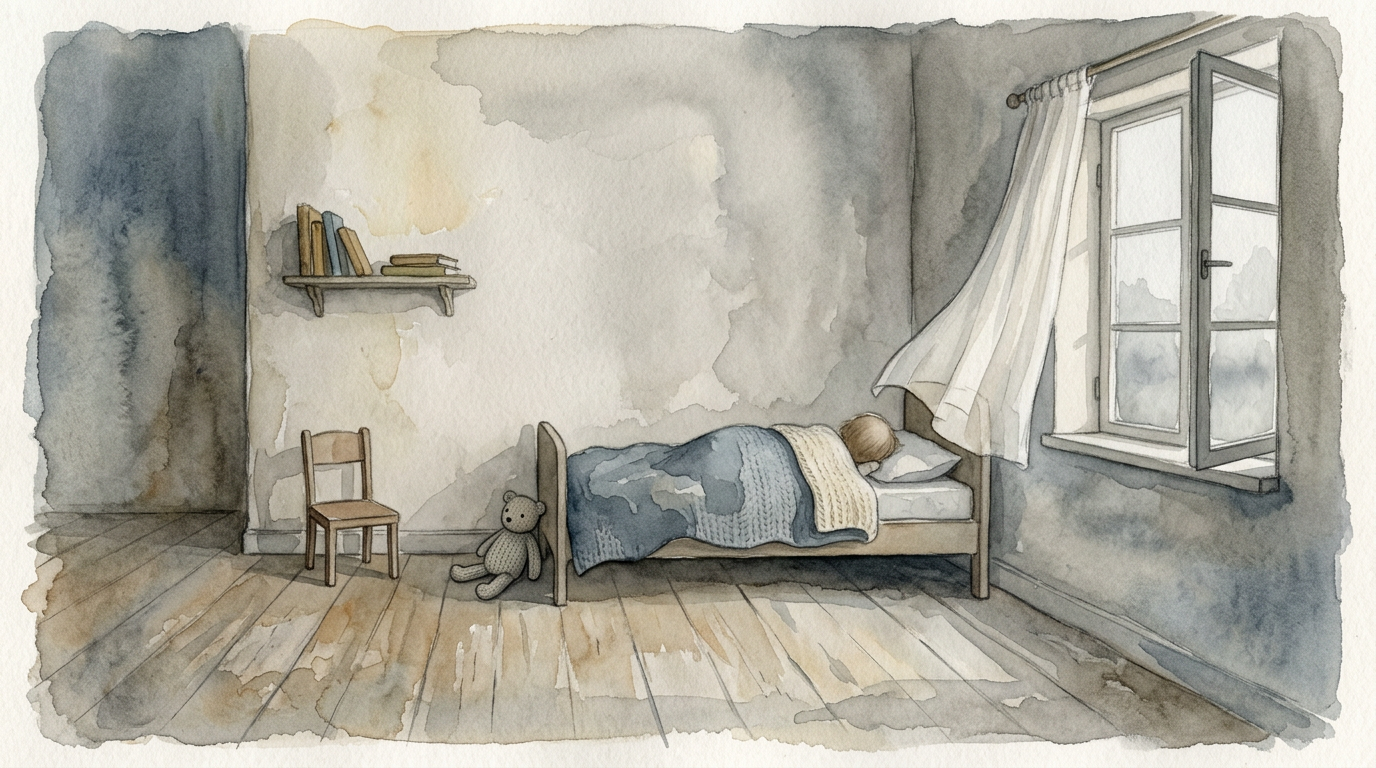
In 1978, Sophie Calle returned to Paris after seven years abroad and began walking. The walks had no destination, no agenda — just the restless drift of someone reacquainting herself with a city that had continued without her. During one of these wanderings, she noticed a door left ajar at the abandoned hotel adjoining the former Gare d'Orsay, the Beaux-Arts railway station on the Left Bank that had ceased regular service in 1939. She slipped inside and found a frozen interior of dust, discarded documents, and silence. Before long, she had installed herself as an unauthorized resident of room 501.
The building Calle occupied was, at that point, an architectural orphan. Designed by Victor Laloux and opened in 1900 for the Exposition Universelle, the Gare d'Orsay and its adjoining hotel had cycled through decades of declining relevance — too short for modern trains, too grand to demolish, too politically contested to repurpose quickly. By the late 1970s, the structure sat in a state of suspended judgment, awaiting a decision that would not fully materialize until President Valéry Giscard d'Estaing approved its conversion into a museum in 1977, with the Musée d'Orsay eventually opening to the public in 1986. In the intervening years, the building existed in a liminal condition — no longer a station, not yet a museum — and it was precisely this indeterminacy that made it available to someone like Calle.
A laboratory in the ruins
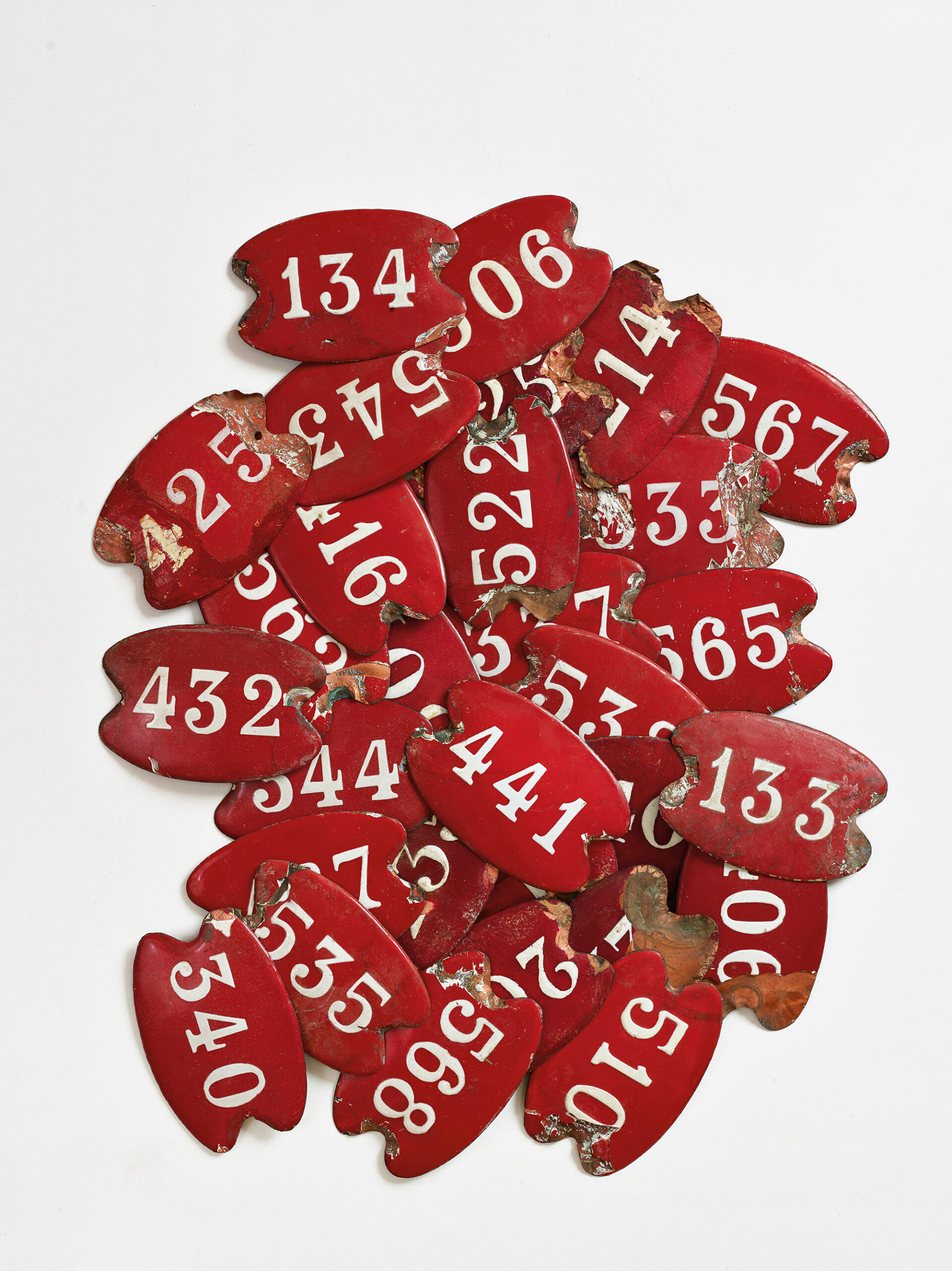
What Calle did inside the abandoned hotel was not simply squat. She began developing the conceptual methods that would come to define her practice: following strangers through the streets of Paris, inviting acquaintances to sleep in her bed while she photographed them, collecting artifacts from the station's slow decay. The derelict rooms became a private laboratory for testing the boundaries between observation and intrusion, intimacy and surveillance, the public and the private. These early experiments — conducted without gallery support, institutional framing, or audience — laid the groundwork for projects that would later place Calle among the most distinctive voices in contemporary art.
The approach had affinities with the Situationist concept of the dérive, the unplanned journey through urban space intended to reveal the city's psychogeographic textures. But where the Situationists theorized, Calle acted with a directness that was more personal than political. Her interest was not in critiquing capitalist urbanism but in harvesting the emotional residue of spaces and encounters. The abandoned Orsay station, with its peeling walls and ghostly corridors, offered an ideal setting: a place rich in accumulated human presence yet emptied of its original function.
When the secret surfaced
The story might have remained private had Calle not revealed it, nearly four decades later, at a dinner party attended by Donatien Grau, the head of contemporary programs at the Musée d'Orsay. The disclosure — that one of France's leading conceptual artists had once lived illegally inside the very building that now houses masterpieces by Monet, Degas, and Van Gogh — carries a certain narrative symmetry. The institution dedicated to preserving art of the late nineteenth and early twentieth centuries had itself, unknowingly, served as the incubator for a late-twentieth-century artistic practice.
The episode also illuminates a recurring dynamic in the life cycle of urban architecture. Buildings pass through phases of purpose, abandonment, and reinvention, and the intervals between these phases often attract precisely the kinds of improvised cultural activity that formal institutions later seek to cultivate. Artists, squatters, and informal communities have historically occupied the gaps that planning leaves open — from the loft conversions of SoHo in the 1960s to the warehouse studios of Berlin after reunification. Calle's residency at the Orsay station fits this pattern, though with a twist: the space she claimed was not merely repurposed but was, in a sense, pre-purposed, its future institutional identity already set in motion even as she moved through its empty halls.
The tension between the unauthorized and the canonical, between the artist sleeping in room 501 and the museum that would eventually enclose that room, remains unresolved — and perhaps more interesting for it. Whether Calle's occupation of the station constitutes an act of trespass, an act of art, or simply an accident of timing depends on where one draws the line between creative practice and the spaces that enable it.
With reporting from Aperture.
Source · Aperture