While much of Europe is rediscovering the night train as a low-carbon alternative to short-haul aviation, Sweden's northern corridors are experiencing a quiet contraction. In a recent opinion piece published in Dagens Nyheter, regional advocate Klaus Wiegel argues that the Swedish State Railways (SJ) and the Transport Administration (Trafikverket) are effectively dismantling night train service to Norrbotten, the country's northernmost county. The critique lands at an uncomfortable moment: Sweden, the nation that gave the world flygskam — the concept of flight shame — appears to be steering its own citizens back toward the airport.
The specific grievance centers on service reductions along the night train routes connecting Stockholm to the far north. At a time when European climate policy broadly favors rail expansion, the trajectory in northern Sweden points in the opposite direction. Where advocates argue capacity should be growing, the offering is instead shrinking.
A structural gap between rhetoric and infrastructure
Sweden's climate ambitions are well documented. The country has committed to achieving net-zero greenhouse gas emissions, and transport — responsible for a significant share of domestic emissions — sits at the center of that agenda. Rail, with its comparatively low carbon footprint per passenger-kilometer, is widely regarded as the backbone of any serious decarbonization strategy for medium- and long-distance travel.
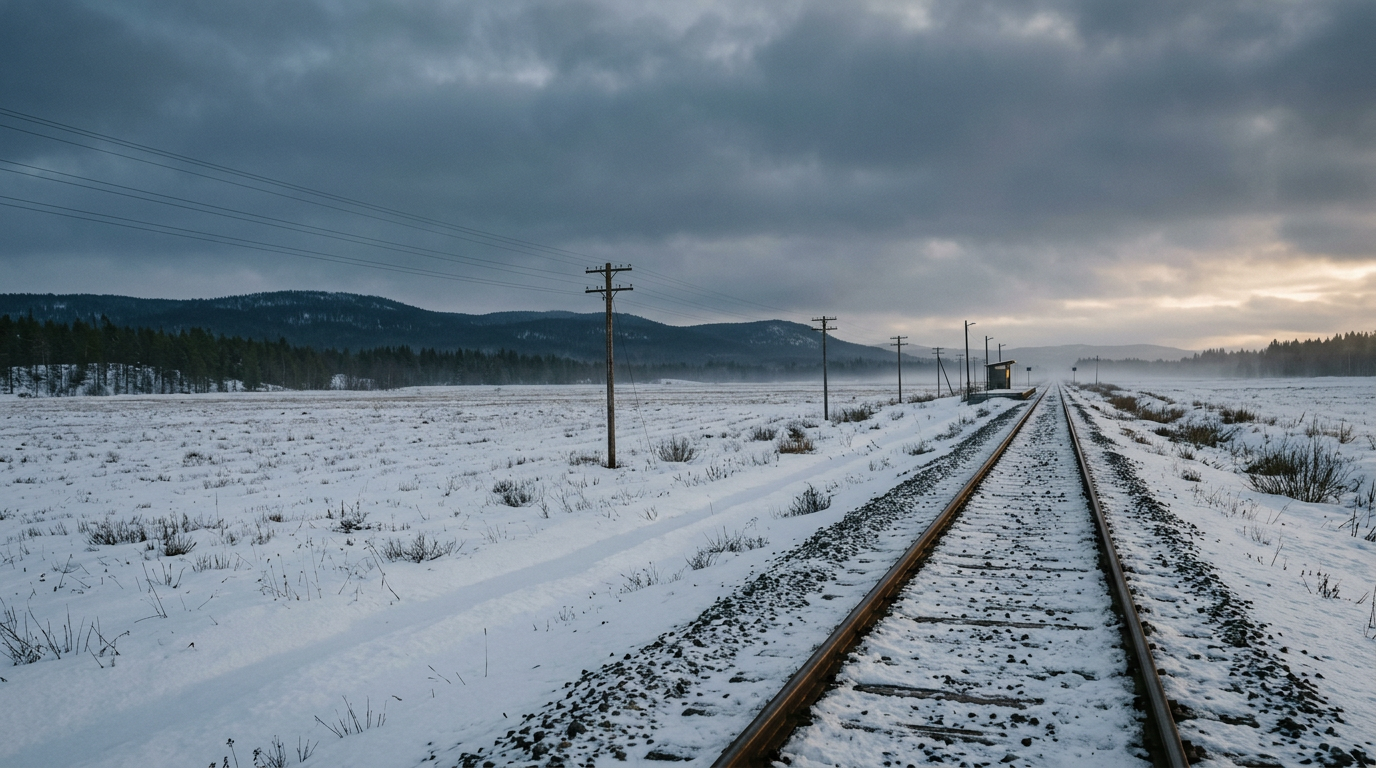
Yet the infrastructure reality in the north tells a different story. Norrbotten stretches across an area roughly the size of Austria but is home to fewer than a quarter of a million people. Sparse population density has long made the region's transport economics challenging. Maintaining and upgrading rail lines across vast, sparsely inhabited terrain is expensive, and the commercial logic that governs SJ's operations tends to favor routes with higher ridership. The result is a familiar pattern in peripheral regions across Europe: the places most dependent on public transport are often the first to see it erode.
Trafikverket, the state agency responsible for rail infrastructure, faces its own constraints. Sweden's rail network has been the subject of persistent criticism over maintenance backlogs and capacity bottlenecks, particularly on single-track stretches that dominate the northern lines. Delays, cancellations, and slow journey times compound the problem, making rail progressively less competitive against aviation on the very routes where it should serve as the default.
The paradox of flygskam
The cultural dimension makes Sweden's situation distinct. The flygskam movement, which emerged in the late 2010s and briefly reshaped travel norms across Scandinavia, was predicated on the existence of viable rail alternatives. The implicit social contract was straightforward: choose the train, accept the longer journey, reduce your carbon footprint. That contract holds only as long as the train actually runs.
When night train services are cut or degraded, the practical options for reaching Norrbotten narrow sharply. Driving distances from Stockholm exceed 1,000 kilometers. Bus services, where they exist, are slow. Aviation becomes not a luxury but a necessity — and with it, the emissions that flygskam was designed to discourage.
The tension is not unique to Sweden. Across Europe, governments face the challenge of reconciling climate commitments with the fiscal realities of maintaining rail service to low-density regions. France has grappled with similar debates over its trains de nuit; Italy and Spain have invested heavily in high-speed corridors while peripheral lines languish. What distinguishes the Swedish case is the sharpness of the contradiction: a country that built part of its international identity around sustainable transport is now struggling to maintain basic rail connectivity to its own northern territory.
The forces at play — commercial logic favoring dense corridors, infrastructure budgets stretched thin, climate targets demanding modal shift — pull in opposing directions. Whether Sweden resolves that tension through renewed investment in northern rail or quietly accepts aviation as the default for its Arctic regions will say something broader about how seriously European nations treat decarbonization when it collides with difficult geography and thin margins.
With reporting from Dagens Nyheter.
Source · Dagens Nyheter