The Speculative Logistics of the Self
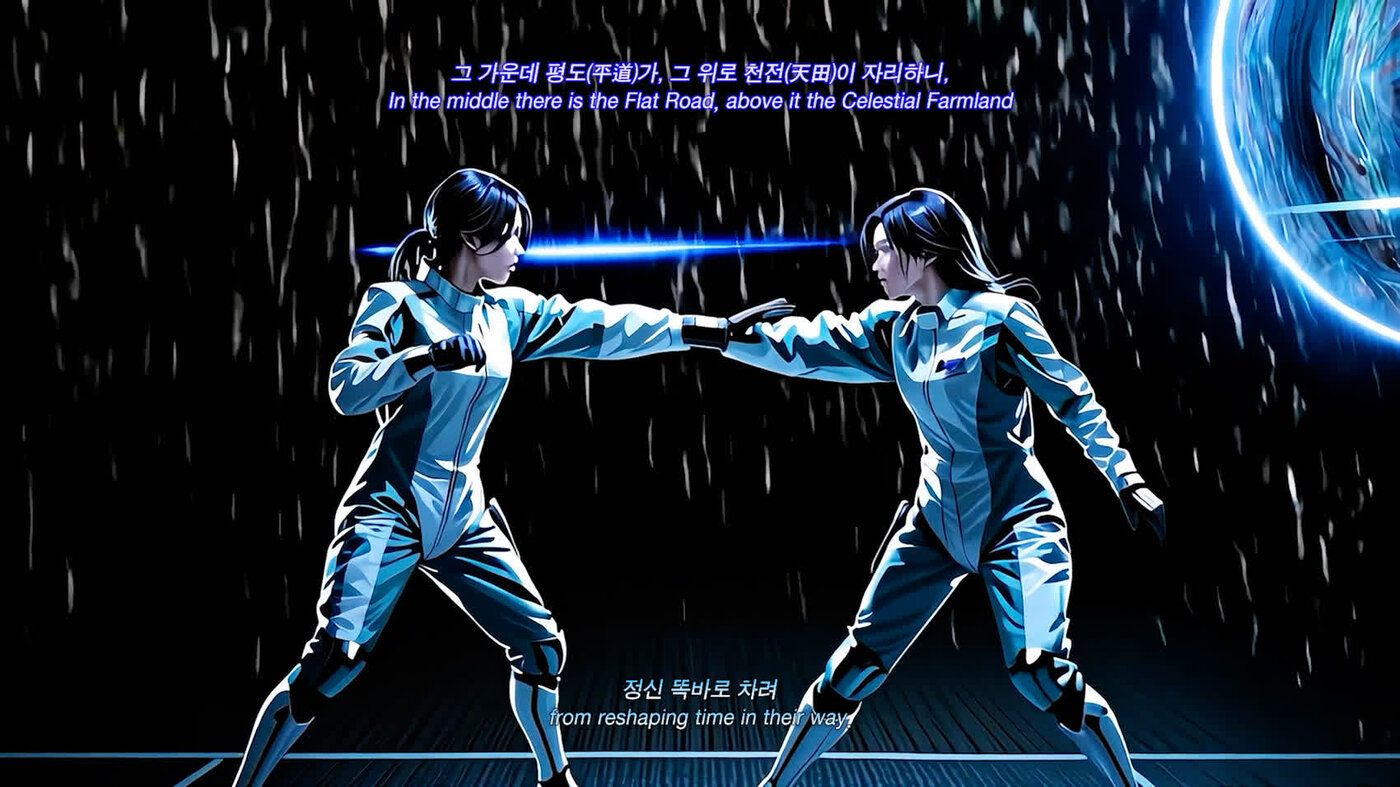
South Korean artist Ayoung Kim has built a practice at the intersection of speculative fiction, geopolitical history, and media infrastructure. Her U.S. solo debut at MoMA PS1, Delivery Dancer Codex, brings that practice to its sharpest articulation yet: a work that reframes digital narcissism not as vanity but as a structural condition produced by the logistics networks that organize contemporary life. The exhibition marks the first major institutional presentation of Kim's work in the United States, positioning her within a growing conversation about how art can map the invisible architectures of global capital and data flow.
Kim's point of departure is deceptively simple. The myth of Narcissus—a figure seduced by his own reflection—serves as a conceptual anchor. But in Kim's rendering, the reflecting pool has been replaced by the screen, and the reflection itself is no longer passive. It is algorithmic, optimized, and entangled with the same supply-chain logic that routes packages across continents. The self that stares back is not a mirror image but a data profile, shaped by the platforms through which it moves.
From Telegrams to Gig Workers
Kim's trajectory toward Delivery Dancer Codex is legible through her earlier projects, each of which treated information transit as a subject worthy of the same scrutiny typically reserved for fine art or political theory. In PH Express, she traced the circulation of telegrams and the patrol routes of 19th-century European warships operating in East Asian waters, treating colonial-era communication infrastructure as a precursor to today's digital networks. In Please Return to Busan Port, she examined the cultural economy surrounding horse racing through accumulated media reports, treating the sport as a node where capital, spectacle, and national identity converge.
These works share a method: Kim identifies a system of movement—of goods, signals, capital, or bodies—and then constructs a speculative narrative that reveals the ideological assumptions embedded within it. Her fictional transcontinental railway connecting Busan to the Eurasian landmass, for instance, bypasses contemporary political borders by imagining a historical continuity that never existed. The gesture is not escapist. It is diagnostic, exposing how infrastructure shapes political possibility as much as it responds to it.
Delivery Dancer Codex extends this logic into the present tense. The gig economy delivery worker—algorithmically routed, perpetually tracked, optimized for speed—becomes Kim's new figure of transit. The "dancer" in the title is not metaphorical decoration. It points to the choreography imposed by platform logistics: the prescribed routes, the timed stops, the performance metrics that reduce a human body to a unit of throughput.
The Algorithmic Mirror
What distinguishes Kim's work from more conventional critiques of platform labor is its insistence on the psychic dimension of these systems. Delivery Dancer Codex does not simply argue that gig workers are exploited, a claim that, however valid, has become familiar. Instead, it asks a stranger and more unsettling question: what happens to the self when identity is continuously mediated by the same optimization engines that govern package delivery?
The Narcissus analogy gains its force here. In the classical myth, the danger lies in mistaking a reflection for reality. In Kim's framework, the danger is subtler. The digital self is not a static reflection but a dynamic construct, continuously updated by algorithmic feedback. To engage with it is not merely to gaze but to be shaped in return. The platform does not show users who they are; it shows them who they are becoming, according to its own logic.
This places Kim's work in dialogue with a broader current in contemporary art and theory that treats logistics not as background infrastructure but as a primary site of meaning-making. The movement of goods, data, and bodies across networks is never neutral. It encodes hierarchies, enforces borders, and produces subjectivities. Kim's contribution is to insist that the most intimate of those subjectivities—the sense of self—is not exempt from this process.
The tension the exhibition leaves unresolved is productive. If the self is already a logistics product, shaped by the same forces that optimize delivery routes and warehouse throughput, then resistance and complicity become difficult to distinguish. Whether the "dancer" is a laborer, a performer, or a reflection caught in an algorithmic loop may depend less on the answer than on who is asking—and from which side of the screen.
With reporting from MUBI Notebook.
Source · MUBI Notebook