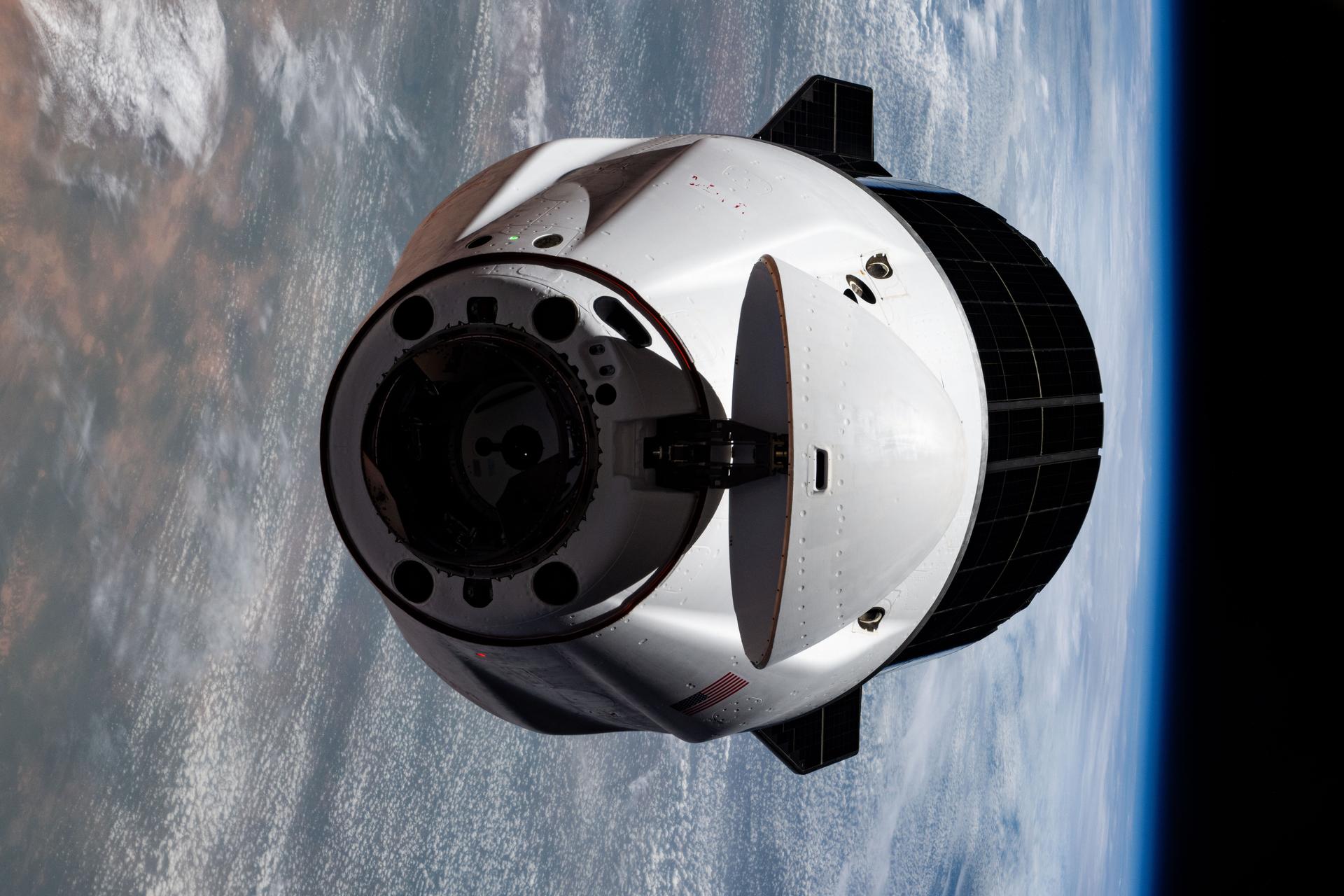
The cadence of spaceflight has shifted from an era of singular, epochal events to one of industrial regularity. NASA and SpaceX are now preparing for the 34th Commercial Resupply Services (CRS-34) mission, a logistical flight that has become a cornerstone of the International Space Station's continued operation. Scheduled for no earlier than Tuesday, May 12, the mission will utilize a Falcon 9 rocket to loft a Dragon cargo spacecraft from Cape Canaveral Space Force Station in Florida. The Dragon capsule is expected to carry over 5,000 pounds of research investigations, hardware, and essential supplies.
The fact that a 34th mission of its kind barely registers as headline news is itself the story. Commercial resupply has become the quiet infrastructure of orbital science — a logistics backbone so dependable that its regularity now defines the rhythm of life aboard the station.
From Experiment to Infrastructure
The Commercial Resupply Services program traces its origins to a period when the very idea of outsourcing cargo delivery to a private company was contentious. NASA awarded its first CRS contracts in 2008, selecting SpaceX and Orbital Sciences (now part of Northrop Grumman) to ferry supplies to the station after the Space Shuttle's retirement. The early Dragon missions were watched with the tension reserved for test flights: novel hardware, unproven docking procedures, and a business model that staked public resources on private execution.
That era is long past. SpaceX's Dragon has become the workhorse of station logistics, capable not only of delivering cargo but of returning experiment samples and hardware to Earth — a capability that distinguishes it from expendable cargo vehicles that burn up on reentry. Over successive contract phases, NASA has extended and expanded the program, reflecting confidence in the model. The relationship has matured from a calculated gamble into a standing arrangement, closer in character to a freight contract than an aerospace milestone.
This normalization carries strategic weight. By converting cargo delivery into a purchased service rather than a government-operated mission, NASA freed engineering talent and budget to pursue deeper-space objectives. The Artemis lunar program and early-stage Mars architecture planning proceed in parallel with station operations precisely because the routine work of keeping the ISS supplied no longer demands the agency's full institutional attention.
The Scientific Supply Chain in Orbit
Beyond the logistics narrative, each resupply mission is a discrete chapter in the station's research output. The payloads aboard CRS-34 — spanning biological studies, materials science, and technology demonstrations — depend on a reliable delivery schedule. Many experiments require fresh biological samples with limited shelf life, or hardware calibrated for narrow time windows. A delay of weeks can invalidate months of preparation on the ground.
This makes the resupply cadence not merely convenient but operationally essential. The ISS functions as a laboratory whose productivity is directly coupled to the frequency and reliability of its supply line. In that sense, the Dragon missions serve a role analogous to reagent deliveries for a terrestrial research hospital: unglamorous, indispensable, and disastrous when disrupted.
The broader context adds a layer of urgency. The ISS is operating in what NASA has described as its final decade of service, with plans to transition low-Earth orbit activity to commercially operated stations. As that transition approaches, the CRS model offers a template — and a test case — for how government-funded science might continue aboard private platforms. The question is whether the reliability built over 34 missions can be replicated in a more fragmented commercial station ecosystem, where multiple operators may compete for payload contracts without the single-customer clarity that defined the NASA-SpaceX arrangement.
As NASA opens media accreditation for the launch, the event underscores a tension that will shape the next chapter of human spaceflight. The agency has proven that industrial-scale logistics in orbit is achievable. Whether that achievement transfers cleanly to a post-ISS landscape — one with new stations, new operators, and new economic incentives — remains an open question, and one that each routine Dragon flight quietly sharpens.
With reporting from NASA Breaking News.
Source · NASA Breaking News