MoMA PS1's "Greater New York" exhibition has long occupied an unusual position in the institutional calendar. Unlike biennials or annuals with fixed rhythms, the survey arrives at irregular intervals — sometimes every few years, sometimes after longer gaps — each time attempting to take the temperature of one of the world's densest and most restless creative ecosystems. The latest iteration, featuring over 150 works from 50 artists, opened at the Long Island City institution with the same paradox that has defined every previous edition: the ambition to map a city whose art world is, by nature, unmappable.
The premise is familiar to anyone who has followed the series since its debut in 2000. "Greater New York" does not try to identify a dominant movement or crown a generation. It functions instead as a periodic core sample — a cross-section of practices, materials, and concerns drawn from a creative population that spans five boroughs and countless diasporas. The result, as with previous editions, is deliberately unwieldy.
A Cacophony by Design
What distinguishes this iteration is the curatorial willingness to let friction stand as a structural principle rather than a problem to be solved. The exhibition resists a singular thesis. Works sit alongside one another without the connective tissue of a tidy thematic framework, and the effect mirrors the experience of the city itself: competing perspectives, clashing aesthetics, and the occasional moment of unexpected resonance between strangers.
This approach carries risks. Group exhibitions that refuse narrative coherence can feel arbitrary, a collection of studio visits stitched together by geography alone. Yet "Greater New York" has historically earned its sprawl by treating New York not as a backdrop but as an active condition — a set of material pressures, spatial constraints, and social proximities that shape what artists make and how they make it. The latest edition appears to lean further into that logic, privileging work that engages the textures of shared urban life over work that merely happens to be produced within the five boroughs.
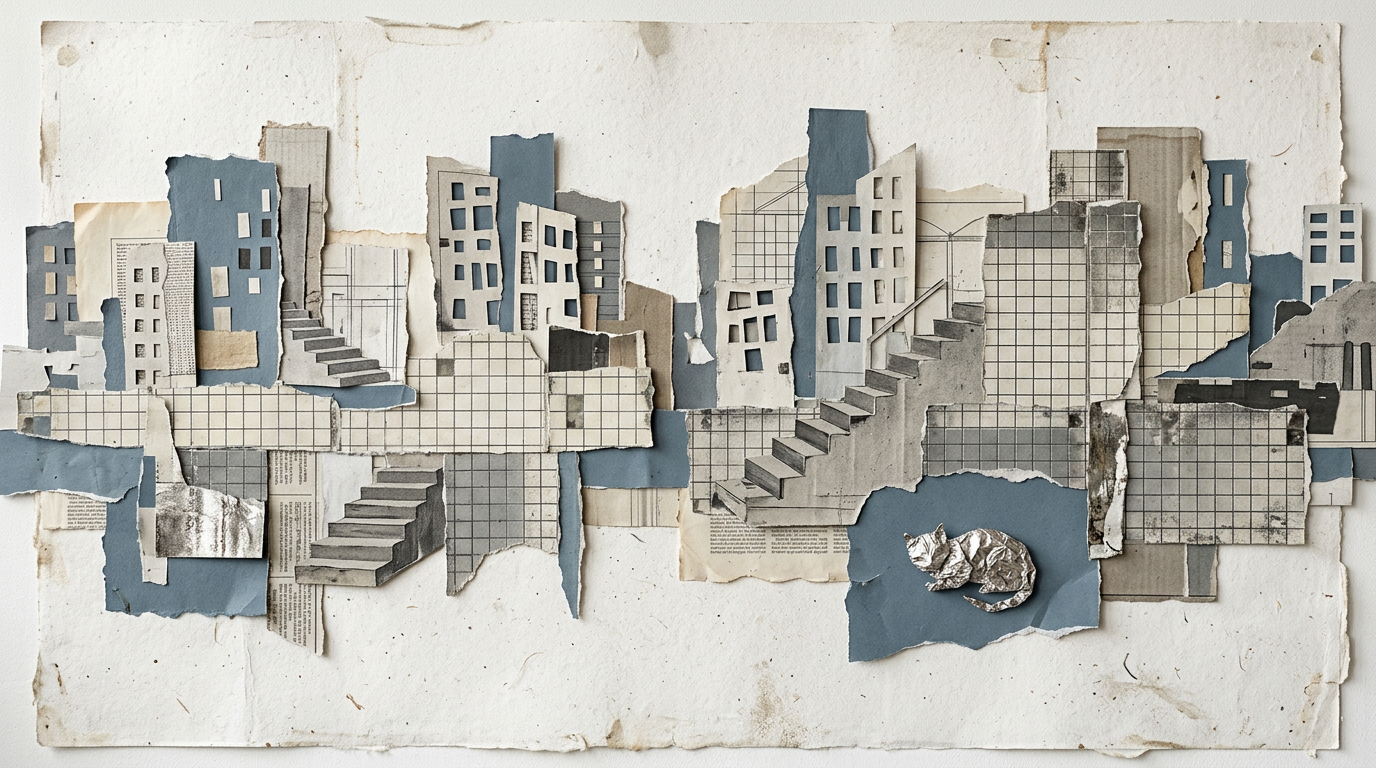
Among the pieces that anchor this sensibility is Dean Millien's "The Cats and the Rats," a series of sculptures fashioned from aluminum foil. The work renders the city's non-human residents — the pigeons, rats, and feral cats with which New Yorkers negotiate daily coexistence — in a material so commonplace it borders on invisible. Aluminum foil is bodega infrastructure, sandwich wrapping, makeshift insulation. By using it as a sculptural medium, Millien collapses the distance between gallery object and street artifact, situating the exhibition firmly in the gritty, tactile reality of metropolitan life.
The Impossibility as Method
The history of large-scale survey exhibitions is littered with attempts to be comprehensive that end up feeling reductive. The Whitney Biennial, the New Museum Triennial, and their international counterparts all face versions of the same dilemma: selection implies exclusion, and exclusion implies a curatorial judgment about what matters. "Greater New York" has historically sidestepped some of this pressure by foregrounding its own incompleteness — treating the survey not as a definitive statement but as an honest admission of limits.
That posture is more than rhetorical modesty. It reflects a genuine epistemological problem. New York's art world is not a single scene but a loose confederation of overlapping scenes, many of which have little contact with one another. An artist working in the South Bronx community-mural tradition and an artist running a conceptual practice out of a Bushwick studio may share a subway line but inhabit different creative universes. Any exhibition that claims to represent both must either flatten those differences or let them coexist unresolved.
The latest "Greater New York" appears to choose coexistence. Whether that choice produces a compelling exhibition or merely an encyclopedic one depends, in part, on what visitors bring to the experience. For those willing to move through the show without demanding a through-line, the friction between works becomes its own kind of content — a reminder that proximity is not the same as community, and that the most durable art often emerges not from consensus but from the daily negotiation of living too close together in a city that refuses to simplify itself.
With reporting from Hyperallergic.
Source · Hyperallergic