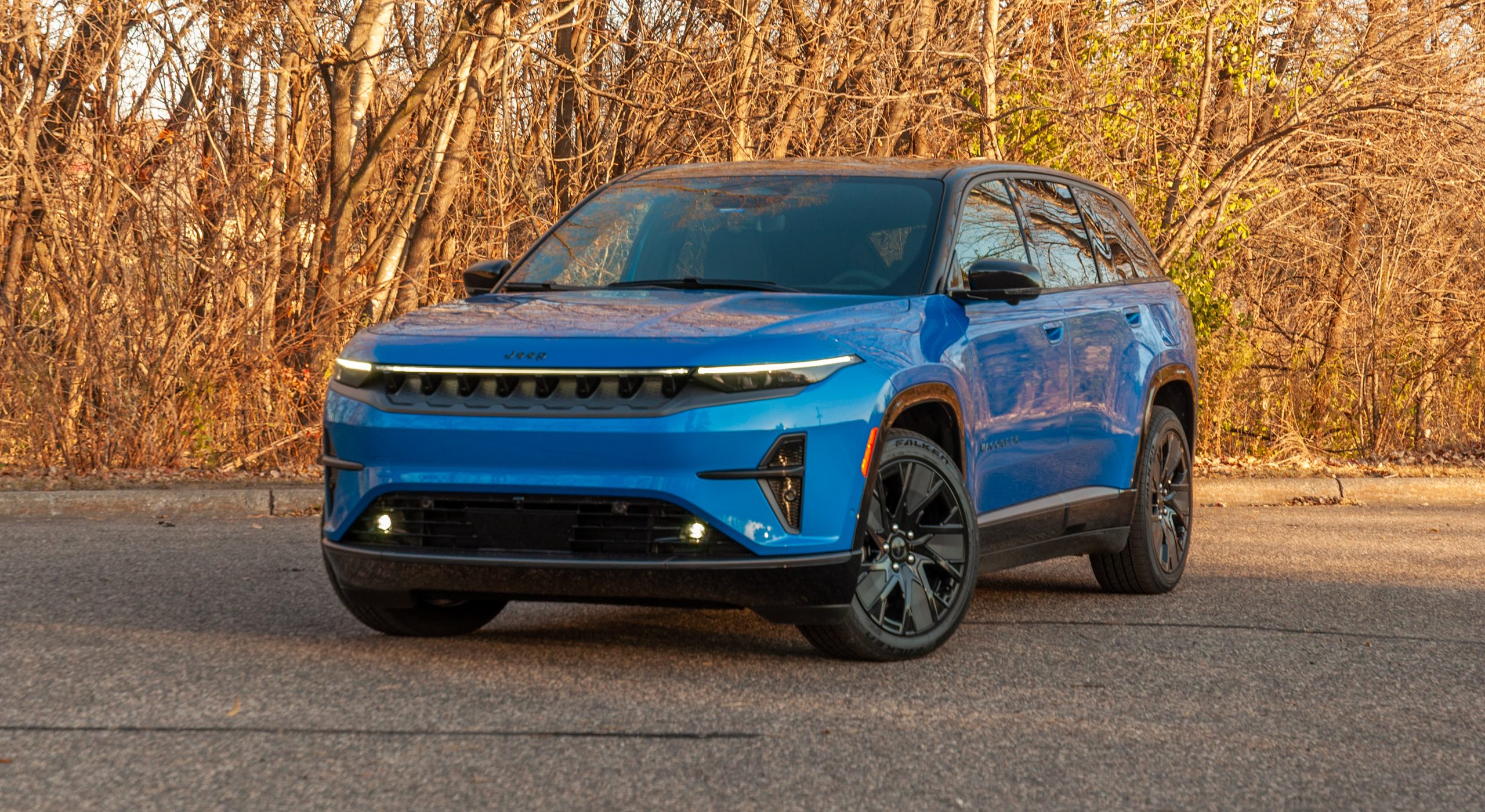
Stellantis has confirmed that the Jeep Wagoneer S will not have a 2026 model year. The electric SUV, positioned as a flagship of Jeep's electrification strategy, will sit out an entire production cycle so the company can work through a surplus of unsold units sitting on dealer lots. The model is expected to return for 2027 with a package of technical improvements, including better battery performance, updated software, and the adoption of the NACS charging connector — the Tesla-originated standard that has become the de facto plug format across much of the North American market.
The decision is a concession to a structural problem facing the broader EV sector: production capacity has outpaced consumer absorption. Stellantis is not alone in confronting this imbalance, but the Wagoneer S pause is notable because of the vehicle's symbolic weight. Jeep has historically traded on rugged, combustion-powered identity. The Wagoneer S was meant to prove that electrification and the brand's heritage could coexist. Shelving it — even temporarily — sends an ambiguous signal about the pace at which that transition can proceed.
The inventory overhang and what it reveals
The gap between EV supply and demand has been a recurring theme across the industry since late 2023. Multiple automakers have scaled back production targets, delayed factory conversions, or shifted investment toward hybrids as a transitional hedge. The pattern reflects not a collapse in EV interest but a recalibration: early adopters have largely been served, and the next tranche of buyers appears more price-sensitive, more range-anxious, and less willing to absorb the friction of immature charging infrastructure.
For Stellantis specifically, the inventory problem intersects with a broader period of organizational turbulence. The company has been managing leadership transitions, margin pressures, and a product portfolio that spans more than a dozen brands across multiple continents. Pausing a single nameplate is a relatively low-cost lever to pull, but it also defers revenue and cedes momentum in a segment where brand credibility is still being established.
The planned 2027 return with NACS compatibility is strategically sound. The connector standard, originally proprietary to Tesla, has been adopted by nearly every major automaker operating in North America. Launching without it in the initial run placed the Wagoneer S at a practical disadvantage relative to competitors. The refresh offers an opportunity to correct that and to incorporate whatever battery and software gains emerge over the intervening months.
Divergent bets across the EV landscape
While Stellantis pulls back, other players are pressing forward with distinct strategies. Hyundai recently unveiled the Ioniq 3, an electric compact whose design draws from the discontinued Veloster's sporty silhouette. The vehicle introduces a next-generation infotainment system that deliberately retains physical buttons and knobs — a pointed response to widespread driver dissatisfaction with touchscreen-only cockpits. The choice reflects a growing consensus among interface designers that tactile controls reduce cognitive load and improve safety. The Ioniq 3 is not currently planned for North American sale, which limits its direct competitive relevance but signals the direction of Hyundai's global EV design philosophy.
Elsewhere, Uber has increased its stake in Lucid to 11.5%, deepening a bet on luxury electric vehicles as a component of its ride-hailing fleet strategy. The investment positions Uber to secure dedicated EV supply for its platform while giving Lucid a guaranteed demand channel — a potentially valuable arrangement for a manufacturer that has struggled to scale retail volume. The partnership sits at the intersection of two difficult problems: Uber's need to electrify its fleet to meet regulatory and sustainability commitments, and Lucid's need to find buyers beyond a narrow luxury niche.
Meanwhile, the traditional luxury segment faces its own identity questions. The observation from a Mercedes-Benz designer that consumer appetite for the station wagon has largely disappeared underscores how quickly form-factor preferences can shift — and how automakers must continuously reassess which body styles justify continued investment.
The Federal Trade Commission has added another variable to the equation, urging dealers to report deceptive advertising practices within the auto industry. Regulatory scrutiny of this kind tends to intensify during periods of market transition, when new technologies and unfamiliar pricing structures create opportunities for consumer confusion.
Taken together, these developments illustrate an EV market that is not contracting but reorganizing. The question is whether pauses like the Wagoneer S hiatus represent prudent inventory management or early signs that the transition timeline assumed by legacy automakers was never realistic to begin with — and whether the companies pressing forward now will be rewarded for conviction or punished for overcommitment.
With reporting from The Drive.
Source · The Drive