For years, David Lynch's daily weather reports on YouTube served as a strange, steadying ritual — a nasal, Midwestern broadcast of Los Angeles skies that felt both mundane and deeply deliberate. Delivered from what appeared to be his home studio, each report was brief, unadorned, and oddly compelling: temperature, cloud cover, a wish for a beautiful day. Taken individually, they were negligible. Taken as a body of work, they became something else entirely — a daily performance that blurred the line between the banal and the uncanny, a line Lynch spent his entire career inhabiting.
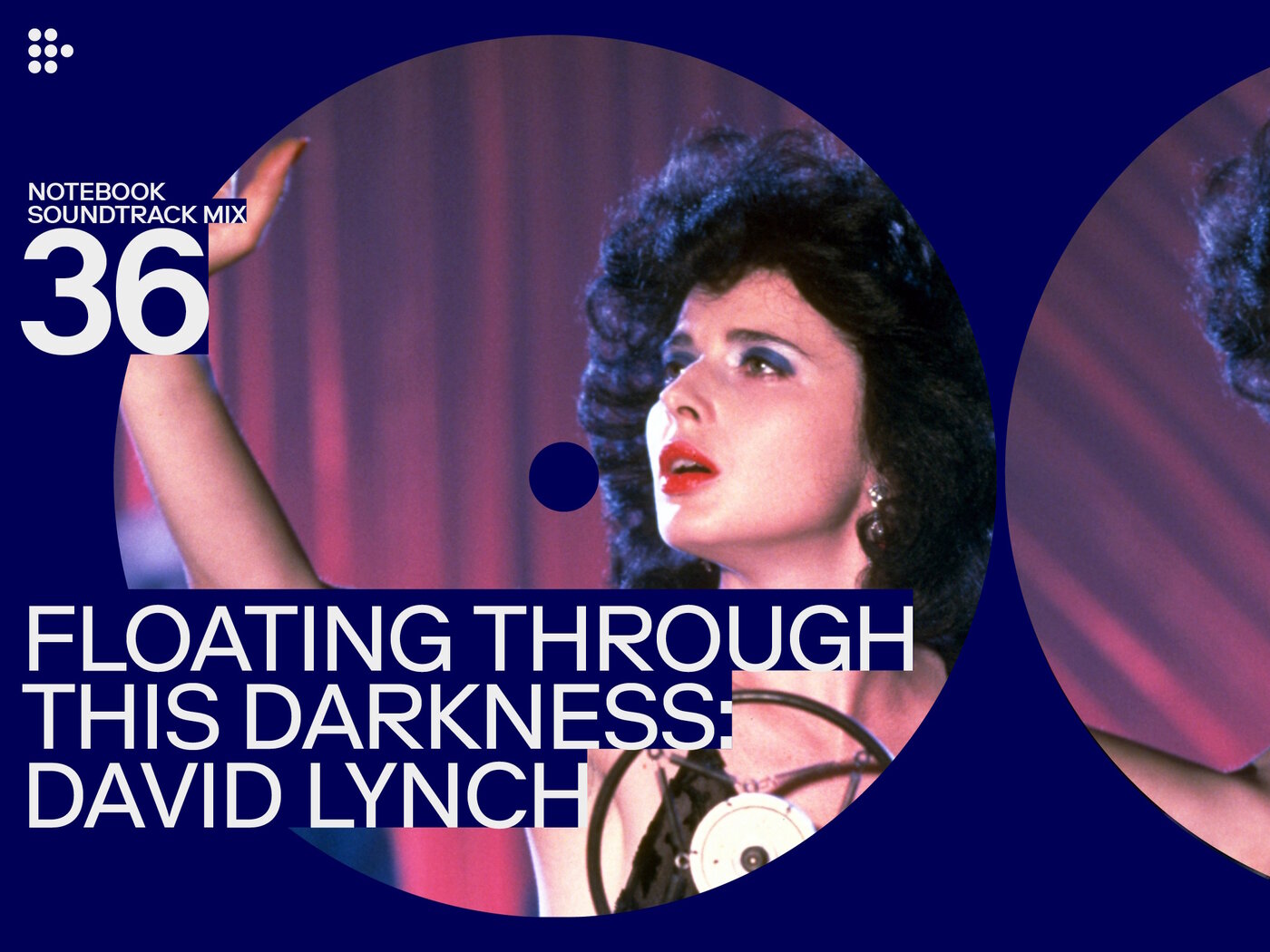
A new soundtrack mix published by MUBI Notebook uses these weather dispatches as a point of entry into the broader sonic landscape Lynch constructed across decades of filmmaking, music, and visual art. The mix opens with a report from March 25, a date that, according to the mix's creator, aligned with their own writing process years later, producing what they describe as a "tunnel between time" connecting Lynch's past recordings with the listener's present. It is a small coincidence, but the kind Lynch would have recognized — the sort of synchronicity his work treated not as accident but as evidence of deeper currents running beneath the surface of ordinary life.
The Berlin Exhibition and Lynch Beyond Cinema
This temporal disorientation found a physical counterpart in a recent exhibition of Lynch's work at the Pace Gallery in Berlin. Under the red glow of a large colored glass window, visitors encountered a side of Lynch that mainstream audiences rarely engage with directly: his painting, sculpture, photography, and sound installations. The exhibition reportedly evoked the atmosphere of his early experimental shorts, particularly The Alphabet (1969), a four-minute film Lynch made while studying at the Pennsylvania Academy of the Fine Arts. That short — part animation, part live-action nightmare — remains a useful key to understanding Lynch's creative instincts. It was made before Eraserhead, before Blue Velvet, before Twin Peaks, yet it already contained the essential Lynchian frequency: domestic space invaded by dread, language dissolving into texture, the familiar rendered alien.
The Berlin show served as a reminder that Lynch's artistic practice was never confined to the cinema screen. Throughout his career, he moved between mediums with a consistency of vision that made the boundaries between them feel arbitrary. His paintings shared the same industrial darkness as his soundscapes. His photographs carried the same stillness as his long takes. The exhibition, by gathering these disparate outputs under one roof, made the case that Lynch was less a filmmaker who also painted than an artist who happened to work most visibly in film.
A Shared Subconscious, Rendered in Sound
The MUBI Notebook mix operates on a similar principle of convergence. By layering Lynch's voice over the industrial hums, ambient drones, and dream-pop textures drawn from his filmography and musical collaborations, it constructs a continuous environment rather than a playlist. The effect is immersive in the way Lynch's best work is immersive — not through spectacle, but through sustained atmosphere. Angelo Badalamenti's compositions for Twin Peaks and Mulholland Drive established a sonic vocabulary that became inseparable from Lynch's visual language, and the mix draws on that vocabulary while extending it into something more personal and essayistic.
What emerges from both the mix and the Berlin exhibition is a portrait of an artist whose influence has become ambient — present in the atmosphere of contemporary culture even when not directly cited. The word "Lynchian" has entered common usage to describe a particular quality of unease lurking beneath polished surfaces, but the term risks becoming a shorthand that flattens the specificity of what Lynch actually did. His work was not merely strange. It was precisely strange, calibrated with a craftsman's attention to texture, timing, and tone.
The weather in Berlin, the mix suggests, can suddenly mirror a spring day in Los Angeles from years prior. Whether that constitutes meaningful coincidence or mere pattern recognition depends on the framework one brings to it. Lynch, characteristically, would not have drawn a distinction. His work occupied the space where those two explanations overlap — where the rational and the intuitive coexist without resolution. That space remains open, and others continue to move through it.
With reporting from MUBI Notebook.
Source · MUBI Notebook