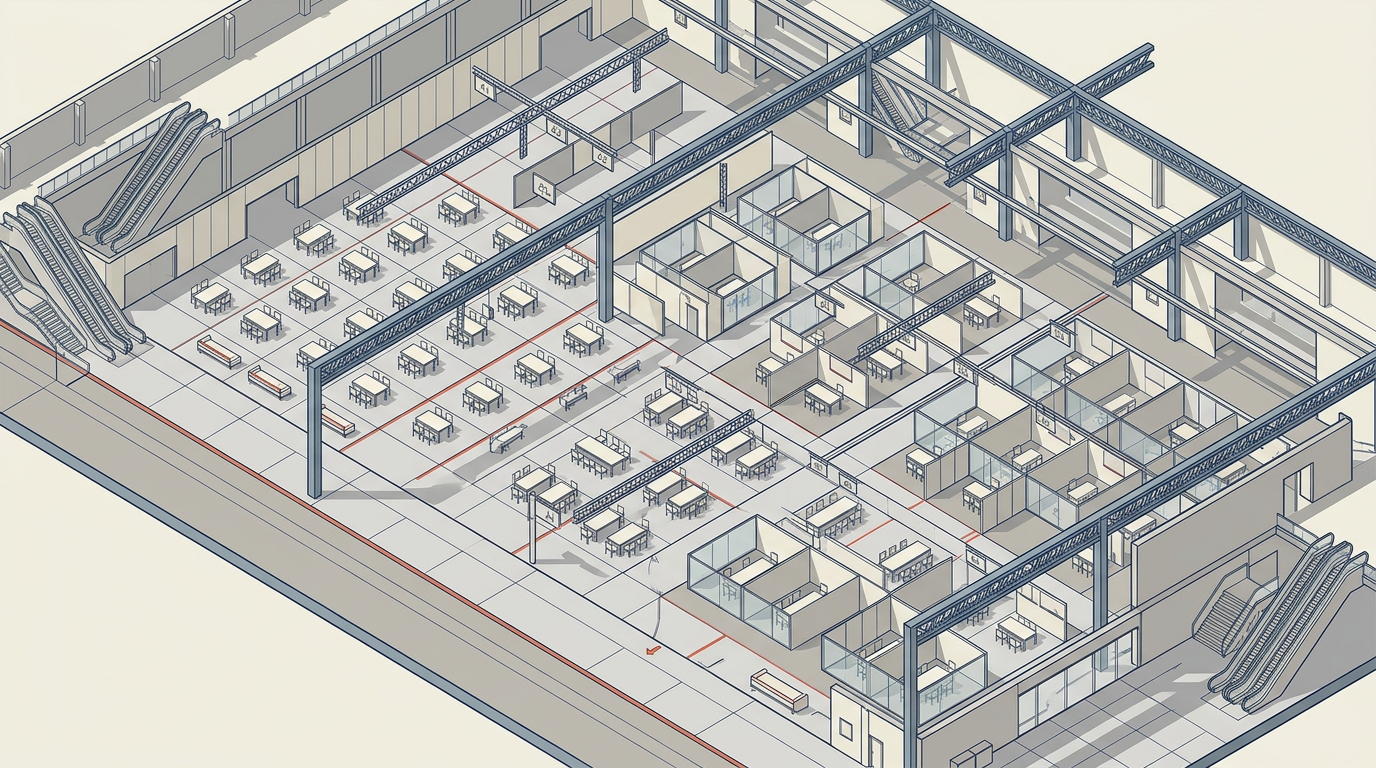
Tokyo Big Sight, the sprawling exhibition complex on the edge of Tokyo Bay, has long served as a backdrop for product launches and industry spectacle. But SusHi Tech Tokyo, the city-backed gathering scheduled for April 27–29, signals a different ambition. With 60,000 expected attendees, 750 startup exhibitors, and city leaders from 49 countries, the event's scale is familiar. Its operating logic is not. The defining number is not headcount but the 10,000 business meetings pre-brokered before the doors open — a logistical scaffold that reframes the conference less as a forum for ideas and more as a structured marketplace for transactions.
The shift is deliberate. Rather than relying on the chance encounters that define most trade show floors, SusHi Tech Tokyo has built its value proposition around matchmaking infrastructure: meetings scheduled, counterparts vetted, agendas aligned in advance. The attendee does not arrive to browse. The attendee arrives to execute.
The decline of serendipity as a business model
For decades, the large-scale technology conference operated on a simple premise: gather enough interesting people in one place and useful collisions will follow. CES in Las Vegas, Mobile World Congress in Barcelona, Web Summit in Lisbon — each built its brand on density, spectacle, and the promise that the right handshake might happen in a hallway. The model worked, but it was inefficient by design. Exhibitors spent heavily on booth real estate with no guarantee of qualified leads. Attendees wandered floors the size of small airports hoping to stumble into relevance.
The pandemic accelerated skepticism toward that model. When in-person events returned, organizers faced a harder question from sponsors and attendees alike: what, precisely, is the return on presence? Some conferences responded by layering on content — more keynotes, more panels, more fireside chats. SusHi Tech Tokyo appears to have taken the opposite path, stripping the experience down to its transactional core. The 10,000 pre-arranged meetings function as a kind of answer: attendance is not speculative, it is contractual.
This approach has precedent. Smaller, invitation-only gatherings — particularly in venture capital and enterprise software — have long operated on curated meeting schedules. What distinguishes the Tokyo event is the attempt to apply that logic at massive scale, across a heterogeneous mix of startups, municipal governments, and corporate delegations from nearly 50 countries.
Tokyo's institutional bet
The event also reflects something specific about Tokyo's positioning in the global innovation economy. Japan's capital has spent years working to shed a reputation for insularity in its startup ecosystem. Government-backed initiatives have sought to attract foreign founders, capital, and corporate partners, often with mixed results. SusHi Tech Tokyo, with its explicit emphasis on cross-border deal facilitation, fits within that broader municipal strategy — an attempt to make Tokyo not just a destination for technology tourism but a node in active deal flow.
The involvement of city leaders from 49 countries reinforces the institutional dimension. This is not purely a private-sector affair. It carries the weight of urban policy, with municipalities themselves positioned as counterparts in structured negotiations — whether around smart city procurement, climate technology deployment, or public-private partnership frameworks.
Whether the model delivers on its promise is a separate question. Pre-brokered meetings guarantee volume, not quality. A scheduled conversation between a Scandinavian municipal official and a Japanese robotics startup does not, by itself, produce a contract or a partnership. The risk is that efficiency of scheduling substitutes for depth of engagement — that the event optimizes for throughput at the expense of the slower, less measurable process by which trust and shared understanding actually form.
The tension is worth watching. If SusHi Tech Tokyo's matchmaking infrastructure produces measurable deal volume, it offers a template that other large-scale conferences will study closely. If it produces mostly polite thirty-minute conversations that lead nowhere, the old model — messy, inefficient, built on the faith that serendipity scales — may prove harder to replace than its critics assume. The conference industry is running an experiment in Tokyo. The independent variable is whether human commerce can be fully pre-programmed, or whether the unscripted encounter remains irreducible.
With reporting from TechCrunch.
Source · TechCrunch