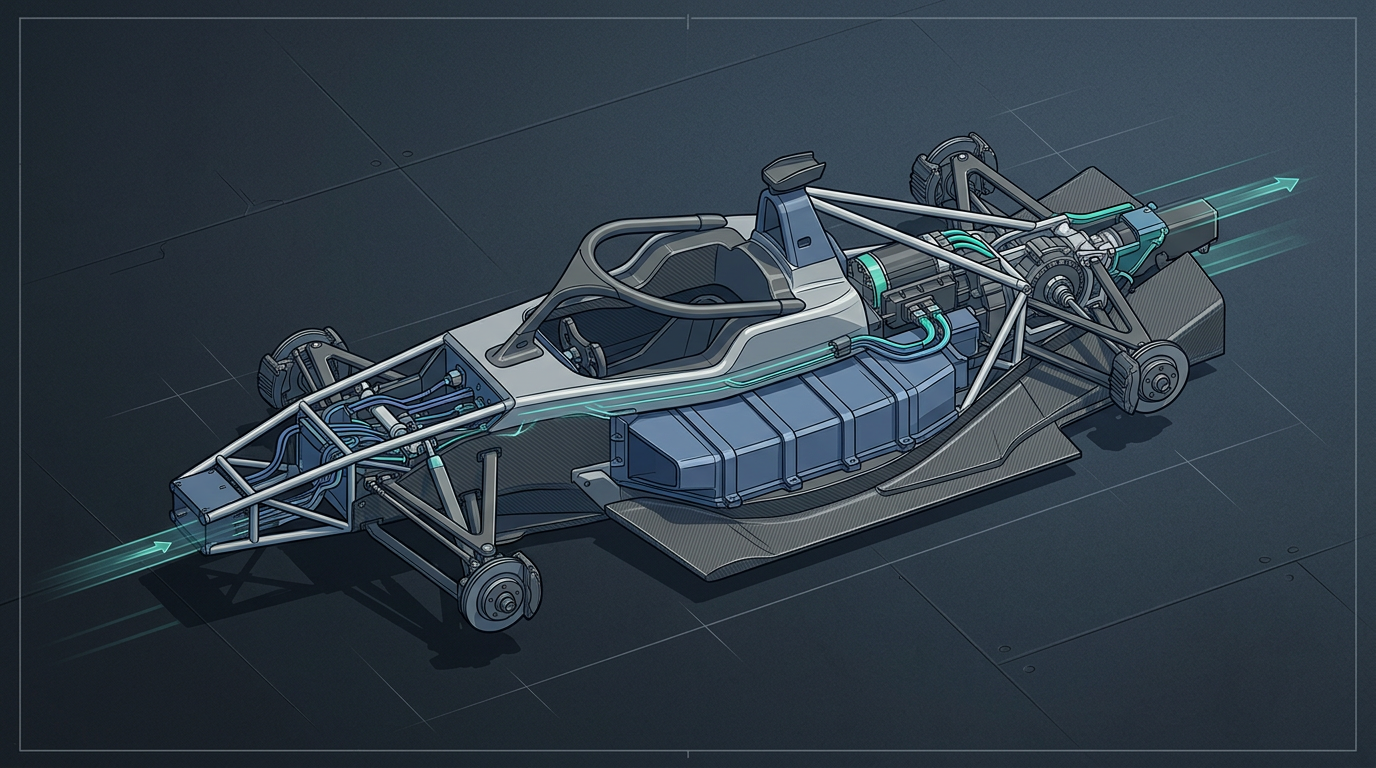
The transition to Formula 1's 2026 technical regulations has been a subject of quiet friction between teams and the FIA for the better part of two years. At the heart of the debate is how the next generation of cars will balance internal combustion with a significantly more powerful electric drivetrain — one that, under the new rules, is expected to deliver roughly three times the electrical output of the current power units. This week, the FIA issued a series of refinements to those rules, aimed at smoothing out the performance bottlenecks that critics feared would hamper the sport's top-end speed.
The primary adjustment centers on "super clipping," a technical phenomenon where the combustion engine is essentially used as a generator to charge the car's battery while the car is in motion. In practical terms, this means the engine diverts a portion of its mechanical output away from the rear wheels and toward energy recovery, creating a drag effect that slows the car precisely when drivers expect peak acceleration. Under the previous draft of the rules, the limits on this recovery threatened to penalize cars at the end of long straights, leading to a visible drop in momentum. The new amendments increase the maximum energy recovery during these phases from 250 kilowatts to 350 kilowatts.
Why Super Clipping Became the Central Concern
The 2026 regulations were conceived as the most ambitious overhaul of F1's hybrid architecture since the turbo-hybrid era began in 2014. The core philosophy is straightforward: shift more of the car's propulsion burden onto the electric motor, reduce fuel flow to the internal combustion engine, and move the sport closer to a credible sustainability narrative. The trade-off, however, was always performance.
Early simulations and wind-tunnel data reportedly alarmed several teams. The concern was not about cornering speed or low-speed acceleration — areas where electric torque excels — but about what happens at the tail end of a long straight at circuits like Monza, Spa-Francorchamps, or Jeddah. If the battery depletes its stored energy before the braking zone, the car must harvest aggressively from the combustion engine to replenish it. That harvesting saps power from the drivetrain at precisely the moment when terminal velocity matters most. The result, in the worst-case scenario, would be cars visibly slowing before a braking zone — an outcome that runs counter to the spectacle F1 sells to broadcasters and fans.
By raising the recovery ceiling from 250 to 350 kilowatts, the FIA gives the power unit more headroom to replenish the battery earlier in the lap, reducing the likelihood that cars arrive at the end of a straight with a depleted energy store and a combustion engine forced into generator mode. It is a calibration, not a redesign.
Incremental Fixes, Structural Tensions
The amendment is notable less for its technical magnitude than for what it reveals about the regulatory process. The 2026 rules have already undergone multiple rounds of revision since their initial framework was published, with aerodynamic specifications — particularly around active surfaces and ground-effect management — also subject to ongoing negotiation. Each revision reflects a tension inherent to modern F1 governance: the FIA sets the technical framework, but teams with hundreds of millions of dollars in development budgets generate simulation data that frequently exposes gaps between regulatory intent and on-track reality.
This dynamic is not new. The 2014 hybrid regulations required their own post-introduction adjustments, and the ground-effect cars introduced in 2022 prompted mid-cycle changes to address porpoising. What distinguishes the 2026 cycle is that these corrections are arriving before the cars have turned a competitive lap — a sign, perhaps, that the feedback loop between regulator and constructor is functioning earlier in the process.
The deeper question remains unresolved. F1's next era asks the sport to reconcile two objectives that exist in genuine tension: a meaningful shift toward electrified propulsion and the preservation of the raw speed that constitutes its core product. The super-clipping fix addresses one symptom of that tension. Whether the broader regulatory architecture holds together under race conditions — across circuits with vastly different energy demands, altitude profiles, and ambient temperatures — is something no simulation can fully answer.
With reporting from The Drive.
Source · The Drive