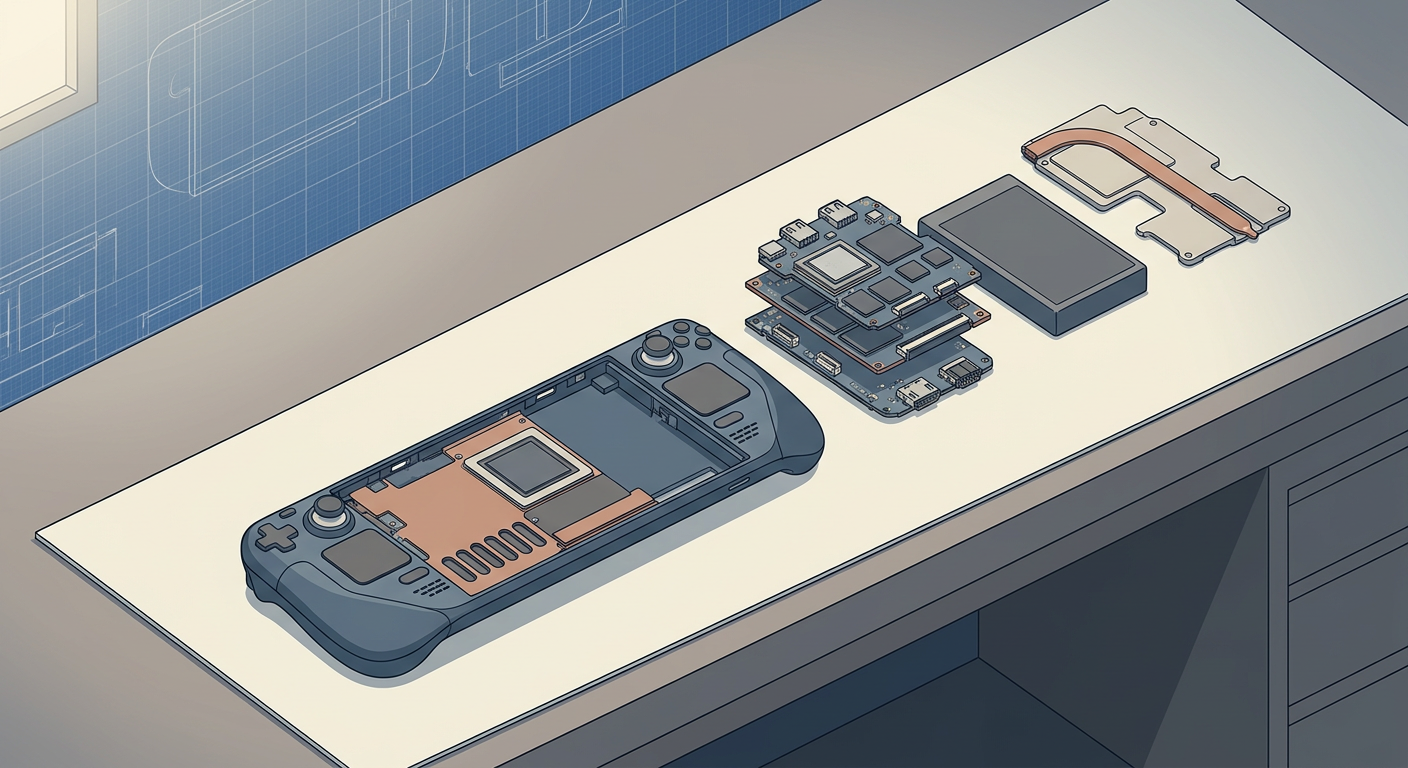
Valve has officially confirmed that development of the successor to its handheld gaming device, the Steam Deck 2, is underway. In recent disclosures, company representatives clarified that the engineering team is currently focused on achieving a generational performance leap rather than settling for the incremental spec bumps that have become the standard in the consumer electronics industry. According to reporting from Hypebeast, the company is deliberately avoiding the pressure of rapid-fire product cycles, choosing instead to wait for silicon advancements that can provide a substantial, non-negotiable improvement in computing power without compromising battery life.
This announcement arrives at a moment when the handheld gaming sector is increasingly crowded with competitors seeking to capture the market through frequent, iterative releases. Valve’s decision to signal that a successor is in development—while simultaneously emphasizing that it is in no rush—serves as a strategic signal to both consumers and the broader hardware ecosystem. It underscores a philosophy where the integrity of the user experience, specifically the balance between performance and portability, remains the primary objective, even if it means delaying the introduction of new hardware by several years.
The Architecture of Patience
The decision to prioritize a "generational leap" over incremental updates is rooted in a fundamental understanding of the constraints inherent in mobile computing. Unlike the smartphone market, where users are often conditioned to accept marginal improvements in processor efficiency or display quality as sufficient justification for an upgrade, the handheld PC gaming market demands a more holistic balance. A portable device is fundamentally constrained by its thermal envelope and battery density. To provide a truly improved experience, Valve must wait for a system-on-a-chip (SoC) architecture that offers a significant leap in performance-per-watt, a metric that does not always track linearly with the rapid release schedules of semiconductor manufacturers.
This patient approach also highlights the difference between a software-first company managing hardware and a traditional hardware manufacturer. Valve’s core business is the Steam platform, an ecosystem that thrives on user retention and software sales. For them, hardware is not merely a revenue stream but a vehicle for expanding the accessibility of their software library. By ensuring that any future hardware release represents a clear, tangible advancement, Valve avoids the risks of market fragmentation and consumer fatigue. The company is not merely selling a device; it is curating an entry point into a vast, established digital library, and that entry point must be sufficiently compelling to justify a transition from the existing, highly capable OLED model.
Lessons from a Hardware Lineage
Valve’s current strategy is informed by a history of both successes and experimental failures. The company’s trajectory, which includes the original Steam Controller and the ambitious but ultimately unsuccessful Steam Machine initiative, has provided a unique set of institutional lessons. The Steam Machine, in particular, demonstrated the complexities of aligning third-party hardware with a unified software experience. By taking control of the entire hardware stack with the Steam Deck, Valve has successfully mitigated those earlier friction points, creating a seamless bridge between the desktop and handheld experience.
These past experiments have instilled a culture of rigorous internal testing and strategic logistics. For instance, the company’s decision to refine its input mechanisms and software compatibility layers before committing to new silicon architectures shows a focus on long-term ecosystem stability. By viewing the Steam Deck not as an isolated product but as a node in a broader hardware lineage, Valve is effectively treating its hardware as a service. This iterative process—where software updates constantly enhance the utility of older hardware—reduces the urgency for a new device, allowing the engineering team the luxury of waiting for the right technological inflection point.
Stakeholders and Market Tensions
The implications of this strategy extend well beyond Valve’s own product roadmap. For competitors, Valve’s refusal to engage in an annual or biennial release cycle creates a challenging market dynamic. Other manufacturers are often forced to push out new hardware to maintain visibility and market share, which can lead to diminishing returns for the consumer. Valve, by contrast, sets a high bar for what constitutes a “new” device, effectively forcing the rest of the industry to justify their own release cadences. This creates a tension between the market’s demand for constant novelty and the engineering reality of meaningful technological progress.
For regulators and industry observers, Valve’s dominance in the PC gaming space through Steam, combined with its increasingly influential role in hardware, remains a subject of ongoing interest. The company’s ability to dictate the pace of innovation in the handheld category is a testament to its unique position as both the gatekeeper of the largest digital storefront and a provider of the most popular hardware for accessing it. As the market for handheld gaming grows, the question of whether this vertically integrated approach will remain the standard or if it will invite increased scrutiny regarding market competition will likely become more pronounced.
Outlook and Open Questions
As the industry looks toward the next generation of handheld silicon, several questions remain regarding the specific technical targets Valve is aiming for. Will the focus remain solely on raw performance, or will the company pivot toward new form factors or display technologies that could redefine the handheld experience? Furthermore, as the line between handheld and desktop performance continues to blur, how will Valve manage the expectations of a user base that increasingly views these devices as their primary gaming machines? The company’s silence on a release window is, in itself, a statement of intent.
Ultimately, Valve’s strategy serves as a reminder that in the high-stakes world of consumer technology, the ability to wait is a competitive advantage. By eschewing the pressure of the quarterly earnings cycle and the demands of rapid-fire product launches, the company is positioning itself to deliver hardware that is not just an update, but a milestone. Whether this strategy will continue to yield the same level of market success remains to be seen, but for now, the focus on generational leaps over incremental gains remains a distinct outlier in a sector defined by the rush to ship.
As Valve continues to refine its hardware ecosystem, the broader question of how much performance the average consumer truly requires in a handheld device remains an open debate. The company is betting that the answer is significantly more than what is currently available, and they are prepared to wait until the technology aligns with that vision. The path forward for the Steam Deck 2 is one defined by silence, preparation, and an uncompromising stance on what constitutes a meaningful generational advancement in the handheld space.
With reporting from Hypebeast
Source · Hypebeast