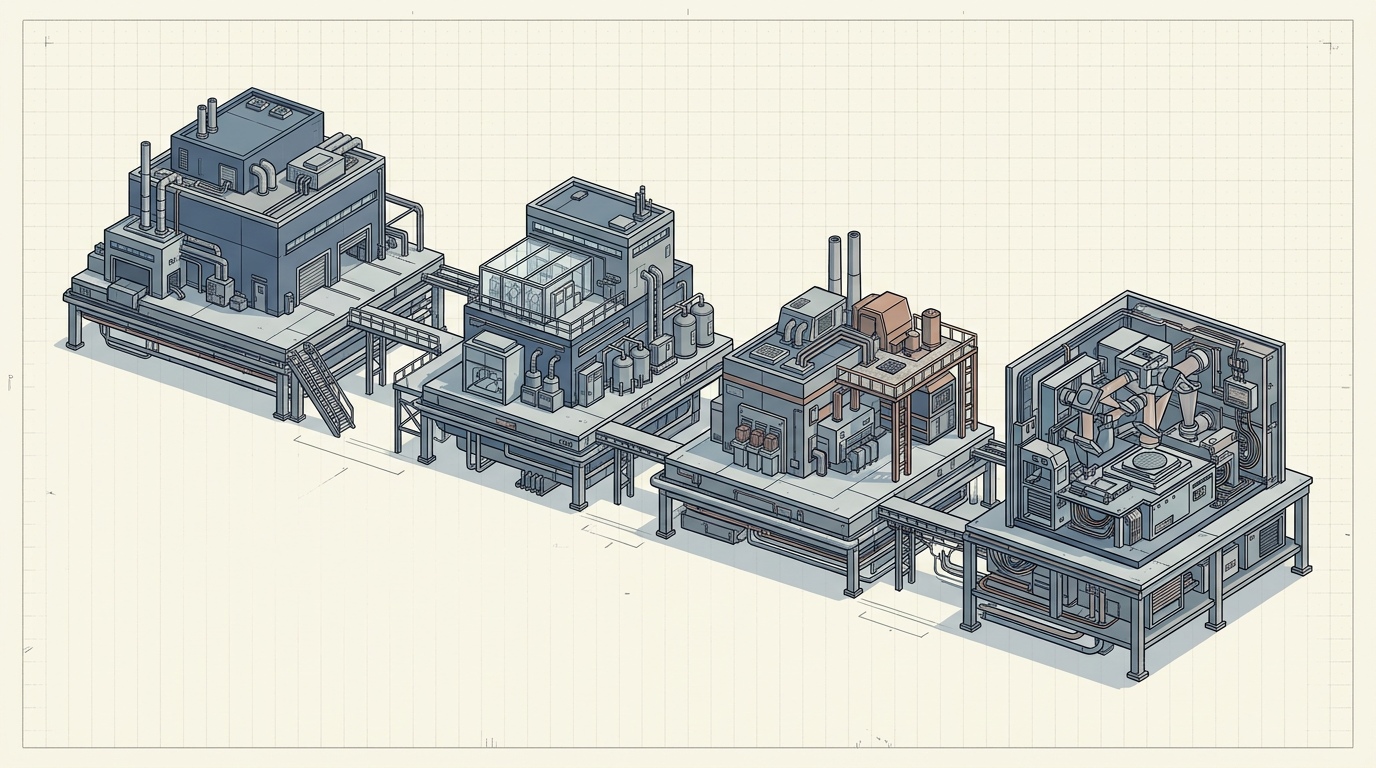
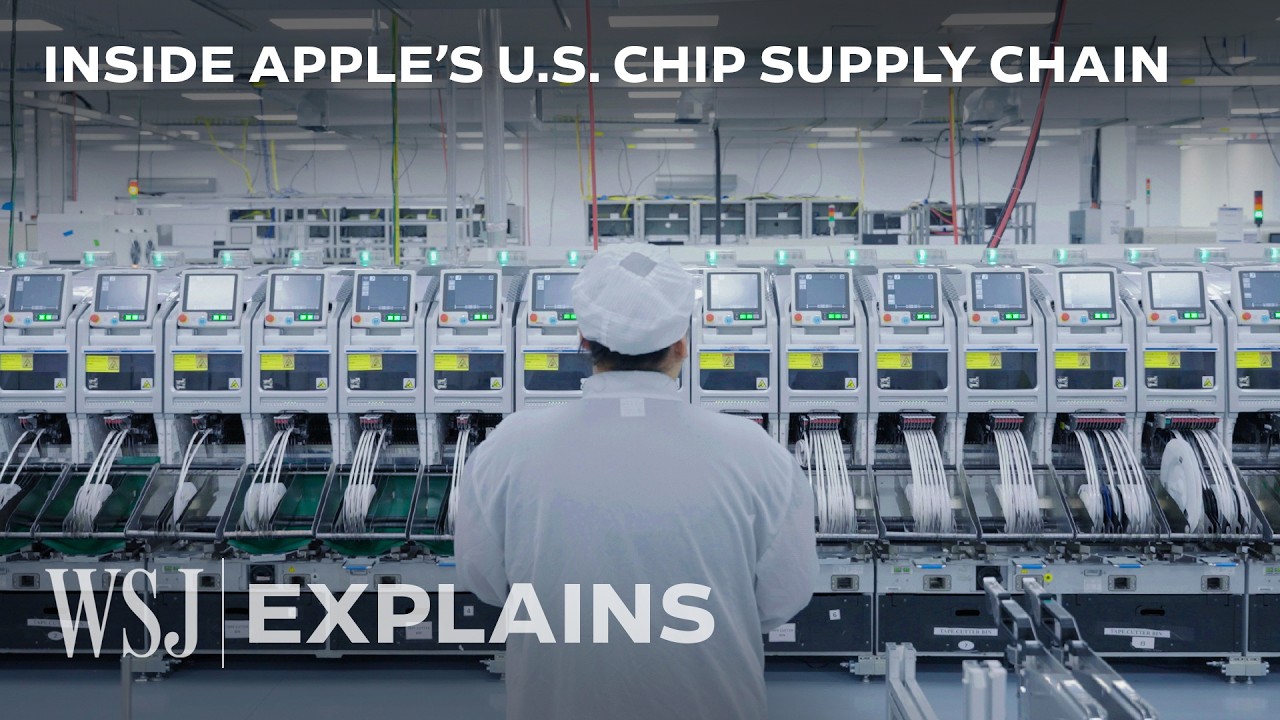
The continuation of Moore’s Law no longer relies on software engineers, but on a singular, highly specialized manufacturing monopoly in Veldhoven, the Netherlands. Advanced Semiconductor Materials International (ASML) has engineered a bottleneck in the global technology supply chain through its mastery of extreme ultraviolet (EUV) lithography. These machines, which cost upward of $200 million each, are not merely iterative improvements over previous manufacturing tools. They are the most complex commercial devices ever constructed, operating at the extreme edge of physics to etch patterns onto silicon wafers at near-atomic scales. Without them, the production of advanced microchips—the bedrock of artificial intelligence, modern military infrastructure, and consumer electronics—simply halts. ASML does not just participate in the semiconductor industry; it dictates its physical limits.
The Physics of Impossible Light
The transition from deep ultraviolet (DUV) to EUV lithography required a fundamental reimagining of optical engineering. Previous generations of chip manufacturing utilized light wavelengths of 193 nanometers. To push transistors closer together, ASML had to generate light at exactly 13.5 nanometers. This wavelength is so short that it is absorbed by almost all matter, including air and traditional glass lenses. Consequently, the entire lithography process must occur within a total vacuum, utilizing a series of flawlessly polished mirrors produced by the German optics firm Zeiss.
Generating this light requires a process that borders on the extreme. Inside the machine, a generator fires microscopic droplets of molten tin into a vacuum chamber at speeds of 200 miles per hour. A high-power carbon dioxide laser strikes each droplet twice: first to flatten it into a pancake shape, and a split-second later to vaporize it into a plasma that emits the crucial 13.5-nanometer EUV light. This violent process, repeating 50,000 times per second, effectively mimics the conditions of a localized star. It is a staggering feat of applied physics that took ASML and its research partners over two decades and billions of dollars to commercialize.
A Geopolitical Chokepoint
The sheer capital and intellectual density required to build an EUV machine has insulated ASML from conventional market competition. Unlike the early days of silicon manufacturing, where multiple American and Japanese firms vied for dominance, the modern lithography market is a natural monopoly. ASML relies on a network of nearly 5,000 specialized suppliers to produce the 100,000 components required for a single EUV system. This distributed supply chain makes the technology nearly impossible for a rival nation or corporation to reverse-engineer, drawing a stark contrast to the rapid software cloning seen in the broader tech sector.
Consequently, these machines have transformed from industrial equipment into critical vectors of foreign policy. The United States government has actively lobbied the Netherlands to restrict the export of ASML’s most advanced systems to China, recognizing that access to EUV technology is a prerequisite for developing next-generation artificial intelligence and advanced military hardware. Companies like TSMC, Samsung, and Intel are entirely dependent on ASML’s delivery schedules to maintain their own roadmaps. The geopolitical center of gravity for the digital age is not located in a data center in California, but on a factory floor in North Brabant.
The mastery of extreme ultraviolet lithography demonstrates that the frontier of computing is fundamentally constrained by hardware, not software. As the semiconductor industry looks toward high numerical aperture EUV systems to push atomic boundaries even further, the reliance on a single corporate entity deepens. ASML’s monopoly is a testament to unparalleled engineering, but it also reveals the fragility of a global economy balanced on a single point of failure. The future of artificial intelligence will only advance as quickly as these mirrors can reflect light.
Source · The Frontier | Technology