Adobe's latest experimental tool, Asset Amplify, offers a window into a future where brand design is not assembled piece by piece but generated wholesale — entire websites, social media assets, and print collateral produced by AI and calibrated to the sensibilities of a specific demographic cohort. The tool was unveiled at the 2026 Adobe Summit as part of the company's long-running "Sneaks" program, a showcase for internal UX experiments. Historically, only about 30% of Sneaks projects have advanced to public release, making Asset Amplify more a statement of intent than a product announcement.
The premise is straightforward: a brand inputs its identity guidelines, selects a target audience — Gen Z, millennials, or another defined group — and the system generates a coordinated set of marketing materials designed to resonate with that cohort. The ambition is not merely to assist a designer but to function as what Adobe frames as an autonomous digital art director.
From creative suite to design infrastructure
Adobe's trajectory over the past several years has been a steady migration from selling tools to selling outcomes. The company built its dominance on professional software — Photoshop, Illustrator, InDesign — that required skilled operators to produce results. The shift toward generative AI inverts that model. Tools like the Firefly family of models, introduced in 2023, began automating discrete creative tasks: generating images from text prompts, extending backgrounds, remixing color palettes. Asset Amplify extends that logic from individual assets to entire brand ecosystems.
The tool sits alongside other recent enterprise-facing initiatives, including the Adobe AI Foundry, a consultancy-style offering aimed at Fortune 2000 companies that helps them build custom AI models trained on their own intellectual property. Together, these products suggest Adobe is repositioning itself less as a software vendor and more as an infrastructure layer for corporate brand production — a platform where the creative brief goes in and finished campaigns come out.
This repositioning carries strategic logic. Adobe's core customer base of professional designers is finite. Enterprise clients operating at global scale, by contrast, have an almost unlimited appetite for content variations: different markets, different platforms, different demographics, each requiring tailored assets. Automating that matrix is a problem well-suited to generative AI, and Adobe is betting that its existing relationships with creative teams give it a distribution advantage over pure-play AI startups attempting the same thing.
The tension between personalization and homogeneity
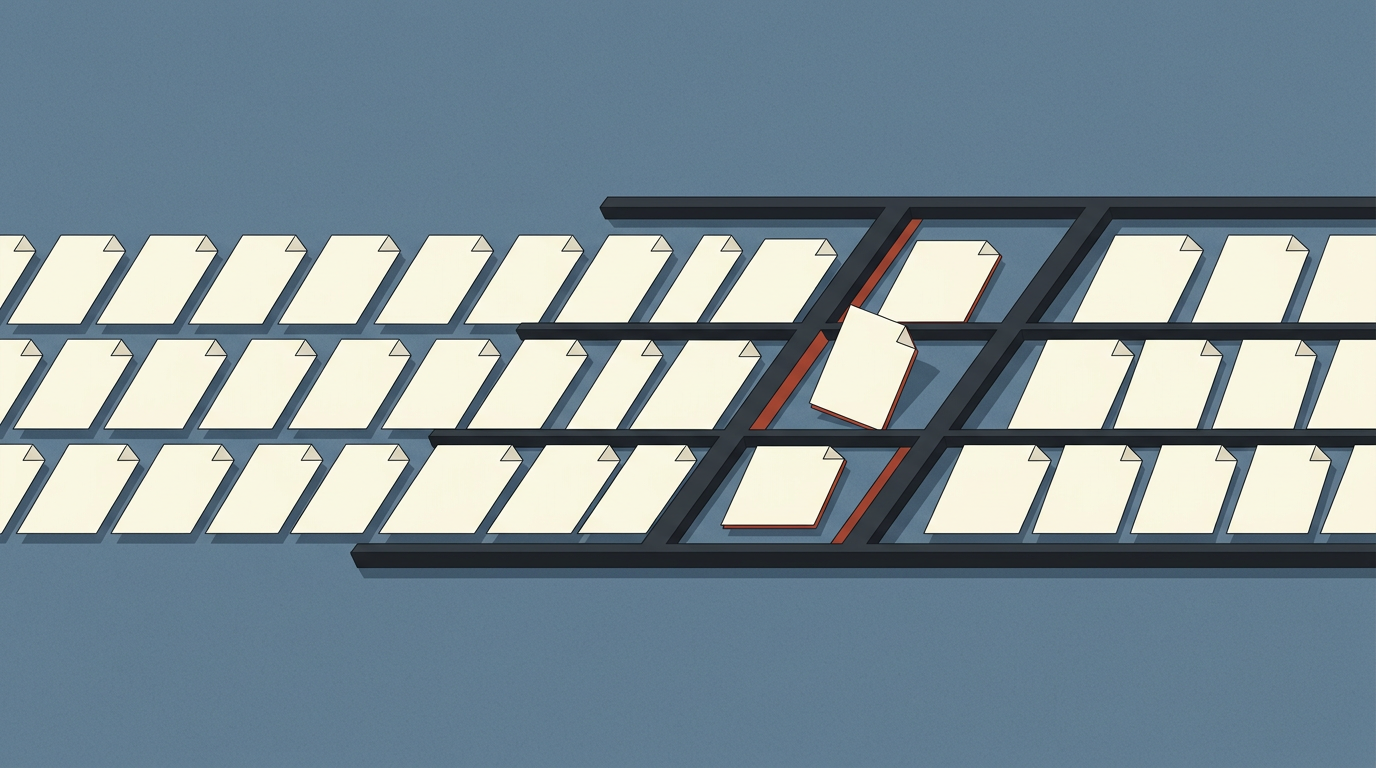
The promise of demographic-specific automation raises a question that Adobe's marketing materials leave unaddressed: whether AI-generated personalization at scale produces genuine differentiation or merely the appearance of it. If every brand targeting Gen Z feeds similar demographic signals into similar models, the outputs risk converging on a shared aesthetic — the same rounded typefaces, the same color palettes, the same tonal register — creating a paradox where hyper-personalization leads to visual homogeneity.
This is not a new tension. The rise of templated website builders in the 2010s produced a recognizable sameness across small-business web design. Canva's democratization of graphic design had a similar flattening effect on social media aesthetics. Generative AI operates at a different scale and sophistication, but the underlying dynamic — tools that lower the barrier to competent design also lower the barrier to generic design — remains.
There is also the question of what demographic-specific design means in practice. Generational cohorts like "Gen Z" and "millennials" are marketing constructs that flatten enormous internal diversity. An AI model trained to optimize for a cohort's aggregate preferences may produce assets that perform well in A/B testing while saying nothing distinctive about the brand itself. The efficiency gains are real; whether they come at the cost of creative signal is harder to measure.
Adobe's Sneaks program is designed to test ideas without committing to them, and Asset Amplify may never ship as a product. But the experiment reveals where the center of gravity in enterprise design is moving: toward systems that treat creative output as a logistics problem, optimizing for speed, consistency, and demographic fit. Whether that optimization serves brands well in the long run — or whether it erodes the distinctiveness that branding is supposed to create — is a question the industry has not yet been forced to answer.
With reporting from Fast Company.
Source · Fast Company