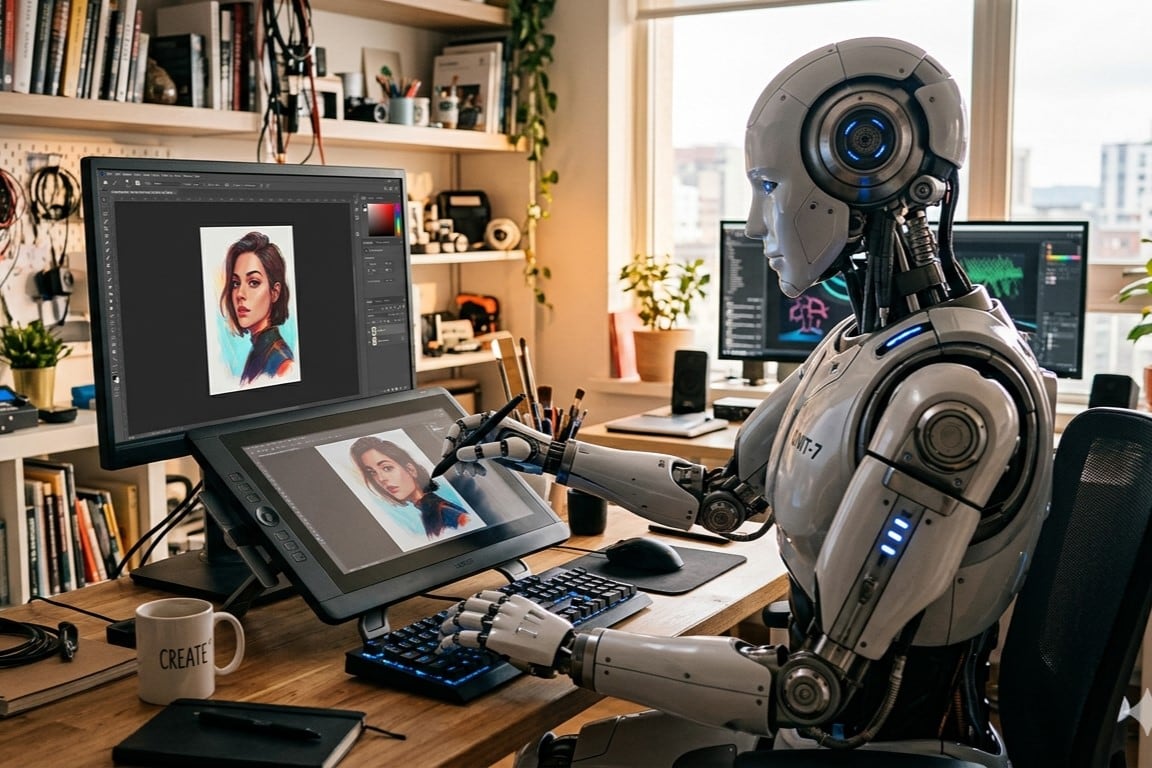
Anthropic is expanding its reach beyond text-based reasoning with the launch of Claude Design, a dedicated tool intended to bridge the gap between natural language prompts and functional visual prototypes. The new offering allows users to generate sketches, interactive mockups, and presentation slides directly within the Claude interface, signaling a shift toward more integrated, visual-first workflows for enterprise teams.
Powered by the Claude Opus 4.7 model, the tool utilizes a dual-pane architecture: a chat interface for conversational instruction and a "canvas" where the AI renders the design in real-time. According to the company, this latest model offers significant improvements in high-quality image processing and instruction-following precision, while maintaining rigorous safety protocols to detect high-risk cybersecurity requests.
From generative output to contextual design partner
The system is designed to be deeply contextual rather than merely generative. Claude Design can automatically inherit a company's existing design language, ensuring that new prototypes remain brand-compliant. Users can refine outputs by providing feedback, uploading screenshots, or sharing existing codebases and design files. This iterative process allows for granular adjustments — modifying color palettes, adding functional buttons, exploring alternative layouts — without losing the progress of the primary project.
This approach reflects a broader pattern in the AI industry: the transition from tools that produce isolated outputs to systems that participate in sustained workflows. The distinction matters. A model that generates a single mockup on command is useful; one that retains context across multiple rounds of revision, respects brand constraints, and integrates with existing assets begins to function more like a junior team member than a utility. The dual-pane architecture — conversation on one side, live rendering on the other — is itself a design choice that mirrors how product teams already operate, with verbal direction flowing alongside visual iteration.
The competitive landscape for AI-assisted design has grown crowded. Figma introduced its own AI-powered features to accelerate prototyping within its established platform. Adobe has embedded generative capabilities across its Creative Cloud suite. Startups such as Galileo AI have targeted the text-to-UI space specifically. What distinguishes Anthropic's entry is less the capability itself than the integration point: Claude Design lives inside a general-purpose AI assistant rather than a specialized design application. For teams already using Claude for research, code generation, or strategic analysis, the addition of visual prototyping reduces the number of tools required to move from concept to artifact.
The agentic workspace and its friction points
By positioning Claude as a collaborative designer rather than a simple chatbot, Anthropic is moving closer to an "agentic" workspace where AI manages the transition from a rough idea to an exportable asset. Once a design is finalized, it can be shared across teams or exported for use in external development environments, streamlining the traditional friction between product ideation and technical execution.
The strategic logic is clear. Enterprise software spending increasingly favors platforms that consolidate tasks under a single interface. If an AI assistant can draft a product brief, write the supporting code, and now produce the visual prototype, the argument for platform lock-in strengthens considerably. Anthropic, which has positioned itself as the safety-conscious alternative in the foundation model race, appears to be betting that trust built through its alignment research can translate into enterprise adoption across an expanding surface area of use cases.
Still, meaningful questions remain. Design professionals tend to demand precise control over output — pixel-level adjustments, typographic nuance, interaction states — that conversational interfaces have historically struggled to deliver. Whether Claude Design can satisfy the expectations of trained designers, or whether it primarily serves non-designers who need "good enough" prototypes to communicate ideas, will shape its actual adoption curve. There is also the question of how brand-compliance features perform at scale: inheriting a design system is one thing; faithfully applying it across dozens of edge cases in a complex product is another.
The tension at the center of Claude Design is the same one running through the broader AI tooling market: the gap between impressive demonstration and reliable daily use. Anthropic has placed a deliberate bet that collapsing the distance between language and visual output inside a single assistant creates enough value to pull design workflows away from purpose-built tools. Whether that bet holds depends less on the model's raw capability than on the tolerance enterprise teams have for trading specialization for convenience.
With reporting from La Nación.
Source · La Nación — Tecnología