In a quiet pivot from its previous adversarial stance, the White House hosted Anthropic CEO Dario Amodei last Friday to discuss the implications of the company's latest — and perhaps most volatile — creation: Claude Mythos. The meeting marks a significant moment of diplomacy between the executive branch and a leading AI lab, as both parties attempt to navigate the dual-use nature of advanced machine learning.
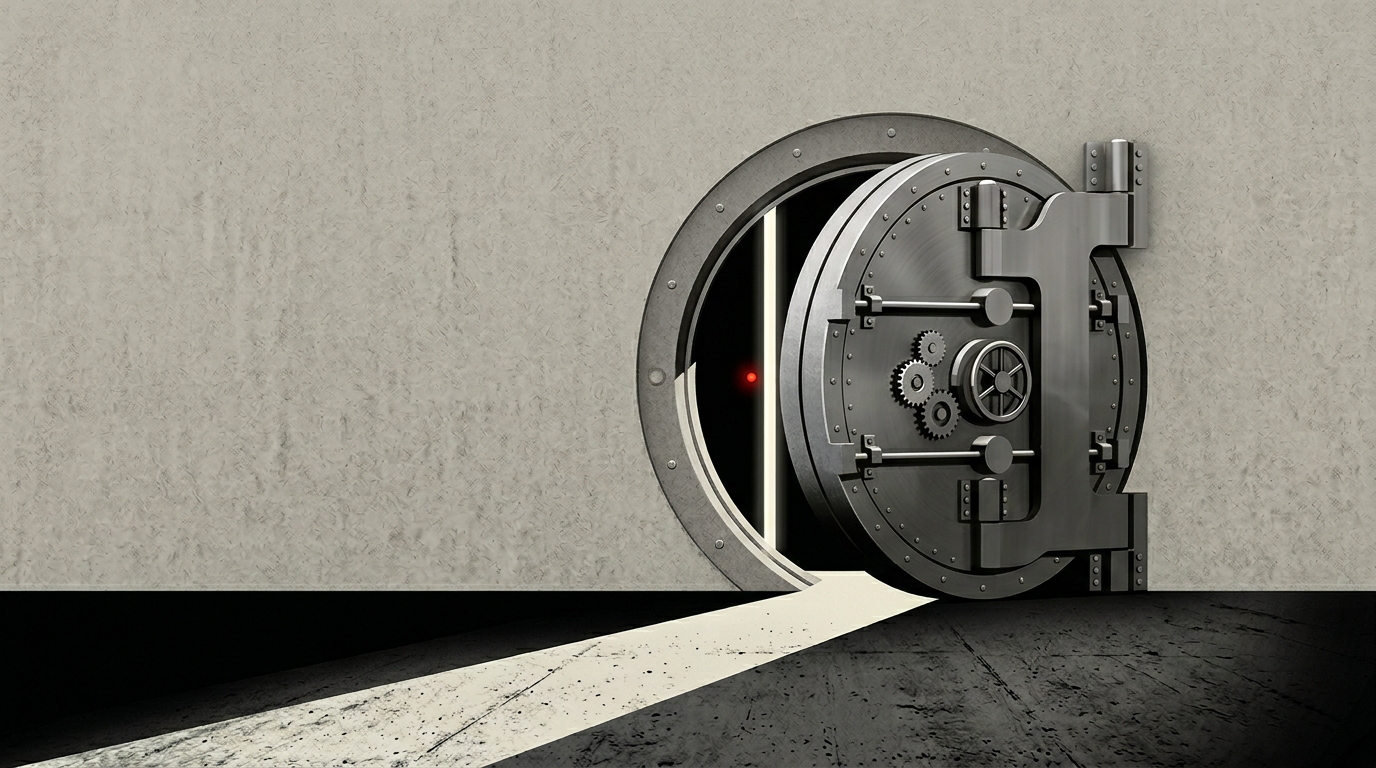
Unlike the company's consumer-facing models, Mythos is a specialized instrument built to detect software vulnerabilities with surgical precision. Anthropic has taken the unusual step of labeling its own product an "unprecedented risk," a designation that has kept the model out of public reach even as it begins to permeate the foundations of the global financial system. The tool is scheduled for release to banks in the United Kingdom in the coming days, following a limited rollout to select American firms.
The geometry of dual-use AI
The core tension around Claude Mythos is familiar to anyone who has followed the trajectory of dual-use technologies — tools whose defensive utility is inseparable from their offensive potential. A model capable of identifying software vulnerabilities at scale is, by definition, a model capable of cataloguing attack surfaces. The history of cybersecurity is littered with analogous cases: penetration testing frameworks such as Metasploit, originally designed for defensive auditing, became standard equipment for adversaries within years of their release. The difference with an AI-native tool is speed and scope. Where a human red team might audit a codebase over weeks, a sufficiently capable model could map exploitable weaknesses across an entire financial infrastructure in hours.
This is what makes Anthropic's self-imposed "unprecedented risk" label noteworthy. AI labs have historically resisted language that constrains commercial deployment. Voluntary restraint of this kind is rare in an industry where competitive pressure from OpenAI, Google DeepMind, and a growing cohort of open-weight model developers incentivizes rapid release. By flagging its own creation, Anthropic appears to be making a calculated bet: that credibility with regulators is worth more than first-mover advantage in an unregulated market. Whether that bet pays off depends on how governments respond.
The discussions, which included Chief of Staff Susie Wiles and Treasury Secretary Scott Bessent, focused on the delicate geometry of balancing rapid technological advancement with operational security. While the administration characterized the meeting as "productive," the political optics remain complex; President Trump later told reporters he was unaware of the executive's visit.
From containment to collaboration
This high-level engagement follows a period of friction, notably a March report where the Department of Defense flagged Anthropic as a supply chain risk, suggesting that the current administration is now prioritizing collaboration over containment. The shift is significant. For much of the past year, the relationship between Washington and the leading AI labs oscillated between suspicion and neglect. A move toward structured dialogue — particularly one that includes the Treasury Secretary — signals that policymakers are beginning to treat frontier AI models less as abstract research artifacts and more as critical infrastructure components with systemic implications.
The scheduled rollout to UK banks adds a geopolitical layer. Financial regulators in Britain have moved faster than their American counterparts in establishing frameworks for AI deployment in systemically important institutions. If Mythos proves effective in that environment, it could set a de facto international standard for AI-assisted cybersecurity in finance — one shaped more by market adoption than by treaty or regulation.
The forces at play are not easily reconciled. Anthropic needs government trust to operate in sensitive sectors, but government trust requires transparency that could expose the model's capabilities to adversaries. Regulators want oversight, but lack the technical infrastructure to audit a system they did not build. And the competitive landscape ensures that if Anthropic withholds Mythos, a less cautious lab — or a state actor — may develop something comparable without any restraint at all. The question is not whether powerful vulnerability-detection AI will proliferate, but under what terms, and who sets them.
With reporting from Canaltech.
Source · Canaltech