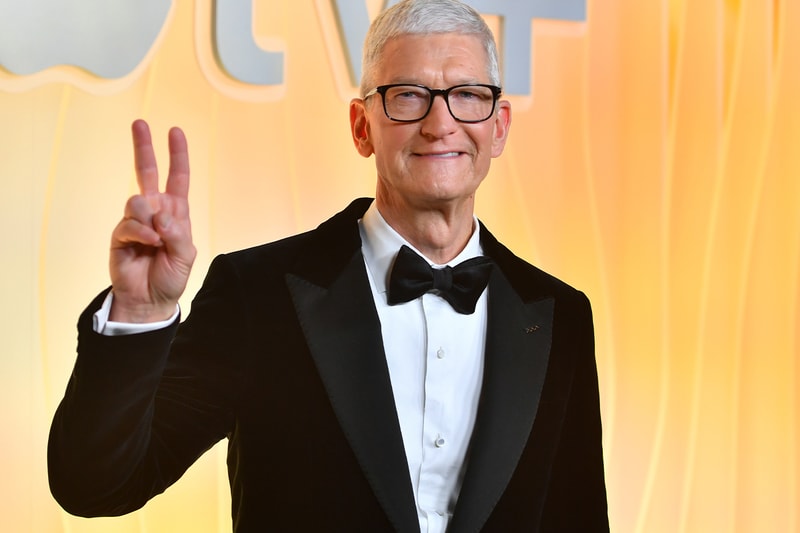
Apple has formalized its long-gestating succession plan. Tim Cook, the architect of Apple's trillion-dollar expansion, will transition to Executive Chairman of the Board on September 1, 2026. Taking the reins as CEO is John Ternus, the current Senior Vice President of Hardware Engineering. The move represents a deliberate, multi-year handoff designed to maintain the company's famously disciplined operational culture.
Since taking over from Steve Jobs in 2011, Cook has transformed Apple from a hardware powerhouse into a sprawling ecosystem of services and wearable technology. Under his tenure, the company's market valuation soared from $350 billion to $4 trillion, driven by the ubiquity of the iPhone and the successful introduction of the Apple Watch and Vision Pro. Cook's departure from day-to-day operations marks the conclusion of an era defined by supply-chain mastery and fiscal dominance.
A succession built on operational continuity
The choice of a sitting hardware executive signals that Apple's board views the next chapter of the company through the lens of product, not platform. In the broader technology industry, CEO transitions at companies of Apple's scale are rare and consequential. Microsoft's handoff from Steve Ballmer to Satya Nadella in 2014 reshaped that company's strategic identity within a few quarters, pivoting hard toward cloud infrastructure and enterprise services. Google's restructuring under Alphabet in 2015 similarly redrew lines of authority and accountability. Apple's approach appears more conservative by design — a lateral shift that keeps Cook inside the boardroom while elevating a leader steeped in the same engineering culture that has defined the company's product cadence for decades.
Ternus, a twenty-year veteran of the company, has overseen the critical transition from Intel processors to Apple's own silicon architecture — a multi-year program that touched every product line from the MacBook Air to the Mac Pro. That transition is widely regarded as one of the most complex hardware migrations in the consumer electronics industry's recent history, requiring simultaneous coordination across chip design, thermal engineering, software emulation, and supply chain logistics. His track record suggests a leader comfortable with large-scale technical programs that carry significant execution risk.
The Executive Chairman role Cook will assume is not ceremonial in Apple's context. The company has not had an Executive Chairman since Arthur Levinson held the non-executive chairmanship. Cook's continued presence on the board provides a bridge of institutional knowledge, particularly on matters of government relations, supply chain partnerships in East and Southeast Asia, and the services business he helped build into one of Apple's fastest-growing revenue segments.
The strategic questions Ternus inherits
The transition arrives at a moment when Apple faces a set of overlapping strategic pressures. In spatial computing, Vision Pro has established a technical benchmark but has yet to find the mass-market adoption curve that defined the iPhone or AirPods. In generative artificial intelligence, Apple has moved more cautiously than peers, integrating on-device models while competitors have raced to ship cloud-dependent AI features. Ternus will need to navigate both fronts — one demanding hardware innovation at lower price points, the other requiring a coherent AI strategy that fits Apple's privacy-first positioning.
Regulatory headwinds add another layer of complexity. Antitrust scrutiny of App Store economics continues in the European Union and the United States, and any new CEO will inherit the task of managing compliance with the EU's Digital Markets Act while protecting a services margin structure that has become central to Apple's financial profile.
There is also the question of organizational gravity. Apple's hardware engineering division has historically operated as the center of mass around which software, services, and design orbit. Elevating a hardware leader to the CEO office could reinforce that gravitational pull — or it could create tension with the services and AI teams whose influence has grown substantially under Cook.
Whether Ternus governs as a product-first CEO in the mold of Jobs or as an operational steward continuing Cook's playbook remains an open question. The structure of the transition — gradual, overlapping, with Cook still in the room — suggests Apple is betting that continuity itself is the strategy. Whether that bet holds in an industry being reshaped by generative AI and regulatory intervention is the tension worth watching.
With reporting from Hypebeast.
Source · Hypebeast