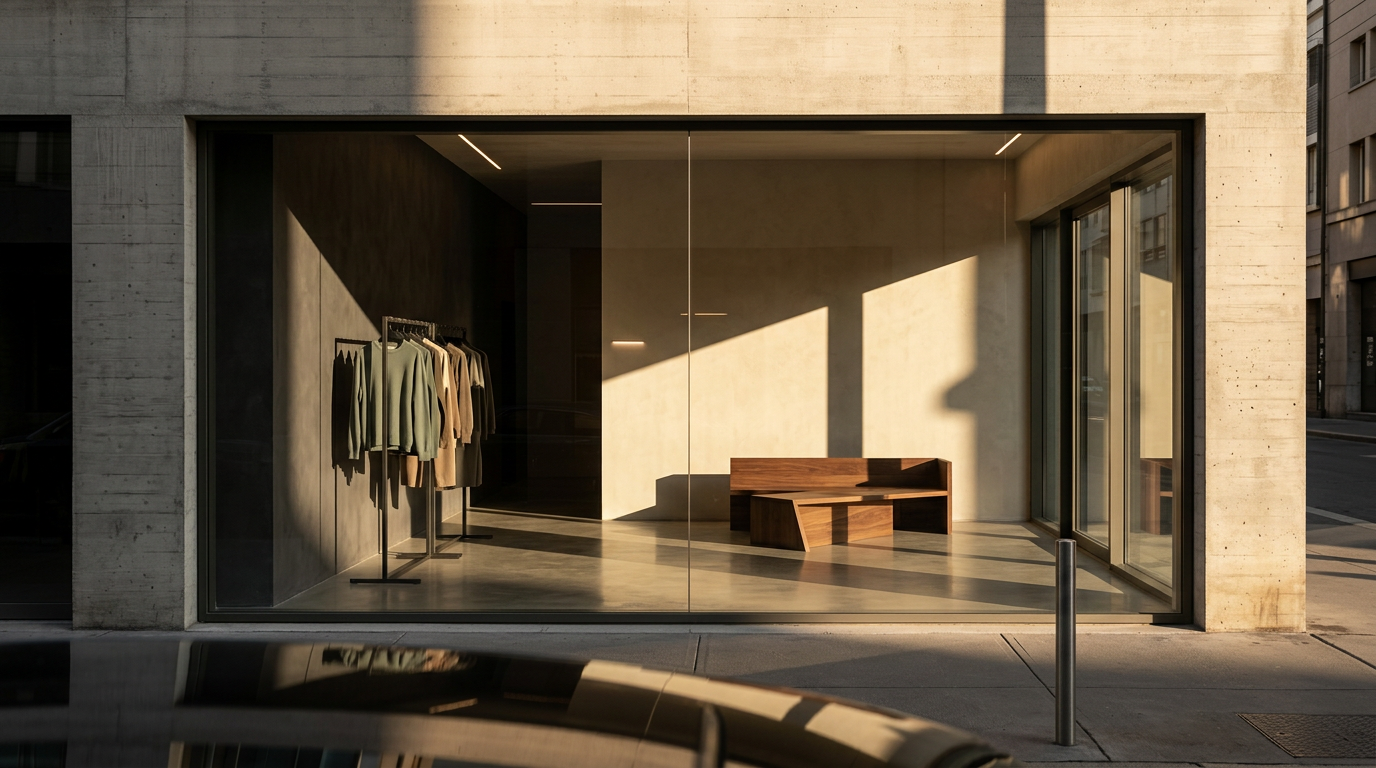
A growing cohort of independent retailers in cities like Brooklyn and Berlin is making a deliberate choice that runs counter to two decades of conventional retail wisdom: they are refusing to sell online. Rather than building digital storefronts, these shop owners are channeling their resources into curated physical spaces, betting that the in-store experience itself is the product — and that it can sustain a viable business without e-commerce revenue.
The trend, as reported by Business of Fashion, suggests that survival without an online presence does not require the global brand equity of a luxury house like Chanel or Hermès. Smaller, independently owned stores are finding that a distinctive physical environment — careful merchandising, knowledgeable staff, a sense of place — can generate enough foot traffic and loyalty to keep the lights on. The model challenges the assumption, widespread since the mid-2010s, that omnichannel presence is a prerequisite for retail survival.
The case against digital storefronts
The logic behind going online has always been straightforward: e-commerce removes geographic constraints, expands the addressable market, and allows a shop to generate revenue around the clock. But for small, independent operators, the costs of that expansion are not trivial. Maintaining a functional online store involves platform fees, shipping logistics, returns management, digital marketing spend, and the constant pressure to compete on price with larger players who benefit from scale. For a single-location retailer with a small team, these demands can dilute the very thing that makes the business distinctive.
By opting out, these retailers are effectively narrowing their market to the people who walk through the door — and then working to make that experience worth the trip. The strategy echoes a longer history in retail. Before the e-commerce era, neighborhood shops in cities like Paris, Tokyo, and New York built durable businesses on reputation, curation, and personal relationships with customers. The independent bookstore, the specialty grocer, the carefully stocked boutique — all operated for decades without a global audience, sustained by local demand and word of mouth.
What is notable about the current wave is that it is a conscious rejection of available technology rather than a pre-digital default. These retailers are aware of what e-commerce offers and have decided the trade-offs do not serve their model.
Physical retail as differentiation
The decision also reflects a broader shift in how consumers — particularly in dense urban markets — relate to shopping. As e-commerce has become frictionless and ubiquitous, the physical store has acquired a different kind of value. It is no longer simply a point of transaction; it functions as a space for discovery, social interaction, and sensory engagement that a screen cannot replicate. For independent retailers, this shift is an advantage. A large chain can replicate its digital experience across thousands of locations, but a single shop with a distinct point of view is, by definition, scarce.
Brooklyn and Berlin are not arbitrary settings for this phenomenon. Both cities have dense, walkable neighborhoods with strong local identities and consumer bases that tend to value independent commerce. The cultural infrastructure — the cafés, galleries, and creative communities surrounding these shops — creates an ecosystem that rewards physical presence in ways that a fulfillment warehouse in a suburban logistics park cannot.
The strategy is not without risk. A store with no online presence is entirely dependent on local economic conditions, foot traffic patterns, and the continued willingness of customers to make a trip. It has no fallback channel during disruptions — a lesson many physical-only retailers learned during pandemic-era lockdowns. The absence of an online catalog also limits discoverability; a potential customer who hears about the shop but cannot browse its inventory may never visit.
Still, the retailers profiled in this trend appear to have made a calculated bet: that depth of experience outweighs breadth of reach, and that scarcity — of both product and access — can itself become a draw. Whether this model scales beyond a handful of well-positioned urban neighborhoods, or whether it remains a niche strategy suited to specific cultural conditions, is the open question. The tension between reach and resonance is not new in retail. What is new is that a generation of shop owners, fully literate in digital tools, is choosing resonance — and finding that customers are showing up.
With reporting from Business of Fashion.
Source · Business of Fashion