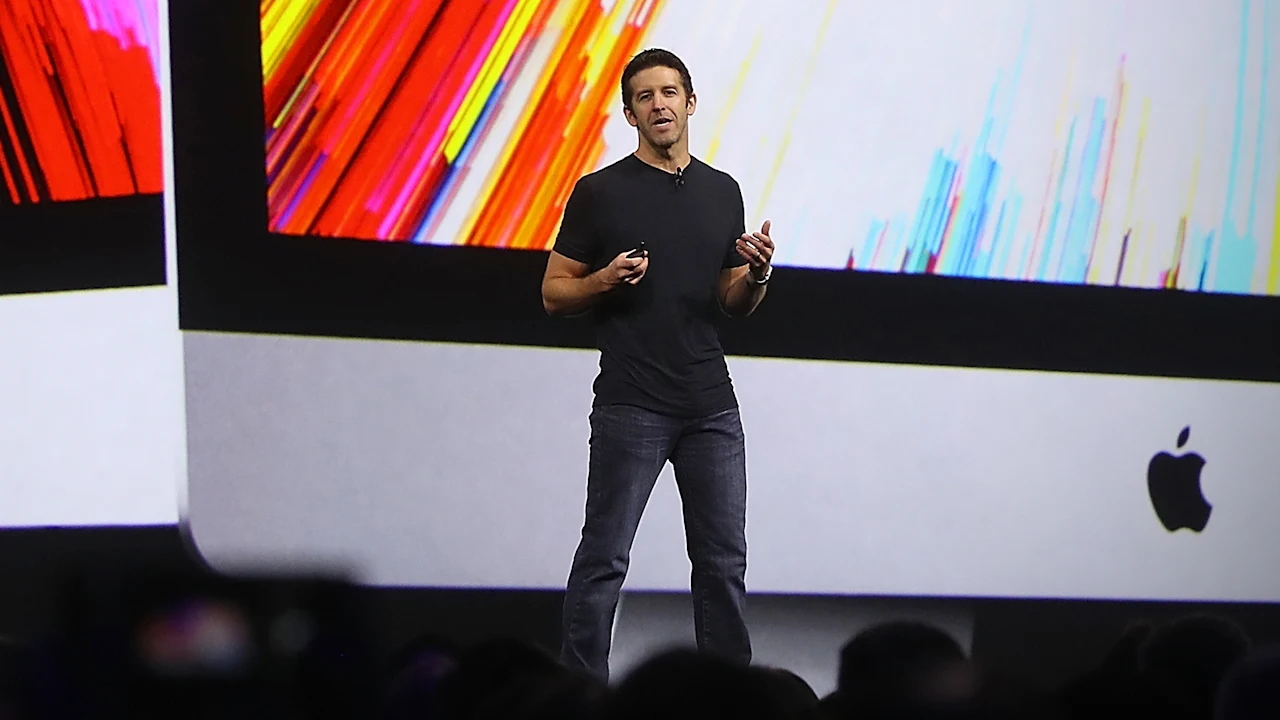
Apple announced that John Ternus, the company's senior vice president of hardware engineering, will succeed Tim Cook as chief executive officer in September. Cook, who has led the company since 2011 and presided over its rise to become the world's most valuable public corporation, will transition to the role of executive chairman. In a public letter, Cook described Ternus as a "brilliant engineer" whose 24-year tenure at Apple has been defined by an obsession with the granular details of product design.
The appointment marks the third CEO transition in Apple's history as a modern technology giant. Steve Jobs handed the reins to Cook in August 2011, weeks before his death, choosing an operations specialist to steward a company that had just reinvented the smartphone. Now Cook passes leadership to a hardware engineer — a profile closer to Jobs's own instincts than to Cook's supply-chain discipline.
From Supply Chain to Silicon
Cook's fourteen-year tenure reshaped Apple less through product breakthroughs than through institutional scale. Under his watch, the company built a services division — spanning the App Store, Apple Music, iCloud, and Apple TV+ — that became a revenue engine in its own right. Gross margins expanded, share buybacks returned hundreds of billions to shareholders, and the supply chain Cook originally built as chief operating officer became a competitive moat few rivals could replicate.
Ternus represents a different lineage. Since taking charge of hardware engineering in 2013, he oversaw the development and launch of Apple Silicon, the proprietary chip architecture that replaced Intel processors across the Mac lineup beginning in late 2020. That transition was more than a component swap: it unified the silicon foundation of nearly every Apple device, from the MacBook Air to the highest-end Mac Pro, under a single design philosophy rooted in performance-per-watt efficiency. The strategic significance was considerable — it reduced Apple's dependence on a third-party supplier for its most critical component and gave the hardware team direct control over the integration between chip and system.
Ternus also played a central role in the development of Apple Vision Pro, the mixed-reality headset that marked the company's first entry into an entirely new product category since the Apple Watch. His early career work in virtual reality, predating his time at Apple, lends biographical coherence to that bet.
The Engineer's Dilemma
The choice to elevate a hardware leader carries implicit strategic weight. Apple's most pressing challenges are not primarily operational. The smartphone market is mature, with replacement cycles lengthening and differentiation between flagship devices narrowing across the industry. Growth increasingly depends on either expanding services revenue — a domain Cook cultivated — or delivering new hardware categories compelling enough to create fresh demand.
Ternus inherits both mandates. The services business requires a CEO who can manage relationships with regulators, content partners, and developers — a diplomatic portfolio that Cook handled with notable steadiness through antitrust scrutiny in the United States and the European Union. The product pipeline, meanwhile, demands conviction about which technologies deserve Apple-scale investment and which do not.
Historically, technology companies that shift from operator-CEOs to product-minded leaders do so when the board perceives that the next phase of value creation depends on invention rather than optimization. Microsoft's appointment of Satya Nadella in 2014, while not a pure hardware analogy, reflected a similar institutional judgment: that the company's future lay in a platform bet — cloud computing — that required a leader steeped in the relevant technology.
Whether Ternus's engineering sensibility translates into the kind of institutional leadership Apple requires is not a settled question. The company's scale — its workforce, its supplier ecosystem, its regulatory exposure — demands managerial range that extends well beyond product taste. Cook's continued presence as executive chairman may provide continuity on the operational and governmental fronts, but the balance of authority between a new CEO and an executive chairman who built the modern Apple will itself be a dynamic worth watching.
The tension at the core of this transition is structural: Apple must simultaneously defend the enormous cash-generating machine Cook built and justify a valuation that assumes the next cycle of transformative products is already underway. Ternus now owns both sides of that equation.
With reporting from Fast Company.
Source · Fast Company