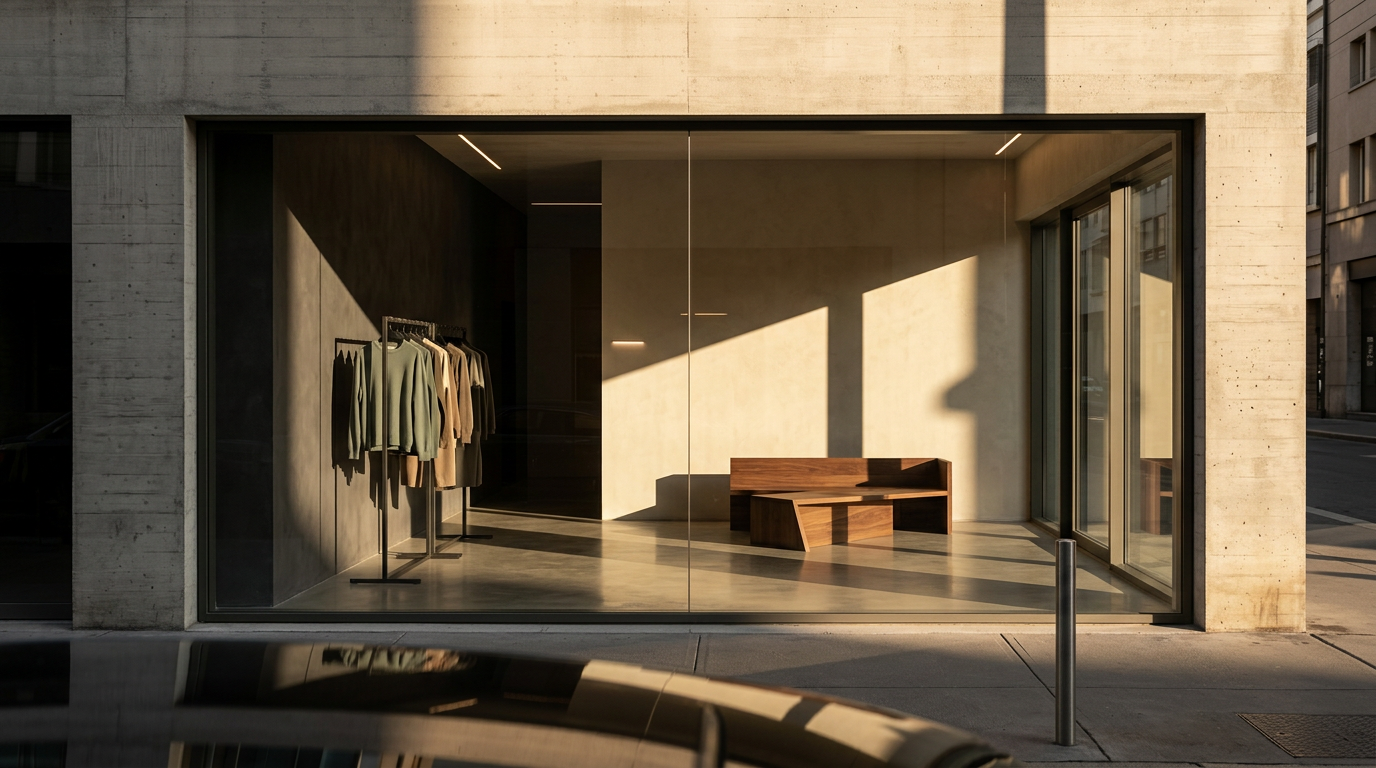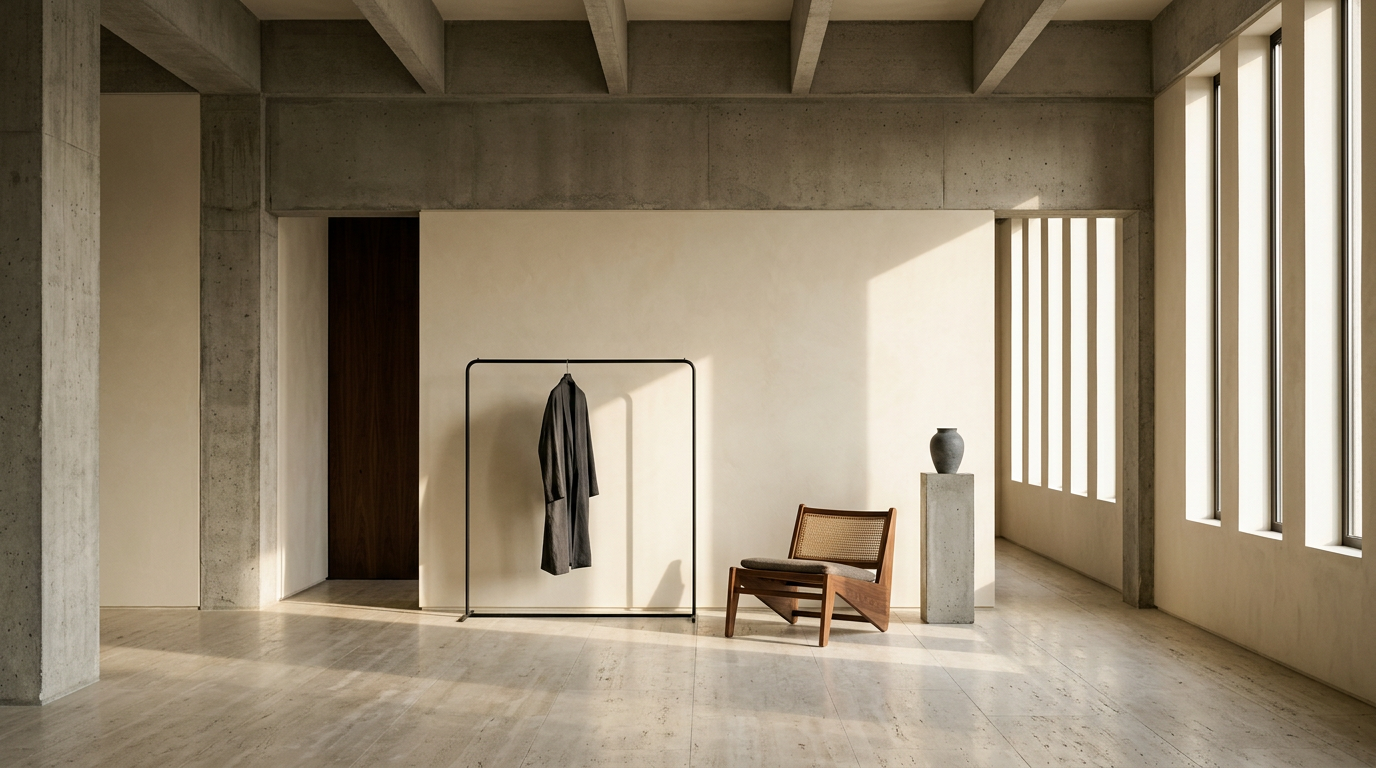
Retail is increasingly moving away from the purely transactional toward the atmospheric. Massimo Dutti's recent ten-day intervention in Paris serves as a quiet case study in this shift. Rather than a traditional storefront, the Inditex-owned brand constructed a "studio universe" — a temporary environment that functions more like a gallery installation than a boutique, blending furniture, art, and apparel into a single curated scenography.
The space is defined by a rigorous attention to materiality, mirroring the textures found in the brand's SS26 Limited Edition Collection. Garments crafted from leather, suede, silk, and linen are not merely stocked on racks but are integrated into a broader arrangement of vintage furniture and collectible design pieces. This layering of objects creates a sense of visual density, where the distinction between the product for sale and the environment it inhabits begins to blur. Lighting and spatial composition enforce a sense of calm continuity, emphasizing volumes and the transitions between different media.
The Pop-Up as Cultural Statement
The format itself is telling. Pop-up retail has been a fixture of fashion marketing for well over a decade, but its function has evolved. Early iterations were primarily about scarcity — limited-edition drops in temporary locations designed to generate urgency. The current generation of pop-ups, of which Massimo Dutti's Paris installation is representative, operates on a different logic. The goal is not to drive immediate transactions but to embed a brand within a cultural context that elevates its perceived value.
By placing editorial elements and artworks alongside apparel, the installation attempts to contextualize Massimo Dutti's aesthetic within a specific intellectual framework. The choice of Paris as a venue is itself a deliberate act of positioning. The city remains the global center of gravity for fashion as a cultural practice — distinct from fashion as commerce, which is more diffusely distributed. A ten-day presence in Paris, designed to feel more like a curated exhibition than a sales floor, signals ambition beyond the brand's traditional positioning in the accessible-premium segment of the market.
This approach echoes strategies employed by other brands seeking to close the gap between commercial fashion and the art and design worlds. The integration of collectible furniture and vintage objects into retail environments has become a recognizable vocabulary, one pioneered by houses at the upper end of the luxury spectrum and now filtering into the broader market. The question is whether the vocabulary retains its potency as it becomes more widely adopted.
Atmosphere as Competitive Terrain
The broader trend at work is the displacement of product from the center of the retail experience. When a brand invests in spatial composition, materiality, and cultural curation, it is making an implicit argument: that the value of a garment is inextricably linked to the physical and intellectual space it occupies. This is not a new idea — department stores in the early twentieth century understood the theatrical dimension of retail — but the current iteration is more deliberate in its references and more specific in its audience.
For Massimo Dutti, the Paris installation also serves a strategic function within the Inditex portfolio. The brand has long occupied a middle position between Zara's mass-market reach and the true luxury houses. Atmospheric retail interventions of this kind are a tool for stretching the brand's identity upward without requiring a fundamental change in price point or distribution. The risk, as with any exercise in brand elevation, is that the gap between the promise of the environment and the reality of the product becomes visible rather than aspirational.
What remains to be seen is whether these atmospheric investments translate into durable shifts in brand perception or whether they function primarily as content — images and narratives designed for circulation on social media and in design publications, consumed at a distance from the physical space itself. The tension between the intimacy of a curated environment and the scale required by a global retail operation is not easily resolved. It is a tension that defines much of contemporary fashion retail, and Massimo Dutti's Paris pop-up sits squarely within it.
With reporting from Designboom.
Source · Designboom