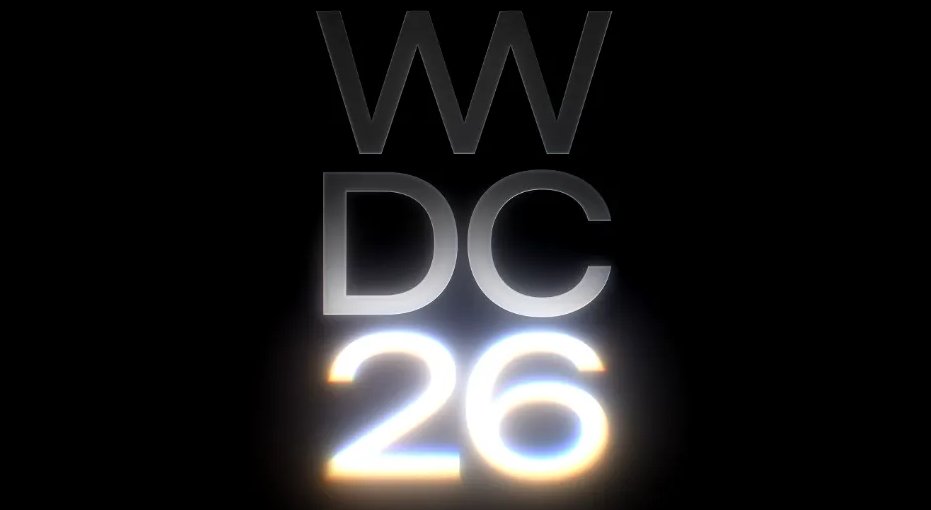
For years, Apple has treated its event invitations and promotional graphics as a form of high-stakes semiotics. These are not merely aesthetic choices; they are breadcrumbs for the observant. In 2024, the iPhone 16 Pro invite whispered of the Siri AI interface to come, and the thermal-inspired logo for WWDC 2025 correctly signaled the arrival of vapor chamber cooling for the iPhone 17 Pro. The pattern is now well-documented enough that each new piece of Apple branding triggers a decoding exercise across the tech press and enthusiast communities alike.
The upcoming WWDC 2026 follows this calculated pattern. According to reports from Bloomberg, the stylized "26" featured in the event's branding is more than a chronological marker — it is a literal preview of Siri's next visual identity. If the interpretation holds, it suggests a meaningful shift in how users will interact with the assistant, moving beyond the current glowing orb toward a more integrated, perhaps more agentic, presence on the screen.
The semiotics of product marketing
Apple's practice of embedding forward-looking design cues in event branding sits at the intersection of marketing discipline and corporate secrecy. The company has long maintained one of the tightest information-control regimes in the technology industry, yet it simultaneously drops visual hints that reward close attention. The effect is deliberate: it generates anticipation among developers and press without requiring a single on-the-record statement. The company says nothing while its graphic design says everything.
This approach has a structural logic. Apple's Worldwide Developers Conference is, at its core, a software event. The audience — developers who build on iOS, macOS, and adjacent platforms — needs early signals about where the platform is heading so they can allocate engineering resources accordingly. A visual hint embedded in a logo is not a commitment, but it functions as a soft directional indicator. When the thermal patterns in the WWDC 2025 branding later corresponded to hardware cooling changes, it reinforced the credibility of the method. Each confirmed prediction raises the stakes for the next round of interpretation.
The practice also reflects something broader about how large technology companies manage narrative cycles. In an era of persistent leaks and supply-chain intelligence, controlled ambiguity offers a way to steer the conversation without surrendering the element of surprise. Apple does not confirm or deny interpretations of its graphics. The speculation itself becomes part of the marketing apparatus.
Siri's visual identity as strategic signal
The reported redesign of Siri's interface carries weight beyond aesthetics. Since the introduction of Apple Intelligence in 2024, the company has been repositioning Siri from a voice-command utility into something closer to a system-wide AI layer. A new visual identity would be the most user-facing expression of that transition — a signal that the underlying capabilities have changed enough to warrant a different metaphor on screen.
The current glowing orb has served as Siri's visual anchor since its redesign in iOS 14. Replacing or substantially evolving it would mark a notable break in continuity, one that Apple typically reserves for moments when it wants users to perceive a generational leap rather than an incremental update. The timing aligns with a broader competitive environment in which Google, Microsoft, and a growing roster of startups have introduced AI assistants with increasingly sophisticated interfaces — multimodal, persistent, and capable of acting on behalf of the user across applications.
Whether the WWDC 2026 branding truly encodes Siri's next form will only be confirmed when the keynote arrives. But the deeper question is not whether Apple hid a clue in a logo. It is whether the redesign, once revealed, will represent a substantive change in Siri's capabilities or primarily a cosmetic refresh designed to match the competitive optics of the moment. The distance between those two outcomes will determine how much the visual hint was worth decoding in the first place.
With reporting from Exame Inovação.
Source · Exame Inovação