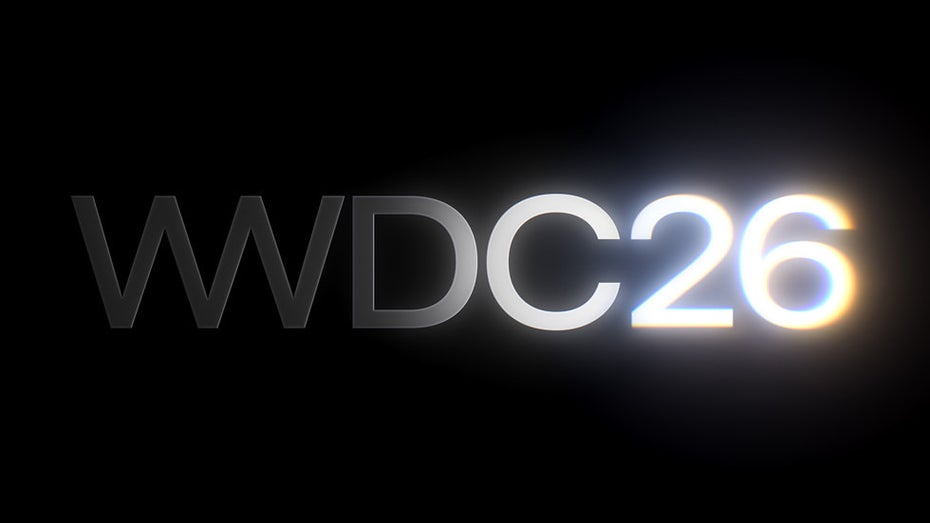
Apple's marketing materials for its Worldwide Developers Conference have a long history of functioning as coded previews. The color palettes, shapes, and motion graphics embedded in WWDC invitations have, over the years, foreshadowed dark mode, widget redesigns, and spatial computing interfaces before a single keynote slide was shown. The teaser for WWDC 2026 appears to follow that tradition. Industry observers parsing the graphic language of the announcement have converged on a single reading: Siri is about to undergo its most significant visual and functional redesign in years, one that would root the assistant inside the Dynamic Island for iOS 27.
The Dynamic Island, introduced with the iPhone 14 Pro in 2022, transformed a hardware compromise — the front-facing camera and sensor cutout — into an interactive software surface. Since its debut, Apple has expanded its role incrementally, using it to surface live activities such as timers, navigation directions, and music playback. Embedding Siri within that same surface would represent a qualitative leap: the assistant would shift from a modal, full-attention interface to an ambient presence that coexists with whatever else is on screen.
From foreground interruption to ambient layer
Siri's interface history is a study in Apple's evolving philosophy about how users should interact with AI. The original 2011 implementation took over the entire display. Later iterations introduced a compact orb at the bottom of the screen, reducing the interruption but still demanding visual focus. Each redesign reflected a broader industry tension: voice assistants need to signal that they are listening and processing, yet every pixel they consume competes with whatever task the user was performing.
Anchoring Siri to the Dynamic Island would resolve that tension more decisively than any prior attempt. The assistant could pulse, animate, or expand contextually within a region the user already associates with background processes. A query about the weather need not displace a conversation in Messages; a quick translation could surface and dissolve without a full-screen takeover. The design logic mirrors a pattern visible across the technology sector: the most capable AI interfaces are increasingly the ones that demand the least attention.
This approach also carries strategic weight for Apple's hardware narrative. The Dynamic Island was initially met with skepticism — a clever trick to disguise a notch, critics argued, but not a fundamentally useful surface. Turning it into Siri's permanent home would retroactively strengthen the case for the cutout as a deliberate design decision rather than an aesthetic workaround. It would give developers a clearer signal about where ambient intelligence lives on iOS, potentially unlocking a new class of third-party integrations built around the same surface.
The competitive context for on-device AI
The timing matters. Google, Samsung, and a growing roster of device makers have spent the past two years racing to embed generative AI capabilities directly into their operating systems and hardware. On-device large language models, multimodal input processing, and proactive suggestion engines have become table stakes in flagship smartphone marketing. Apple has historically been more conservative in its AI messaging, preferring to frame capabilities around privacy and on-device processing rather than raw model power.
A Siri redesign that emphasizes seamless, context-aware assistance over conversational spectacle would be consistent with that positioning. Rather than competing on the size of the underlying model or the breadth of generative outputs, Apple would be competing on integration depth — the degree to which intelligence is woven into the interface itself rather than bolted on as a separate experience. It is a bet that users value unobtrusiveness over capability demonstrations.
Whether that bet pays off depends on execution details that a teaser graphic cannot reveal. How much contextual awareness will the new Siri actually deliver? Will third-party developers gain meaningful access to the Dynamic Island's AI surface? And can Apple close the perception gap with competitors whose assistants already handle complex, multi-step tasks in public demos?
The WWDC keynote will provide some answers. But the deeper question — whether ambient intelligence embedded in hardware surfaces can outcompete the chatbot paradigm that dominates the current AI interface conversation — will take considerably longer to resolve.
With reporting from t3n.
Source · t3n