At a 100-acre research facility in Richburg, South Carolina, the Insurance Institute for Business & Home Safety (IBHS) is deliberately setting fire to residential structures. The purpose is not destruction for its own sake but systematic study: by subjecting test houses to wind-driven flames under controlled conditions, researchers aim to identify exactly how wildfires breach the building envelope — and what construction practices can prevent it.
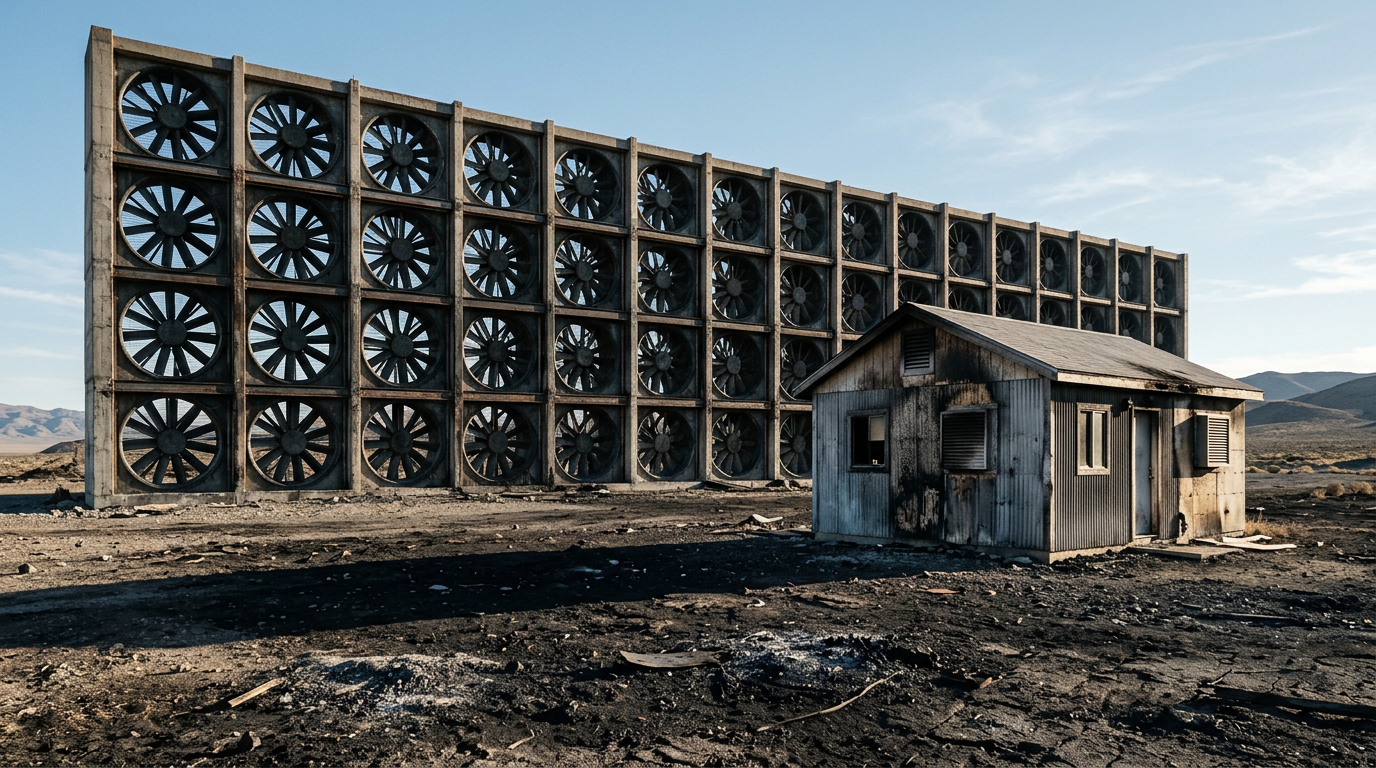
The facility features a six-story wall of 105 industrial fans capable of generating the kind of wind conditions that turn a brush fire into a structure fire. Sensors and cameras embedded inside each test house record how flames interact with windows, eaves, vents, and rooflines. To date, 13 houses have been burned in this manner, each yielding granular data on the sequence of failure points that allow fire to enter and consume a home.
The logic of controlled destruction
The approach borrows conceptually from automotive crash testing, where vehicles are destroyed under laboratory conditions so that engineers can study impact dynamics and improve occupant protection. IBHS, a nonprofit funded primarily by the property insurance industry, applies the same logic to residential construction. Rather than waiting for post-disaster forensic analysis — which is complicated by the chaos of real wildfire events — the institute creates repeatable scenarios that isolate specific variables: roofing material, vent design, the distance between a wood fence and an exterior wall, the type of mulch in a garden bed.
The experiments have already produced actionable findings. Fortified materials — a term IBHS uses for construction assemblies that meet its own resilience standards — combined with strategic placement of vegetation, fencing, and landscaping materials can meaningfully slow fire spread to and through a structure. The details matter in ways that are not always intuitive. Embers driven by high winds can enter a home through gaps as small as a few millimeters in soffit vents or between roof tiles, igniting interior spaces even when the main fire front has not yet reached the structure. Much of the IBHS research focuses on these ember intrusion pathways, which wildfire science has increasingly recognized as the dominant mechanism of home ignition in wildland-urban interface fires.
The wildland-urban interface — the zone where development meets undeveloped land — has expanded steadily across the United States as housing construction pushes into fire-prone landscapes. That expansion has coincided with longer and more intense fire seasons, driven by drought, heat, and accumulated fuel loads in forests and grasslands. The result is a growing mismatch between where homes are built and how they are built.
Insurance pressure and the building code gap
The insurance industry's interest in this research is not academic. Wildfire losses have strained the property insurance market in multiple states, most visibly in California, where several major insurers have reduced coverage availability in high-risk areas. Premiums have risen sharply in fire-prone regions, and in some cases coverage has become difficult to obtain at any price. IBHS sits at the intersection of these pressures: its research informs both insurance underwriting standards and voluntary building certification programs that homeowners and builders can adopt.
The gap between what building codes require and what wildfire-resilient construction demands remains significant in most jurisdictions. California has adopted some of the most stringent wildfire building standards in the country, but many other states with growing wildland-urban interface exposure have not followed. Local adoption of fire-resistant construction standards is often politically contentious, as it raises building costs and imposes requirements on property owners.
The IBHS facility in South Carolina offers a controlled environment in which to generate the kind of evidence that can inform those debates. Whether that evidence translates into widespread changes in construction practice depends on forces beyond the laboratory: insurance market dynamics, local building code politics, and the willingness of homeowners to invest in resilience before a fire arrives rather than after. The tension between the cost of prevention and the cost of loss remains the central question — and it is one that no amount of crash testing, however rigorous, can resolve on its own.
With reporting from Fortune.
Source · Fortune