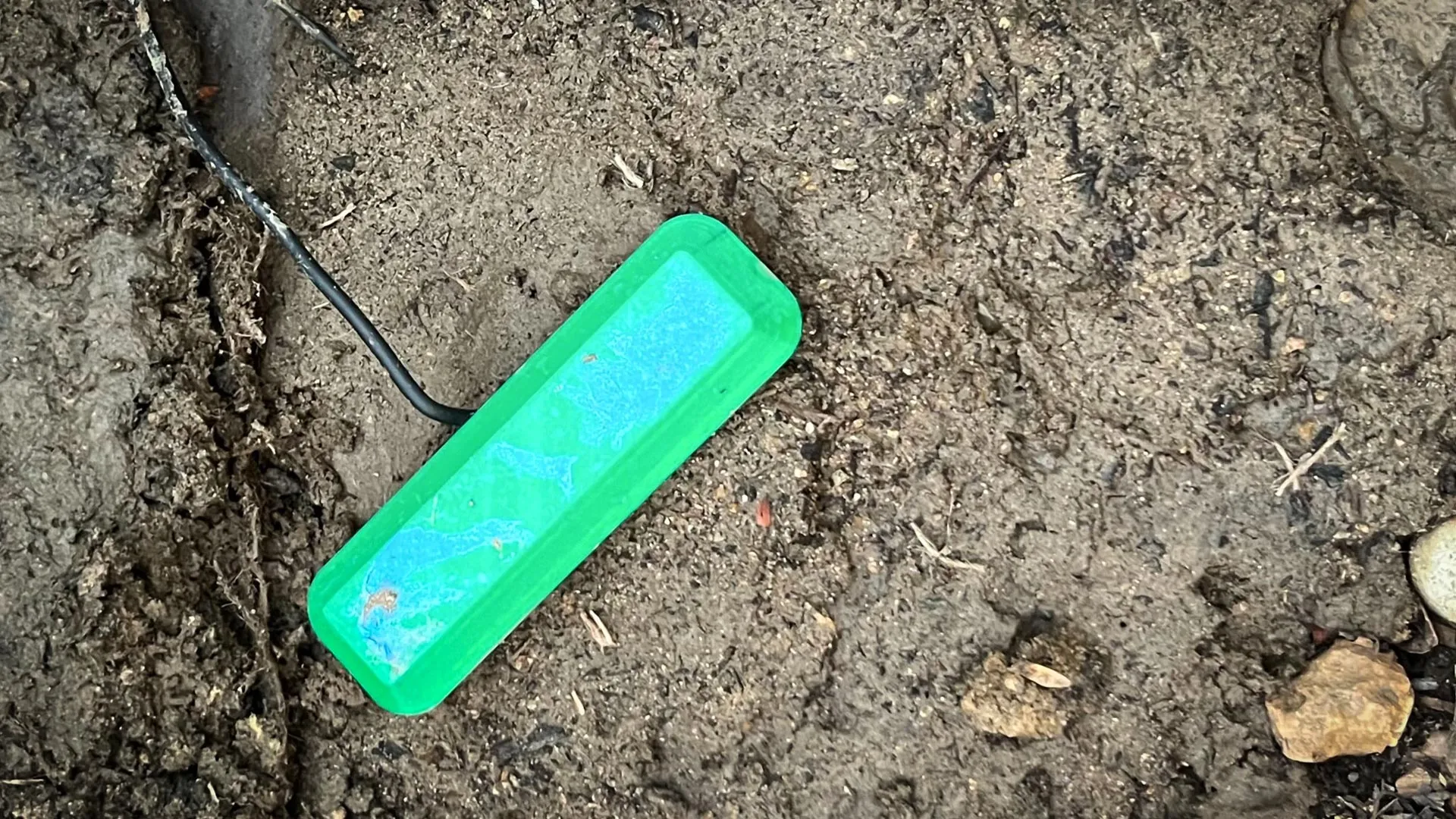
Electricity Emerging from the Earth: Scientists Develop Soil-Driven Fuel Cell
Researchers have built a microbial fuel cell that draws electricity from microorganisms living in ordinary soil, turning the ground beneath farms and forests into a low-grade but persistent power source. The device is designed to run buried sensors indefinitely, removing the need for batteries or solar panels in remote agricultural and environmental-monitoring installations.
The technology exploits a well-documented phenomenon: certain bacteria and archaea release electrons as a byproduct of their metabolism when they break down organic matter in soil. By embedding electrodes at different depths — one in the oxygen-poor zone where these microbes thrive and another closer to the surface where oxygen is available — the cell captures that electron flow as usable current. The principle is not new; laboratory demonstrations of soil-based microbial fuel cells date back more than two decades. What distinguishes the latest design, according to the published account, is its resilience across a wide range of soil conditions, from arid ground to waterlogged terrain, and its ability to keep generating power through drastic swings in humidity.
From Lab Curiosity to Field-Ready Hardware
Earlier generations of microbial fuel cells suffered from a practical problem: they worked reliably only in consistently wet environments, such as river sediments or saturated paddy fields. Dry spells collapsed the electrochemical gradient, and the devices went silent. That limitation confined most real-world pilots to aquatic or semi-aquatic settings and kept the technology on the margins of the broader energy-harvesting conversation.
The new cell appears to address this weakness through a design compact enough to remain buried and structurally tolerant of moisture variation. If the durability claims hold under extended field deployment, the advance closes a gap that has kept soil microbial fuel cells out of serious contention as a power source for terrestrial sensor networks. The output of such devices remains modest — typically in the microwatt to low-milliwatt range — but that is sufficient for modern ultra-low-power sensors and microcontrollers that wake periodically, take a reading, transmit data, and return to sleep.
Implications for Precision Agriculture and Environmental Monitoring
The practical significance lies less in the raw energy produced than in the maintenance burden it eliminates. Precision agriculture increasingly depends on dense networks of soil-moisture, nutrient, and temperature sensors spread across large areas. Powering those networks is a persistent headache. Batteries require periodic replacement — a labor-intensive task when thousands of nodes are scattered across a farm. Solar panels need line-of-sight to the sky, which makes them impractical beneath tree canopies, inside greenhouses, or in regions with prolonged cloud cover. A buried cell that feeds on the soil it monitors sidesteps both constraints.
The environmental calculus is also worth noting. Conventional button-cell and lithium batteries contain heavy metals and finite materials whose disposal creates its own ecological footprint — an irony when the sensors they power are meant to support sustainable land management. A device that runs on ambient microbial activity and degrades benignly at end of life aligns more coherently with the goals of the systems it serves.
Still, several questions remain open. Soil microbial communities vary enormously by geography, season, and land-use practice. Whether the cell performs consistently across different soil biomes — sandy, clay-heavy, heavily tilled, or chemically treated — will determine how broadly the technology can be deployed. Scaling from controlled test plots to commercial sensor networks introduces manufacturing, cost, and standardization challenges that laboratory results alone cannot resolve. And the competitive landscape is not empty: energy-harvesting alternatives such as thermoelectric generators, piezoelectric devices, and radio-frequency scavengers are also advancing toward the same low-power niche.
The tension, then, is between a biologically elegant solution and the engineering pragmatism required to make it ubiquitous. Whether soil microbial fuel cells become a standard component of agricultural infrastructure or remain a niche curiosity may depend less on the science — which appears increasingly solid — and more on whether the economics and logistics of deployment can keep pace.
With reporting from Science Daily.
Source · Science Daily