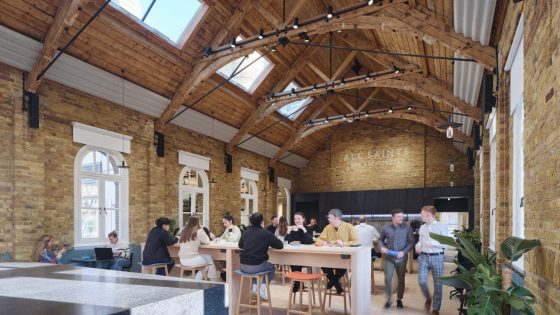
EPR Architects, one of London's established mid-size practices, has filed a legal claim for £791,000 against a fit-out contractor after a flood caused severe damage to the firm's studio in south London. The workspace, housed in a renovated 19th-century building, had recently undergone a significant refurbishment — making the incident a particularly costly setback for a practice that had invested in upgrading its own premises.
The claim, in which EPR is listed as the claimant, targets the contractor responsible for the fit-out works on the historic building. Details of the flood's cause and the specific contractor involved have not been publicly disclosed beyond the court filing. The scale of the claim — nearly £800,000 — suggests damage that went well beyond surface-level cosmetic harm, likely affecting building fabric, fixtures, equipment, and potentially archived project materials.
The risks of heritage renovation
Adapting 19th-century buildings for contemporary use is a discipline architecture firms know well — and one fraught with hidden risk. Older structures often carry vulnerabilities in their plumbing, drainage, and waterproofing systems that may not be fully apparent until intervention occurs. Fit-out works in such buildings can inadvertently disturb legacy infrastructure, and the consequences of water ingress in a heritage setting tend to be disproportionately severe. Period features, bespoke joinery, and original masonry are expensive to restore and sometimes irreplaceable.
For an architecture practice, the stakes are compounded. Studios house not only the physical workspace but also models, samples, drawings, and digital infrastructure critical to ongoing projects. A flood event in such a setting can disrupt live commissions, delay client deliverables, and impose indirect costs that extend well beyond the repair bill. The £791,000 figure in EPR's claim likely reflects some combination of physical remediation, asset replacement, and consequential losses, though the precise breakdown has not been made public.
The case also touches on a broader tension in the construction industry: the allocation of liability when fit-out or refurbishment works go wrong. Contractors engaged for interior works typically carry professional indemnity and public liability insurance, but disputes over the scope of responsibility — particularly when pre-existing building conditions are a factor — are common and often protracted.
A familiar pattern in construction disputes
Legal actions between design professionals and contractors are not unusual in the UK construction sector. The Technology and Construction Court, a division of the High Court that handles building disputes, maintains a steady caseload of claims arising from defective works, water damage, and professional negligence. What makes this case notable is that the claimant is itself an architecture firm — a party more accustomed to being on the design side of such disputes than pursuing a contractor for damage to its own premises.
EPR, known for work spanning commercial, residential, and heritage sectors, occupies a position in the market where reputation and studio environment are closely linked. Architecture practices increasingly treat their own offices as showcases of design capability — a tangible demonstration of what they offer clients. Damage to such a space carries reputational as well as financial weight.
The outcome of the claim will depend on the specifics of the contract between EPR and the fit-out contractor, the evidence regarding the flood's cause, and any arguments over contributory factors related to the building's age and condition. Whether the case proceeds to trial or reaches settlement will likely hinge on how cleanly liability can be attributed.
For the wider profession, the episode is a reminder that the risks architects manage on behalf of clients — procurement, contractor selection, quality assurance — apply with equal force when the client is the firm itself. The line between design expertise and construction risk management remains thinner than it appears.
With reporting from Architects Journal.
Source · Architects Journal