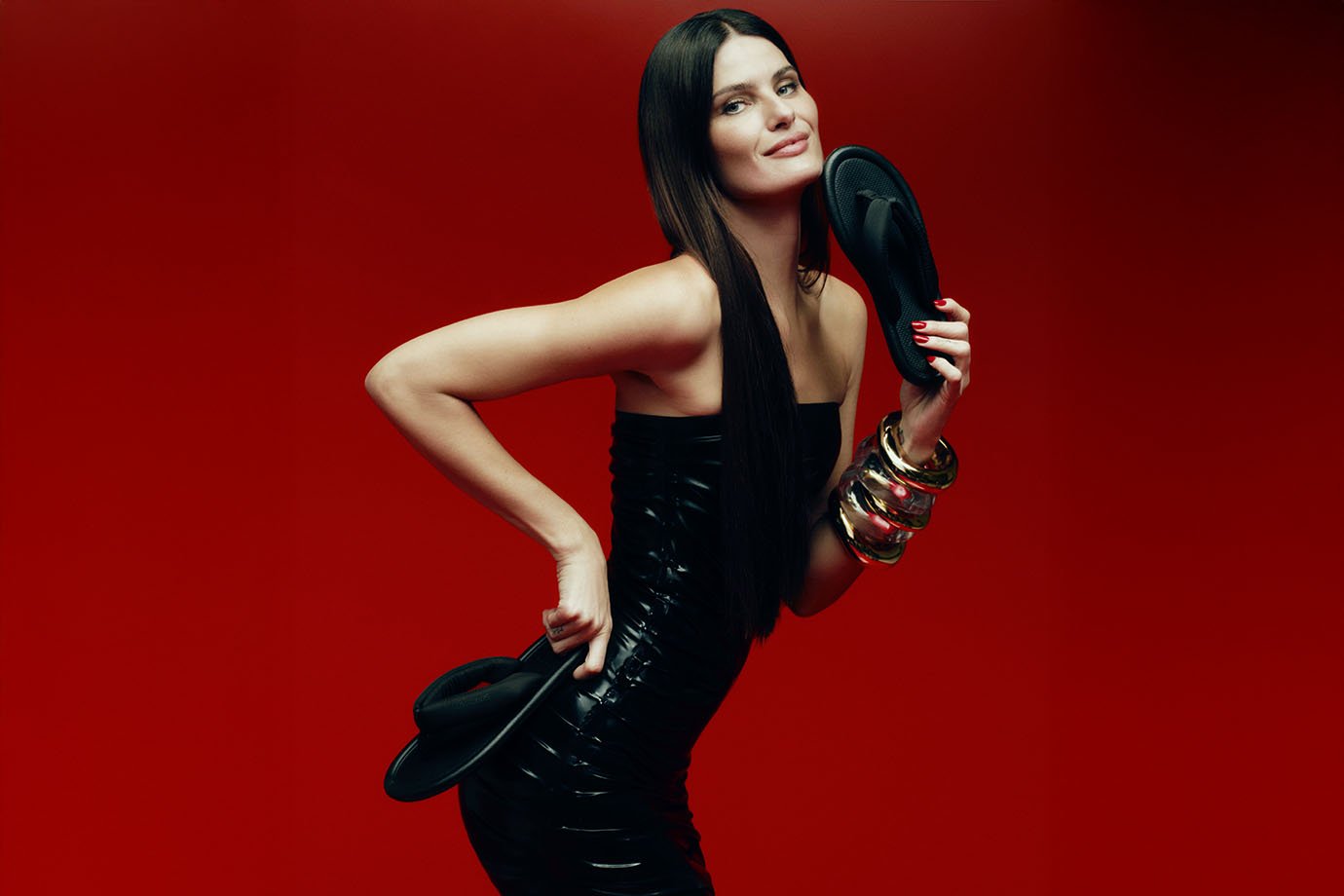
The cinematic world of Miranda Priestly has always served as a mirror for the fashion industry's internal hierarchies. With the anticipation surrounding the sequel to The Devil Wears Prada, the brand-building tethered to the film is shifting from the exclusive runway to the public sidewalk. Brazilian footwear staple Havaianas has announced a four-model collection developed in partnership with the production, leaning into the film's legacy of high-stakes aesthetics.
The move represents a calculated intersection of luxury tropes and democratic design. While the original 2006 film famously deconstructed the trickle-down economics of a "cerulean" sweater, this partnership highlights a different phenomenon: the elevation of the mundane through cinematic association. By bringing the iconography of high fashion into the realm of casual rubber sandals, the collaboration speaks to the enduring power of the franchise as a cultural shorthand for style.
The Logic of Cinematic Licensing in Consumer Goods
Film-driven collaborations in fashion and footwear are not new, but their strategic logic has shifted considerably over the past decade. Where licensed merchandise once meant afterthought products sold in theater lobbies, studios and consumer brands now treat these partnerships as co-marketing exercises with genuine commercial ambition. The model follows a pattern established by streetwear labels and sneaker brands, where limited-edition "drops" tied to cultural moments — album releases, film premieres, anniversaries — generate outsized attention relative to their production runs.
For Havaianas, the calculation is legible. The company, owned by Alpargatas, has spent years building an international identity that bridges its origins as an affordable Brazilian staple with aspirational positioning in European and North American markets. Past collaborations with fashion houses and designers have served this dual purpose: reinforcing brand relevance among style-conscious consumers while preserving the accessibility that defines the product. A tie-in with The Devil Wears Prada — a property whose entire thematic architecture revolves around the tension between elite fashion and everyday life — fits that positioning with unusual precision.
The original film, adapted from Lauren Weisberger's 2003 novel, became a touchstone not only for its portrayal of the magazine industry but for its broader argument about how fashion choices encode class, ambition, and identity. Its cultural footprint has proved durable enough to sustain a sequel nearly two decades later, which itself signals the franchise's continued commercial viability as a licensing vehicle.
Nostalgia as a Retail Currency
The timing of the collaboration also reflects a broader pattern in consumer marketing: the systematic monetization of millennial nostalgia. Properties from the mid-2000s — films, television series, music catalogs — are being reactivated across product categories as the generation that grew up with them enters peak spending years. The sequel to The Devil Wears Prada arrives in a market already primed by reboots, legacy sequels, and franchise extensions across entertainment.
For a footwear brand, the challenge in any such collaboration is translating cinematic identity into physical product without producing something that feels like a costume accessory. The four-model structure of the Havaianas collection suggests an attempt at range — likely spanning references recognizable to fans of the original film alongside designs calibrated for broader streetwear appeal. Whether the collection achieves that balance will depend on execution, but the strategic intent is clear: attach the brand to a narrative that consumers already understand and value.
The deeper question the partnership raises is whether the "story behind the product" model of retail — where cultural association does more commercial work than material innovation — has a ceiling. In categories like rubber sandals, where functional differentiation is inherently limited, narrative may be the only meaningful axis of competition. Havaianas is far from the only brand operating on this logic, but few collaborations illustrate it as neatly as one that pairs the world's most recognizable casual sandal with a film whose central subject is the power of fashion to confer meaning on otherwise ordinary objects.
The cerulean sweater speech, it turns out, works in both directions.
With reporting from Exame Inovação.
Source · Exame Inovação