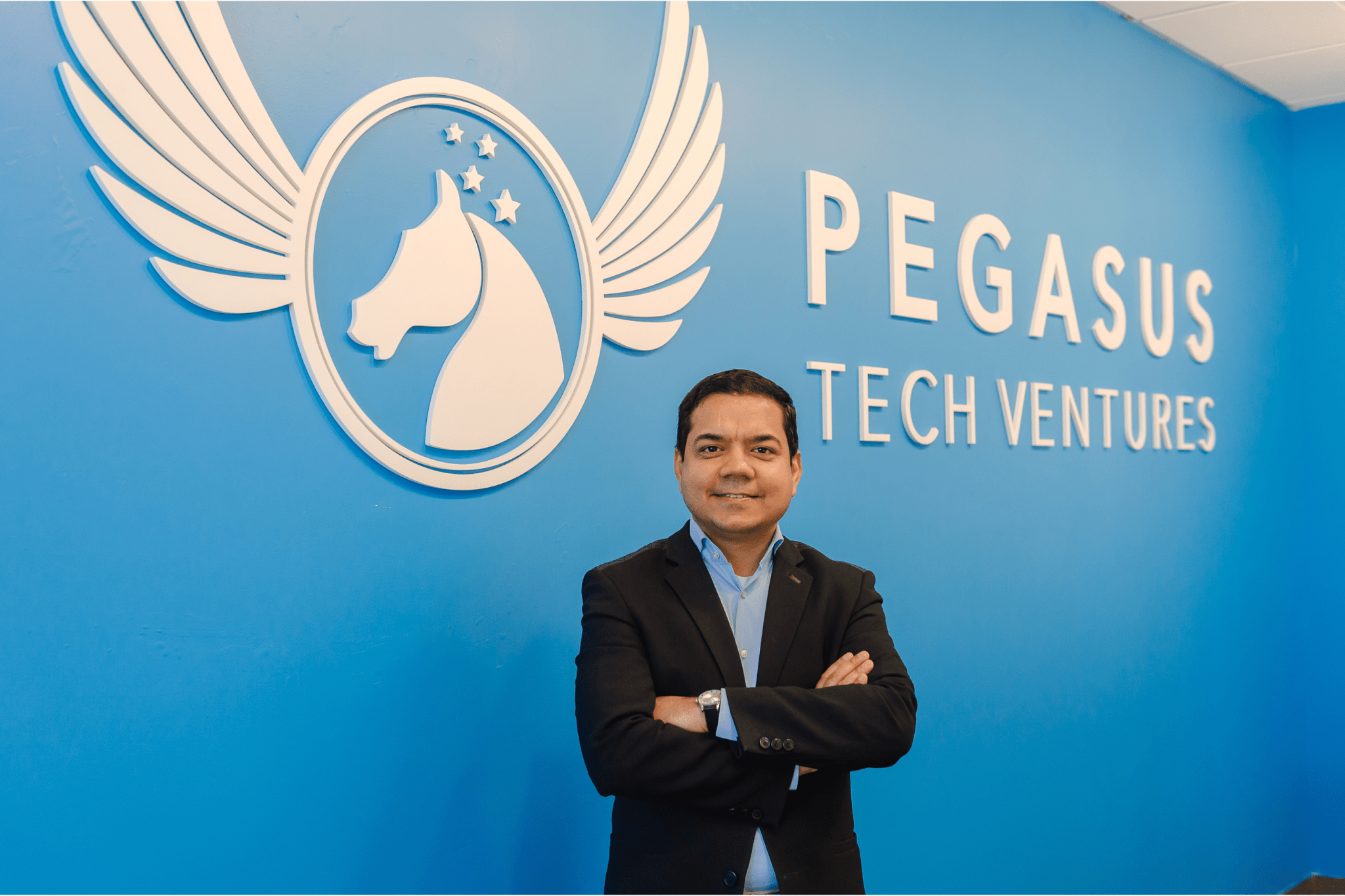
Japanese legacy corporations are sharply increasing their venture capital commitments in Silicon Valley, seeking to close a widening gap in artificial intelligence adoption. Pegasus Tech Ventures, a San Jose-based venture firm that manages corporate venture funds on behalf of large Japanese companies, reports that several of its clients are dramatically scaling up their investment vehicles. Japanet, the television shopping and media conglomerate, is quadrupling its fund to $200 million, while Aisin, a major automotive parts supplier with deep ties to the Toyota Group, has doubled its fund to $100 million.
The moves reflect a growing anxiety among Japanese boardrooms that domestic research and development cycles are too slow to keep pace with the speed at which AI capabilities are being commercialized, particularly in the United States. Anis Uzzaman, CEO of Pegasus Tech Ventures, has described these firms as "sweating" over their lag behind American and European counterparts in deploying AI across operations, products, and services.
The Galapagos Problem, Revisited
The phenomenon at the center of this capital reallocation has a name familiar to anyone who has studied Japanese technology strategy: "Galapagos syndrome." The term, coined in the late 2000s to describe how Japanese mobile phones evolved sophisticated features in isolation from global standards, has become shorthand for a broader pattern — Japanese firms developing advanced but domestically confined technologies that fail to compete internationally.
The syndrome proved costly in the smartphone era, when companies like NEC and Panasonic were effectively locked out of the global handset market despite years of engineering investment. A similar dynamic now threatens to play out in artificial intelligence. Japan's corporate sector, while technically proficient, has historically favored incremental improvement within established product lines over the kind of disruptive, platform-level bets that define the current AI wave. Internal R&D departments, often structured around consensus-driven decision-making and long development horizons, are poorly suited to a landscape where foundation model capabilities shift quarter by quarter.
Corporate venture capital offers a structural workaround. Rather than attempting to build AI competencies from scratch, firms like Japanet and Aisin are effectively purchasing optionality — gaining early access to startup technologies, talent networks, and commercial partnerships that would take years to develop internally. The strategy is not new; Japanese corporations were active Silicon Valley investors during the 1980s and again during the dot-com era. What distinguishes the current cycle is the explicit framing around AI and the scale of individual fund increases.
Strategic Logic and Structural Tensions
The decision to route capital through a firm like Pegasus rather than establishing proprietary venture arms speaks to a pragmatic calculation. Building an in-house corporate venture operation in Silicon Valley requires local deal flow, technical evaluation capability, and a reputation within the startup ecosystem — assets that take years to accumulate. Outsourcing fund management to an intermediary with established networks compresses that timeline, though it also introduces a layer of distance between the investing corporation and the startups it backs.
Whether these investments translate into genuine operational transformation remains an open question. Corporate venture capital has a mixed track record globally when it comes to technology transfer. Startups often prize corporate investors for their distribution channels and domain expertise, but cultural and organizational friction can slow integration. Japanese firms, with their distinctive management structures and domestic market orientation, face an additional layer of complexity in absorbing Silicon Valley innovation.
There is also the competitive context to consider. South Korean conglomerates, Taiwanese semiconductor firms, and Chinese technology companies are all pursuing aggressive AI strategies with varying degrees of state support. Japan's government has signaled its own interest in AI competitiveness, but corporate capital allocation decisions like those reported by Pegasus suggest that the private sector is not waiting for policy frameworks to mature.
The underlying tension is clear enough: Japanese corporations recognize that the cost of inaction in AI is rising, yet the mechanisms they are choosing — venture fund expansions managed through intermediaries, thousands of miles from headquarters — carry their own execution risks. Whether the capital deployed in Sand Hill Road offices finds its way into meaningful product and process changes in Nagoya factories and Tokyo retail operations is the question that will ultimately determine whether this wave of investment breaks the Galapagos pattern or merely repeats it.
With reporting from Fortune.
Source · Fortune