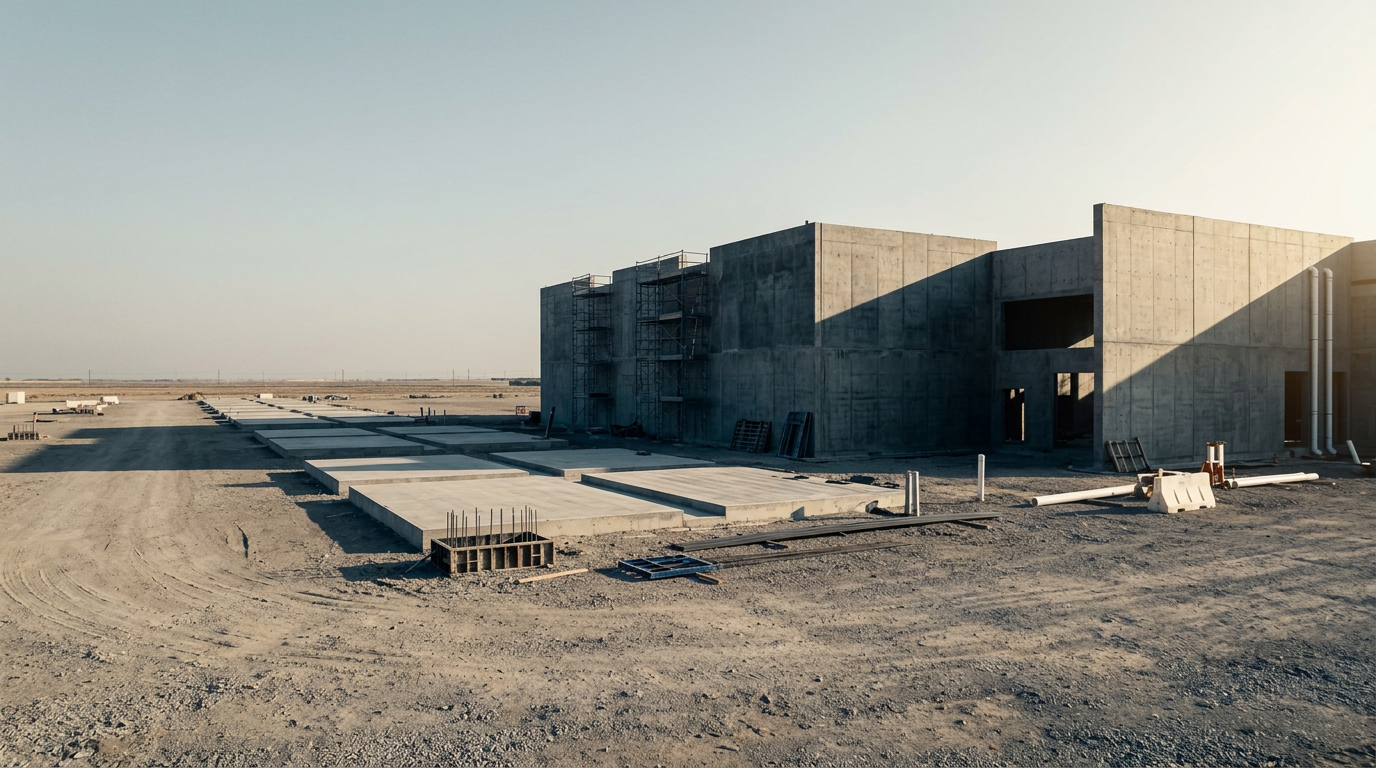
Fermi, a Texas-based startup focused on building power infrastructure for artificial intelligence workloads, is caught in an escalating governance crisis. Toby Neugebauer, the company's fired chief executive and largest shareholder, is pushing for an immediate sale of the business. The board, led by Chairman Marius Haas, is resisting. The standoff arrives at a precarious moment: Fermi's market capitalization has fallen from $20 billion to under $3.2 billion, and its flagship development — a large-scale data center campus in the Texas Panhandle known as "Project Matador" — has struggled to secure tenants.
Neugebauer and allies who together control roughly 40% of outstanding shares appear to have concluded that the company's standalone path is no longer viable. The board, for its part, has shown no public willingness to engage on sale terms. The result is a dispute that touches on some of the most consequential questions facing the AI infrastructure sector: how much capital the buildout actually requires, who bears the risk when demand projections miss, and what happens when founder-investors and independent directors disagree on the definition of fiduciary duty.
The Anatomy of a Valuation Collapse
A decline from $20 billion to under $3.2 billion represents a loss of more than 80% of market value — a trajectory that suggests something more structural than ordinary market volatility. AI power and data center startups attracted enormous capital inflows during the generative AI boom, often on the basis of forward-looking demand models that assumed hyperscalers and enterprise customers would lease capacity at a pace sufficient to justify speculative construction. When those tenants do not materialize on schedule, the economics unravel quickly: land has been acquired, permits secured, and infrastructure partially built, but revenue remains distant.
Project Matador, sited in the Texas Panhandle, fits a pattern seen across the sector. Remote or semi-rural locations offer cheap land and proximity to energy sources — Texas, in particular, has attracted data center developers because of its deregulated power grid and abundant natural gas and wind capacity. But cheap land does not guarantee demand. Hyperscale cloud providers and large AI model trainers have their own site-selection criteria, including network latency, water availability for cooling, and the reliability of local grid interconnections. A campus that checks some boxes but not others can sit partially empty for quarters or years.
The speed of Fermi's valuation decline also raises questions about the capital structure. Infrastructure ventures of this kind are typically capital-intensive and debt-heavy. When equity value erodes, leverage ratios worsen, covenant pressures mount, and the cost of additional financing rises — a feedback loop that can make a sale look increasingly rational from a shareholder perspective, even at a steep discount to prior valuations.
Governance Tension and the Path Forward
The dispute between Neugebauer and the board is, at its core, a disagreement about time horizon and risk tolerance. A controlling shareholder bloc advocating for a sale is making an implicit argument that the company's assets are worth more to an acquirer today than they will be to existing shareholders tomorrow. The board's resistance implies either a belief that conditions will improve or a concern that a fire sale would destroy residual value.
Such conflicts are not uncommon in capital-intensive sectors where early-stage companies hit execution walls. In energy, mining, and telecommunications, founder-led campaigns to force asset sales have sometimes succeeded in unlocking value — and sometimes accelerated decline by signaling distress to counterparties and potential tenants. The 40% stake held by Neugebauer and his allies is substantial but likely insufficient to force a transaction unilaterally without either winning board seats or prevailing in a proxy contest.
The broader AI infrastructure market will be watching closely. Fermi is not the only company that raised capital on aggressive demand assumptions; it is simply one of the first where the gap between projection and reality has become a public governance fight. Whether the outcome is a sale, a recapitalization, or a prolonged standoff, it will set expectations for how similar disputes are resolved across a sector that deployed tens of billions of dollars on the premise that AI compute demand would arrive faster than the infrastructure to serve it.
The question is not whether AI will eventually need the power and cooling capacity that companies like Fermi set out to build. It is whether the companies that built first — and bet biggest — can survive the interval between construction and demand.
With reporting from Fortune.
Source · Fortune


/s3/static.nrc.nl/wp-content/uploads/2026/04/21113725/210426VER_2033179666_on.jpg)