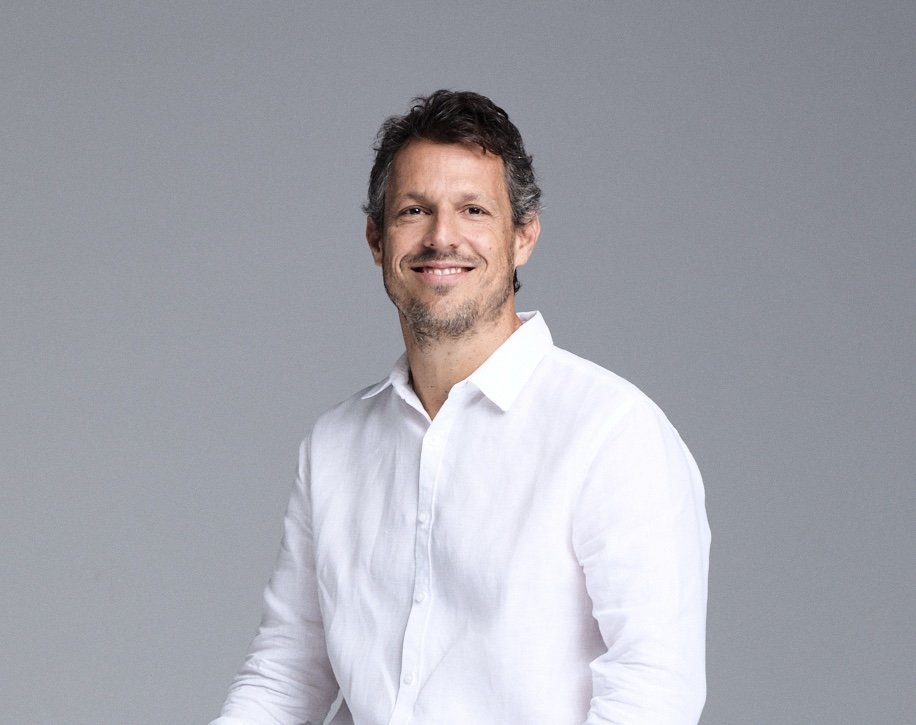
Riachuelo, the nearly 80-year-old pillar of Brazilian fashion retail, is undergoing a calculated architectural shift. Three years into the tenure of CEO André Farber, the R$ 13 billion company is signaling that its future will be defined less by traditional storefront expansion and more by the technical ecosystems it builds behind the scenes.
The pivot centers on Curitiba, a city increasingly serving as the company's laboratory for operational and digital innovation. By concentrating its modernization efforts in this regional tech hub, Riachuelo aims to solve the perennial problem of the legacy incumbent: how to move with the agility of a digital native without sacrificing the scale of a multi-billion-dollar enterprise.
The Curitiba Bet and the Infrastructure Logic
The choice of Curitiba as an innovation base is not incidental. The capital of Paraná has cultivated a technology ecosystem over the past decade that sits outside the gravitational pull — and the cost structure — of São Paulo. For a retailer seeking to build digital capabilities without the overhead of Brazil's financial capital, the city offers a practical middle ground: access to engineering talent, proximity to southern supply chains, and a municipal environment that has historically been receptive to technology-driven enterprises.
Riachuelo's move follows a pattern visible across large Brazilian incumbents. Companies with decades of physical infrastructure — stores, distribution centers, supplier networks — face a structural tension between maintaining what already works and investing in systems that may take years to yield returns. The retailer's decision to create a dedicated innovation hub rather than distribute modernization efforts across its existing corporate structure suggests an awareness that legacy organizations often struggle to innovate from within their own operational core. Separating the function, at least geographically, can reduce the institutional friction that tends to slow transformation in large enterprises.
The results of this strategic realignment are beginning to surface in the company's financial health. Farber's approach suggests a focus on the fundamental infrastructure of retail — optimizing the supply chain and digital integration to reclaim a dominant position in a sector that has shifted considerably since Riachuelo's founding in the 1940s.
Competing in a Reshaped Market
The competitive landscape facing Riachuelo today bears little resemblance to the one that allowed it to become a household name. The Brazilian fashion retail sector has absorbed successive waves of disruption: the rise of domestic e-commerce platforms, the aggressive entry of international fast-fashion operators such as Shein and Shopee into the Brazilian market, and a consumer base that has grown accustomed to algorithmic personalization and rapid delivery cycles. For a brick-and-mortar incumbent, the challenge is not merely digital presence — most large retailers now sell online — but the deeper integration of data, logistics, and merchandising into a single responsive system.
This is the problem that innovation hubs are designed to address. The question is whether Riachuelo can translate experimental capability into operational change at the scale of hundreds of stores and thousands of SKUs. Brazilian retail history offers cautionary examples of incumbents that invested in innovation theaters — visible, well-funded labs that produced prototypes but failed to alter the core business. The difference between a successful transformation and an expensive sideshow typically lies in whether the innovation function has genuine authority over operational decisions or remains advisory.
Farber's tenure will likely be measured against precisely this criterion. The financial discipline required to sustain a R$ 13 billion operation while simultaneously funding a modernization program creates an inherent tension between short-term margin preservation and long-term competitive positioning. The retailers that have navigated this transition successfully in other markets — from legacy department stores in the United States to fast-fashion operators in Europe — have generally done so by treating technology not as a separate initiative but as the connective tissue of the entire business.
Riachuelo's Curitiba experiment sits at the intersection of these forces: the weight of physical scale, the speed demanded by digital competition, and the organizational question of whether a nearly eight-decade-old company can restructure its reflexes. Whether the hub becomes the engine of a genuine transformation or remains a well-intentioned outpost may depend less on the technology it produces and more on how deeply that technology is permitted to reshape the decisions made in boardrooms and on shop floors.
With reporting from Exame Inovação.
Source · Exame Inovação