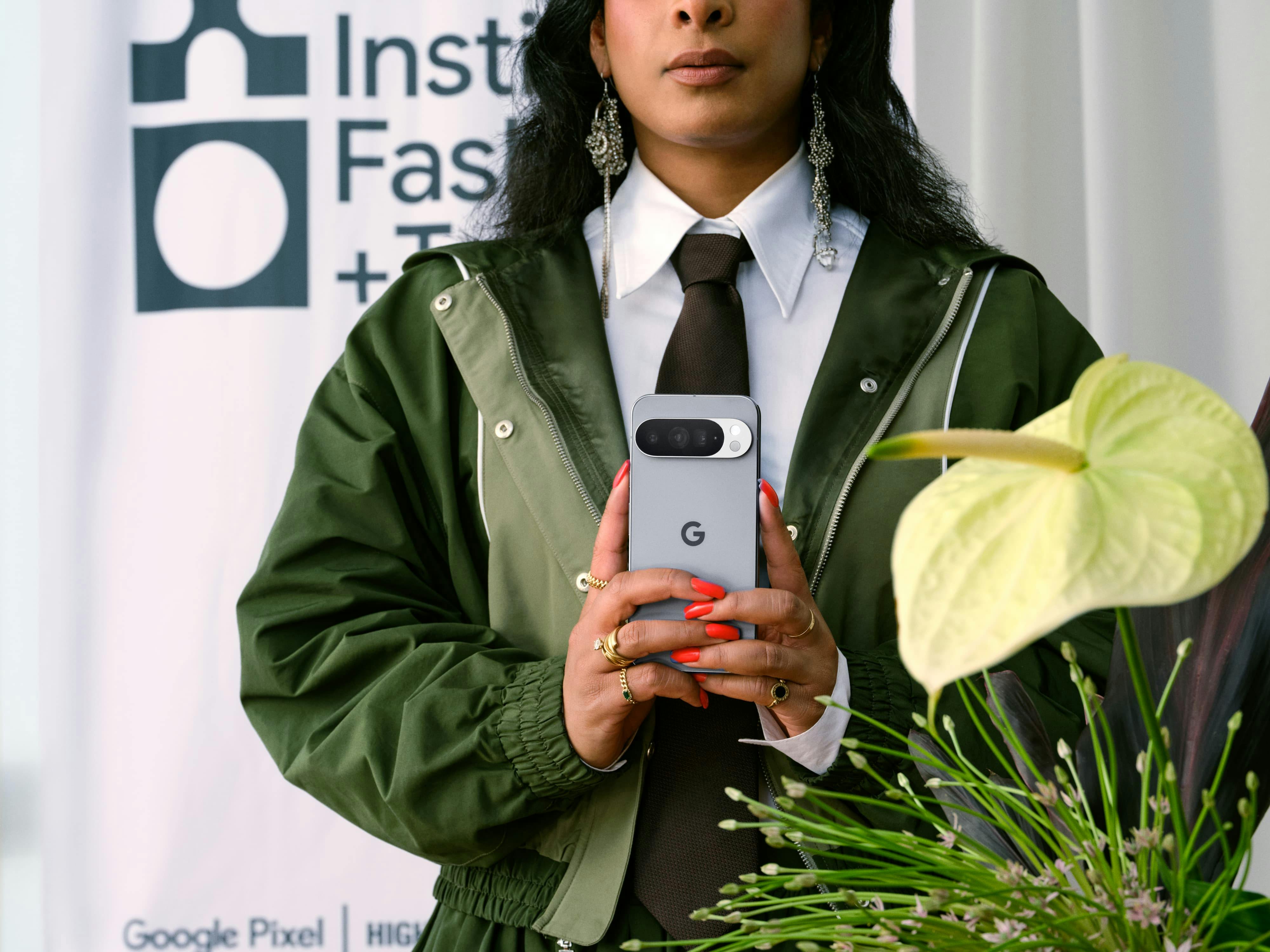
The intersection of fashion and technology has long been defined by spectacle — LED-threaded garments on runways, digital wearables minted for virtual worlds, augmented reality try-ons that rarely survive beyond a press cycle. The Pixel Institute of Fashion & Technology (PIFT), a joint initiative between Google Pixel and Highsnobiety, represents a deliberate departure from that pattern. Rather than showcasing what technology can do to fashion, the year-long program asks what mobile technology can do for the people trying to build fashion businesses from scratch.
PIFT is structured around mentorship and guided learning aimed at creative entrepreneurs who lack the institutional access that traditional fashion education or industry networks provide. Participants will explore how a smartphone — specifically, Google's Pixel hardware — can serve as a primary tool across the full arc of building a brand: from initial design work and visual storytelling to audience development and commercial operations. The premise is straightforward: if a single device can shoot campaign-quality imagery, edit video, manage social channels, and facilitate e-commerce workflows, the capital requirements for launching a label drop considerably.
Mobile hardware as creative infrastructure
The idea of a phone replacing a studio is not new, but its credibility has grown steadily. Google has invested in high-profile demonstrations of Pixel's production capabilities, including filmmaker Gia Coppola's short film EDIE, which was shot entirely on a Pixel device. That project served as a proof of concept for mobile cinematography at a level previously reserved for dedicated camera systems. PIFT extends the same logic into fashion, a field where visual production — lookbooks, campaign films, social content — constitutes a significant share of a brand's operational costs in its early stages.
The broader context matters here. Over the past decade, a generation of independent fashion labels has emerged largely through social media, building audiences and selling product without the backing of conglomerates or wholesale distribution networks. Brands that started on Instagram or TikTok have demonstrated that taste and distribution can coexist on a phone screen. What many of those founders lacked, however, was structured guidance on how to move from viral attention to sustainable business. PIFT appears designed to address that specific gap — not by teaching design in the classical sense, but by treating the smartphone as the operational backbone of a lean creative enterprise.
The strategic calculus for Google
For Google, the initiative fits a well-established playbook among technology companies: associating flagship hardware with high-status creative disciplines. Apple pioneered this approach decades ago by embedding itself in music production, graphic design, and filmmaking. Samsung has pursued fashion and art partnerships of its own. By anchoring Pixel in the fashion world through a structured educational program rather than a one-off sponsorship, Google gains sustained visibility among a demographic that values both aesthetics and utility — precisely the audience most likely to influence purchasing decisions within their communities.
There is also a product thesis embedded in PIFT. If participants genuinely build brands using Pixel devices as their primary tools, the resulting case studies become marketing assets far more persuasive than any advertisement. The program bets that authentic creative output, produced under real constraints, will do more to validate the hardware than staged demonstrations ever could.
The tension worth watching is whether the program produces outcomes that transcend the partnership's promotional logic. Fashion incubators and accelerators have a mixed record; many generate visibility for sponsors without meaningfully altering the trajectories of participants. The question for PIFT is whether mobile-first methodology can genuinely lower the barriers to building a durable fashion business, or whether it simply repackages existing tools under a new institutional banner. The answer will depend less on the technology itself and more on the depth of mentorship, the quality of industry access provided, and whether participants emerge with businesses that outlast the program's calendar.
With reporting from Highsnobiety.
Source · Highsnobiety