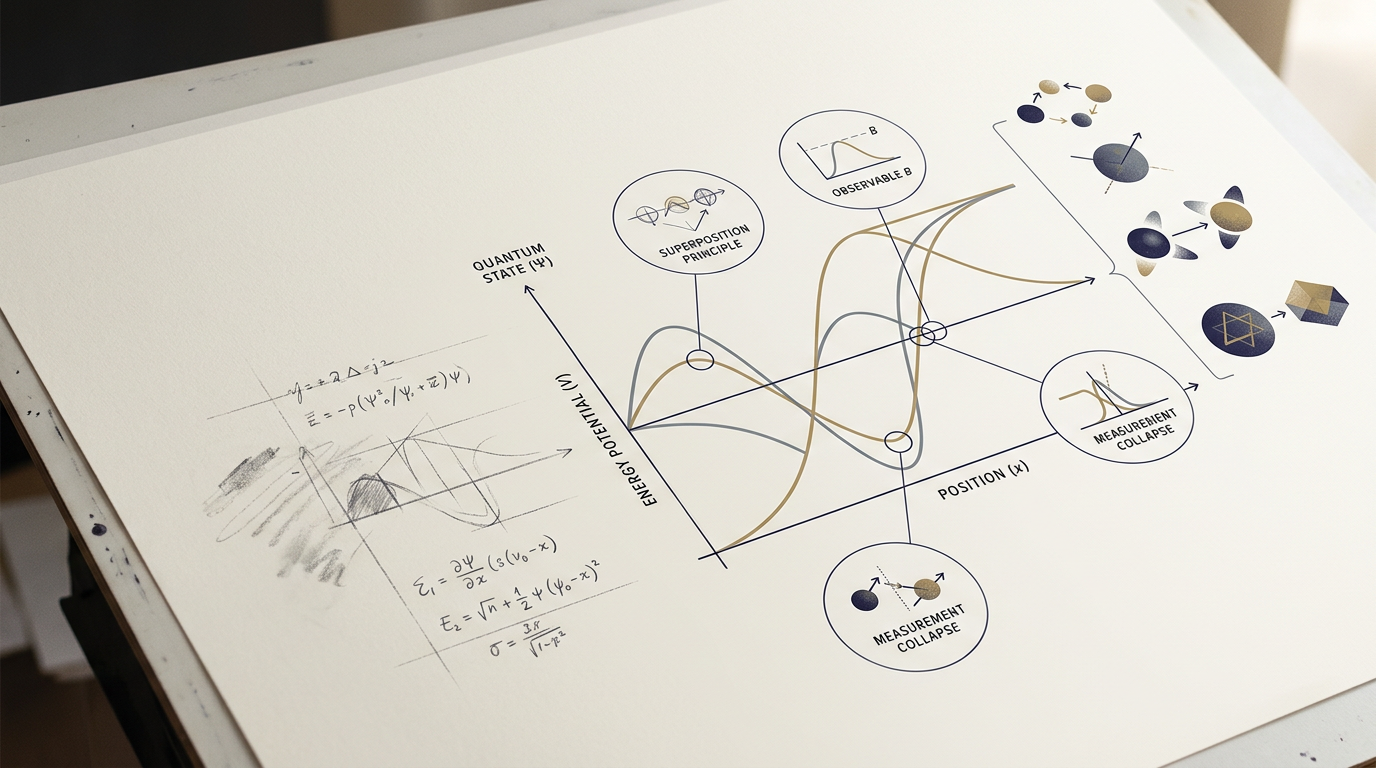
OpenAI has released an update to its image-generation model designed to improve the accuracy of complex charts, scientific diagrams, and other structured visual outputs. The enhancement targets professional users — researchers, analysts, engineers — who need generative tools capable of producing technically precise visuals rather than artistic or photorealistic imagery. The move signals a deliberate shift in how the company positions its image capabilities: less as a creative novelty, more as a productivity layer for knowledge work.
The update addresses a well-known limitation of generative image models. Since the emergence of diffusion-based systems, AI-generated visuals have struggled with structured information — text rendered inside charts, axis labels on graphs, proportional relationships in data visualizations, and the logical consistency required by scientific figures. A model might produce a visually convincing bar chart where the bars bear no coherent relationship to the labels beneath them. For casual use, the effect is amusing. For a professional preparing a report or a researcher illustrating findings, it is disqualifying.
From creative tool to professional utility
The trajectory here is not unique to OpenAI. Across the generative AI industry, the competitive frontier has moved from raw capability — can the model produce an image at all? — toward reliability and precision in domain-specific tasks. Early image generators competed on aesthetic quality and prompt adherence. The next phase of competition appears to center on whether these tools can be trusted with structured, information-dense outputs where accuracy is not optional.
This shift mirrors what happened with large language models. Initial excitement focused on fluency and general knowledge. Commercial adoption, however, demanded factual reliability, citation accuracy, and the ability to follow complex instructions consistently. Image generation is entering a similar maturation phase. The question is no longer whether AI can draw a diagram, but whether the diagram it draws can be used without manual correction.
For OpenAI specifically, the update fits a broader strategic pattern. The company has progressively oriented its product development toward enterprise and professional markets, where willingness to pay is higher and where tool reliability directly affects adoption. An image model that can accurately render a flowchart, a data visualization, or a molecular structure has a clearer path to integration in corporate and research workflows than one optimized primarily for photorealistic portraits or stylized illustrations.
The accuracy gap and its implications
The technical challenge of rendering structured visuals is distinct from general image generation. Charts and diagrams encode information through spatial relationships, numerical precision, and textual labels — all areas where generative models have historically been weakest. Improving performance on these tasks likely requires not just better training data but architectural or post-processing approaches that enforce internal consistency in ways that standard diffusion models do not.
Competitors face the same challenge. Google, Meta, and a growing number of startups have invested in image generation, but none has convincingly solved the structured-visual problem at scale. Whichever provider first achieves reliable, production-grade technical illustration stands to capture a segment of the market — design tools, business intelligence platforms, scientific publishing — that remains largely untouched by generative AI.
The broader tension is between generative flexibility and informational fidelity. The same properties that make diffusion models creative — their capacity for interpolation, variation, and surprise — work against them when the task demands exactness. How OpenAI and its rivals navigate that tradeoff will shape whether AI image generation becomes a serious professional instrument or remains, for structured tasks, a tool that still requires a human in the loop to verify every output.
With reporting from Bloomberg — Technology.
Source · Bloomberg — Technology