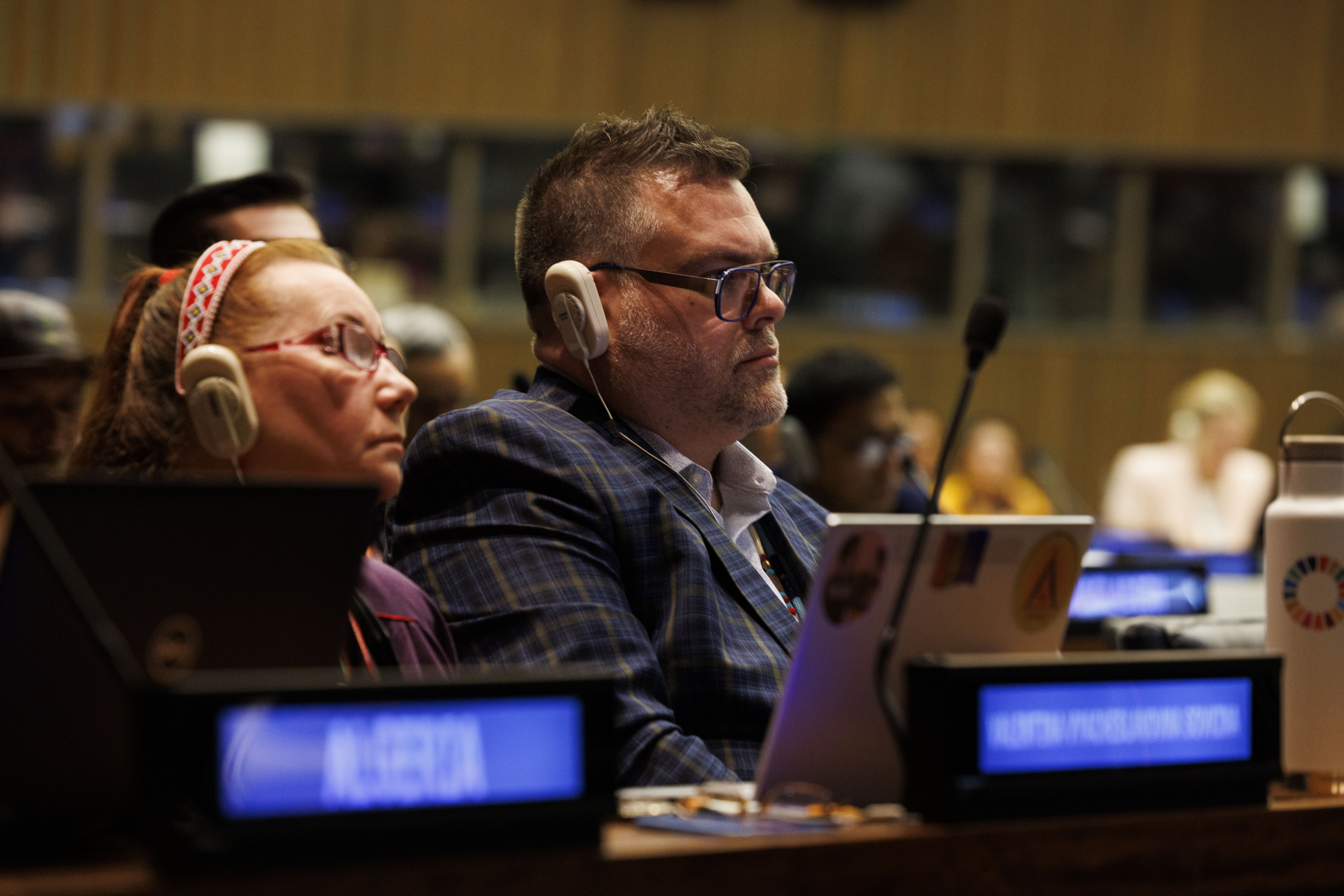
As hundreds of delegates convene at the United Nations for the Permanent Forum on Indigenous Issues, the atmosphere is defined by a sense of precariousness. This year's theme — Indigenous health in the context of conflict — serves as a somber acknowledgment of how war and militarization compound the existing pressures of climate change. For these communities, health is rarely viewed as a clinical abstraction; rather, it is a condition inextricably linked to land sovereignty. When ecosystems are degraded by conflict or displacement, the collective well-being of the people dissolves with them.
The forum arrives at a moment when the global economy is reorganizing itself around two parallel imperatives: the buildout of artificial intelligence infrastructure and the transition away from fossil fuels. Both require vast quantities of critical minerals — lithium, cobalt, copper, rare earth elements — and a significant share of known reserves sits beneath lands that Indigenous peoples have inhabited and managed for generations.
The New Extraction Frontier
The paradox is not subtle. The very technologies framed as solutions to planetary crises are generating a fresh cycle of resource extraction on ancestral territories. Data centers powering large language models demand enormous volumes of energy and raw materials. Wind turbines, solar panels, and battery storage systems depend on mineral supply chains that stretch into remote regions of Latin America, sub-Saharan Africa, Southeast Asia, and the Arctic. In each of these geographies, Indigenous communities have historically borne the environmental and social costs of extraction while receiving few of its benefits.
This pattern has deep precedent. The fossil fuel era produced well-documented cases in which oil and gas development proceeded on Indigenous lands with minimal consultation, inadequate compensation, and lasting ecological damage. Advocates at the forum argue that the green energy transition risks replicating that model unless strict safeguards — including the principle of free, prior, and informed consent — are embedded into every stage of mineral sourcing and project development. The principle, enshrined in the UN Declaration on the Rights of Indigenous Peoples adopted in 2007, remains unevenly implemented across national jurisdictions. Mining codes in many countries still allow governments to override community objections when projects are deemed to serve the national interest.
The AI dimension adds a layer of complexity. Unlike a solar farm or a lithium mine, the downstream demand generated by artificial intelligence is diffuse and fast-moving. The connection between a chatbot query in a corporate office and a cobalt mine on Indigenous land is real but opaque, making accountability harder to trace and public pressure harder to mobilize.
Governance Gaps and the Question of Direct Agency
Beyond the physical extraction, systemic barriers persist in the halls of global governance itself. Delegates from the Global South have faced increasing difficulty securing visas to attend the forum, even as they call for a fundamental shift in how climate resources are managed. The irony is pointed: the communities most affected by extraction and climate disruption are also those most likely to be excluded from the institutions designed to address those problems.
The central demand emerging from the forum is one of direct agency. Indigenous representatives are pushing for climate financing to bypass state or foreign intermediaries and flow directly into the hands of the communities doing the stewardship work. The logic is straightforward: Indigenous peoples manage an estimated substantial share of the world's remaining biodiversity-rich landscapes, yet they receive a fraction of global conservation and climate funding. Redirecting resources would not only be more equitable but, proponents argue, more effective — given the track record of top-down conservation programs that have often displaced the very populations whose practices sustained those ecosystems.
The tension at the heart of this year's forum is structural, not incidental. The global economy's appetite for critical minerals is accelerating. The governance frameworks meant to protect Indigenous rights remain fragmented and largely voluntary. And the communities positioned at the intersection of these forces are being asked, once again, to absorb the costs of a transition they did not design.
Whether the emerging architecture of AI governance and green industrial policy will incorporate meaningful Indigenous participation — or whether it will treat consultation as a procedural formality — remains the open question. The answer will depend less on declarations issued in New York than on the specific terms negotiated at mine sites, in national legislatures, and inside the boardrooms of the companies building the next generation of energy and computing infrastructure.
With reporting from Grist.
Source · Grist