SpaceX, the aerospace company led by Elon Musk, has secured a $60 billion option to acquire Cursor, the AI-powered coding startup that has rapidly gained traction among software developers. The deal, announced on Tuesday, represents one of the largest transactions involving a generative AI company to date and signals a deliberate effort to embed automated software development into the core of SpaceX's engineering operations.
The structure of the agreement is notable in itself. Rather than an outright acquisition, SpaceX has obtained the right — but not the obligation — to complete the purchase later this year. The alternative: a $10 billion payment for the results of a joint collaboration between the two companies. This optionality gives SpaceX leverage to evaluate the integration before committing fully, a mechanism more common in pharmaceutical licensing deals than in the technology sector.
AI-Assisted Engineering and the Colossus Factor
The strategic rationale centers on combining Cursor's AI code editor with Colossus, the large-scale AI training supercomputer developed by xAI, which operates as a SpaceX subsidiary. Cursor has built its reputation on a code editor that uses large language models to assist developers in writing, debugging, and refactoring software — a tool category sometimes described as an "AI pair programmer." The product has found a substantial user base among professional engineers, a distribution advantage that SpaceX apparently views as complementary to its computational infrastructure.
The ambition, as the deal structure implies, is to accelerate the development of mission-critical software — the kind that governs flight control systems, orbital mechanics calculations, and autonomous landing sequences. Aerospace software carries unusually high reliability requirements. Every line of code in a launch vehicle's guidance system operates under constraints where failure is not an abstraction but a physical event. Applying AI-assisted coding tools to this domain raises both the promise of faster iteration cycles and serious questions about verification and validation processes that aerospace regulators have spent decades refining.
The broader context matters here. The integration of generative AI into software engineering workflows has moved from experimental curiosity to standard practice across much of the technology industry over the past two years. What SpaceX appears to be testing is whether that same acceleration can be applied to safety-critical systems — a domain where the software industry and the aerospace industry have historically maintained very different standards of rigor.
IPO Positioning and Vertical Integration
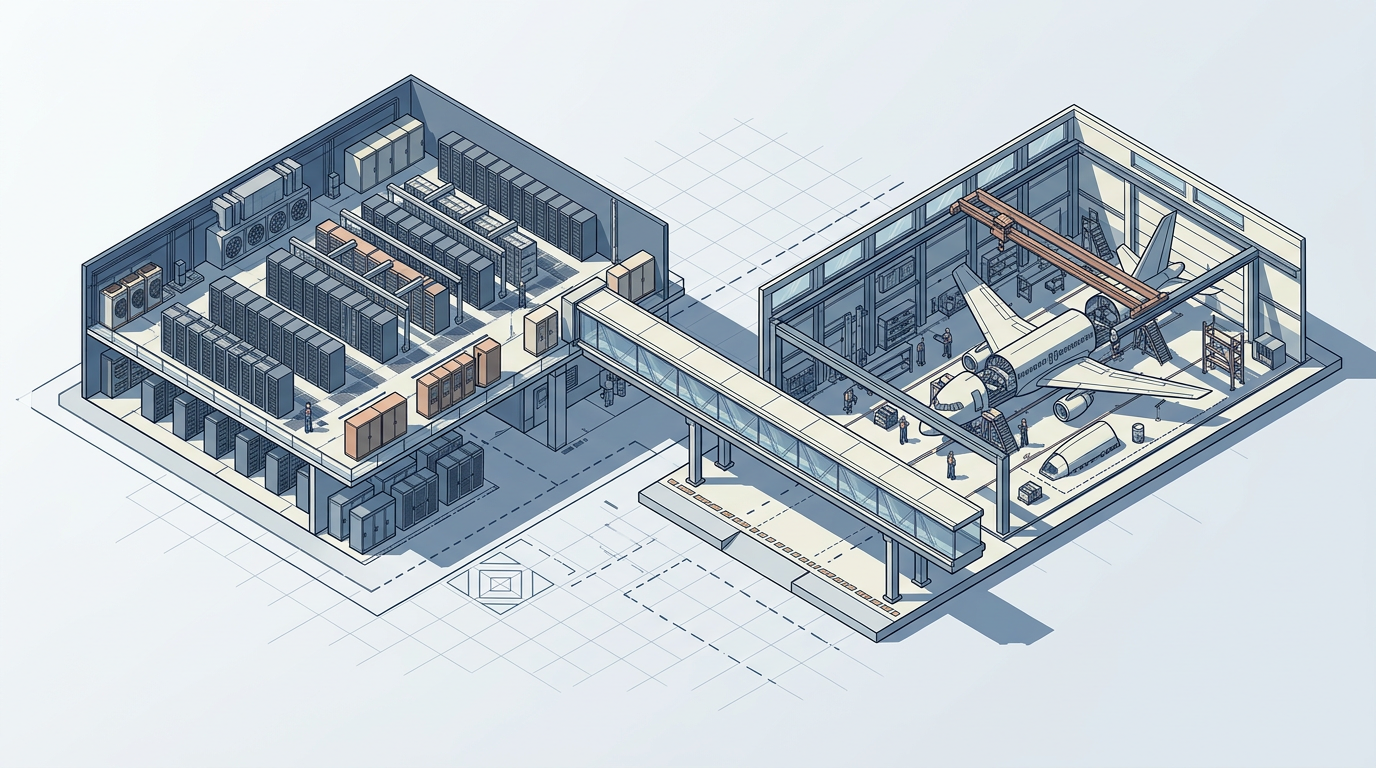
The timing of the Cursor option is difficult to separate from SpaceX's trajectory toward an initial public offering, widely expected to be among the largest in history. By adding AI capabilities to its portfolio ahead of a listing, the company is constructing a narrative that extends well beyond launch services. SpaceX already operates Starlink, the satellite internet constellation that generates recurring revenue at scale. An AI-powered software development capability would add another layer to the story of vertical integration — a company that designs rockets, operates a global communications network, builds supercomputers, and now develops the tools its own engineers use to write code.
Vertical integration has been central to SpaceX's competitive advantage since its founding. The company manufactures its own engines, builds its own avionics, and recovers its own boosters — a level of in-house control that traditional aerospace contractors historically outsourced across sprawling supply chains. Extending that philosophy to AI-assisted software development follows the same logic, even if the domain is fundamentally different from bending metal and casting turbopumps.
The question that remains open is whether the option will be exercised at all. A $60 billion valuation for a coding tool startup — however popular — implies expectations of transformative impact on software productivity that have not yet been demonstrated at aerospace-grade reliability. SpaceX could walk away with the collaboration results for $10 billion, a sum that is itself extraordinary but that preserves flexibility. The deal structure, in other words, reveals as much caution as ambition. Whether the full acquisition materializes may depend less on Cursor's commercial momentum and more on whether its tools can meet the verification standards that govern software responsible for keeping humans alive in orbit.
With reporting from InfoMoney.
Source · InfoMoney