The aerospace industry has long been defined by its mastery of physics and materials science, but SpaceX's latest move suggests the next era of flight may be won in the lines of code. In a deal that underscores the ballooning value of generative software tools, Elon Musk's rocket company has reached an agreement to acquire Cursor, the AI-native code editor, for $60 billion — a figure that would make it one of the largest acquisitions in the history of the technology sector.
Cursor, developed by Anysphere, rose to prominence as a code editor built around large language models, offering developers an environment in which AI agents can anticipate architectural decisions, refactor entire codebases, and generate functional code with minimal human direction. The tool attracted a devoted following among software engineers for its fluid integration of generative capabilities into the daily act of writing software. That SpaceX — a company whose core identity is built around rockets, not developer tools — would pay such a premium signals a particular thesis about where value is migrating in complex engineering.
Vertical integration enters the software layer
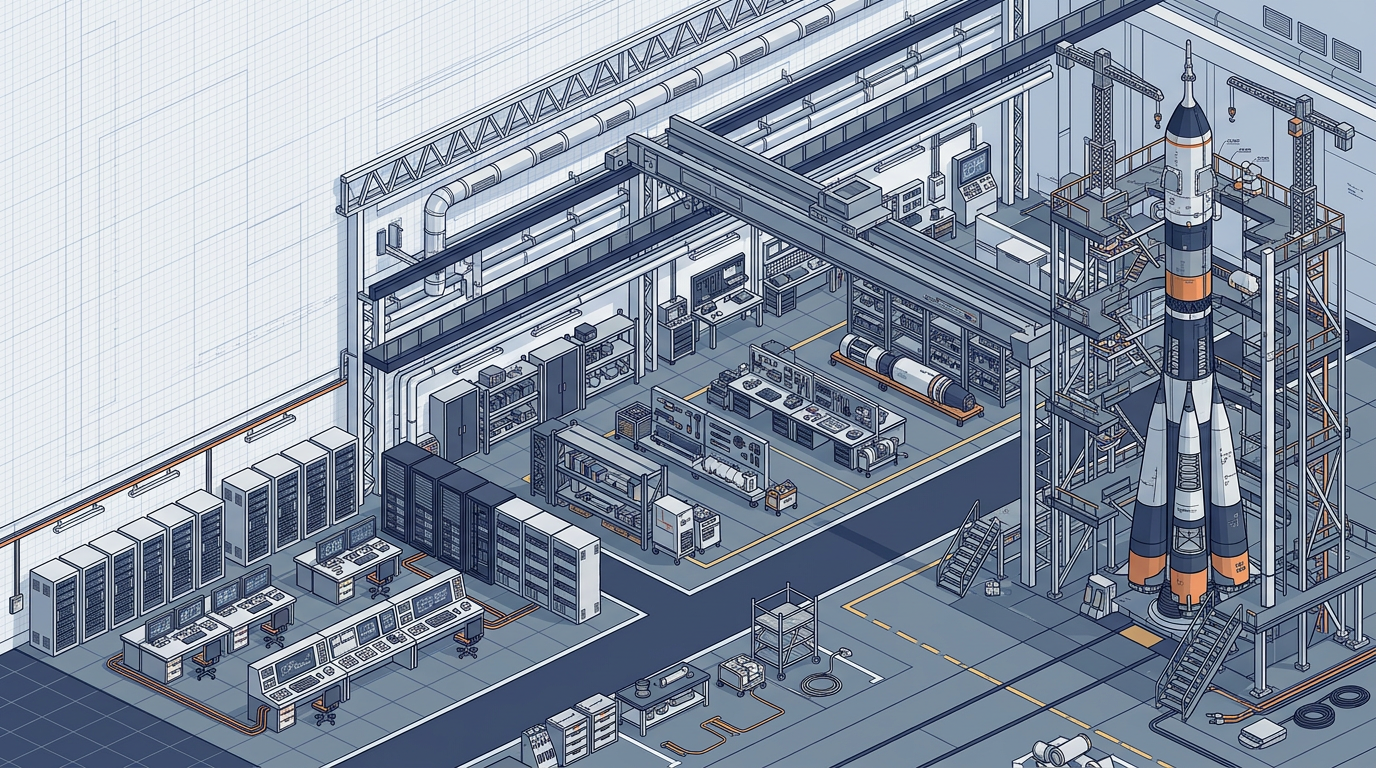
SpaceX's operating philosophy has long centered on vertical integration. The company manufactures its own engines, builds its own avionics, and assembles its own launch vehicles — a strategy that has allowed it to compress costs and iteration cycles far beyond what traditional aerospace primes achieved. The Cursor acquisition extends that logic into a new domain: the tools used to write the software that governs every stage of a mission, from simulation and flight control to constellation management.
The rationale is not difficult to trace. Modern launch vehicles and satellite networks are software-intensive systems. Starship's flight computer, the autonomous landing sequences that enable booster reuse, and the orbital coordination of thousands of Starlink satellites all depend on codebases of considerable scale and complexity. As these systems grow, the speed at which software can be written, tested, and deployed becomes a binding constraint on the pace of the entire enterprise. Bringing an AI-native development environment in-house gives SpaceX direct control over that constraint — and, potentially, the ability to shape the tool around the specific demands of safety-critical aerospace code.
There is precedent for this kind of move in adjacent industries. Tesla's decision to design its own inference chips for autonomous driving rather than rely on third-party silicon followed a similar logic: when a capability becomes central enough to the product, owning the toolchain becomes a competitive necessity rather than a luxury.
What the price tag signals for the AI tooling market
The $60 billion valuation attached to Cursor is striking in its own right. It places a company that builds a code editor — a category historically associated with modest, utility-scale businesses — in the same valuation territory as major enterprise software firms. The implication is that the market, or at least SpaceX, views AI-augmented development environments not as productivity accessories but as foundational infrastructure for the next generation of engineering.
This reprices the entire category. Other AI coding tools — GitHub Copilot, Replit's Ghostwriter, Amazon's CodeWhisperer — now operate in a landscape where a single acquirer has signaled willingness to pay a sovereign-wealth-fund-scale sum for the right platform. Whether that valuation reflects durable economics or the frothy peak of a generative AI cycle is a question the market will answer over time.
For SpaceX, the risk is that the capabilities Cursor offers today — however impressive in general-purpose software development — may not translate cleanly into the domain-specific, safety-critical context of aerospace. Writing code that controls a rocket engine demands verification regimes, formal methods, and failure-mode discipline that differ substantially from the workflows Cursor was designed to accelerate. Adapting the tool to that environment is a nontrivial engineering challenge in itself.
The deal also raises a structural question about access. If Cursor becomes a proprietary SpaceX asset, the broader developer community that fueled its growth may lose access to the product or see its development priorities shift toward aerospace-specific use cases. How SpaceX manages that transition — whether it keeps Cursor available as a commercial product or folds it entirely into internal operations — will shape both the tool's trajectory and the competitive dynamics of the AI coding market.
What remains clear is the underlying bet: that the organizations capable of writing software fastest and most reliably will hold a decisive advantage in industries where physical and digital systems are converging. Whether that bet justifies $60 billion depends on how quickly autonomous coding agents mature — and whether the gap between generating code and trusting it with human lives can be closed.
With reporting from Hacker News.
Source · Hacker News