Traditional sports merchandise has long relied on a utilitarian, logo-heavy formula that prioritizes team allegiance over personal style. The standard offering — oversized jerseys, foam fingers, screen-printed tees — serves a clear purpose: tribal identification. But for a growing segment of fans, particularly those accustomed to curated wardrobes and design-forward consumption, the gap between what they wear to a restaurant and what they wear to an arena has become a source of quiet frustration.
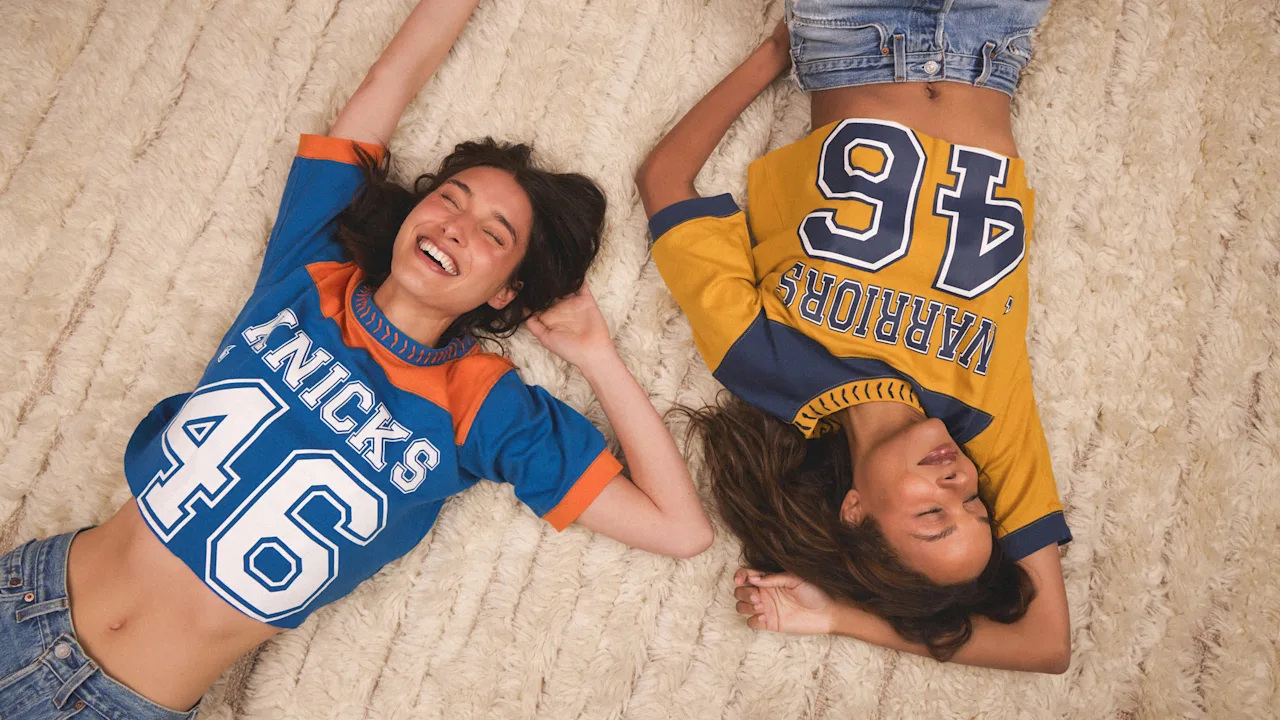
For Danielle Snyder Shorenstein, a fashion designer who relocated from New York to San Francisco, that frustration became a design brief. The standard Golden State Warriors gear felt disconnected from her aesthetic — a problem she initially solved by treating the jersey not as a finished product, but as raw material. By deconstructing team apparel and adding elements like crochet collars and crystal embellishments, she created a hybrid of high fashion and stadium culture. The response, first from players' families and fellow fans, was immediate and organic, suggesting a significant untapped market for fanwear that transcends the gift-shop aesthetic. That grassroots experimentation has now crystallized into DannijoPro, a collaboration between Shorenstein and her sister, Jodie Snyder Morel.
From Logo to Lifestyle
The sports merchandise industry has historically operated under a simple commercial logic: license the logo, stamp it on fabric, sell it at volume. The model works because demand is largely inelastic — fans buy gear to signal loyalty, not to make a fashion statement. But the broader consumer landscape has shifted beneath that assumption. The rise of athleisure, the blurring of formal and casual dress codes, and the influence of streetwear on luxury fashion have collectively raised the baseline expectation for what clothing should look like, regardless of context.
DannijoPro sits at the intersection of these forces. Rather than competing with mass-market licensees on price or distribution, the brand targets a consumer who already spends on design and views team affiliation as an extension of personal identity. The concept is not entirely without precedent. Streetwear labels have long drawn on sports iconography, and luxury houses have occasionally produced limited-edition collaborations with leagues and teams. What distinguishes DannijoPro is the direction of approach: it starts from within fan culture and moves toward fashion, rather than the reverse. The result is merchandise that reads as wardrobe rather than souvenir.
The Snyder sisters bring relevant credentials to the venture. Their existing brand, Dannijo, built a following in jewelry and accessories through a sensibility that blends craft detail with accessible glamour — a vocabulary that translates naturally to the project of elevating sports apparel. The decision to formalize the effort as a distinct label, rather than a capsule collection, signals ambition beyond a novelty play.
The Arena as Runway
The timing aligns with a broader recalibration in professional sports around the fan experience. Leagues and franchises have invested heavily in premium hospitality, venue design, and digital engagement, recognizing that the modern spectator expects an experience that extends well beyond the game itself. Merchandise, however, has been slower to evolve. The gap is particularly visible in women's fanwear, a category long treated as an afterthought — pink-washed versions of men's designs rather than products conceived with a distinct consumer in mind.
DannijoPro's early traction suggests that the demand is real, but the path to scale carries familiar tensions. Licensed sports merchandise operates within a tightly controlled ecosystem of league approvals, team branding guidelines, and exclusive manufacturing agreements. Any brand seeking to reimagine the category must navigate those constraints without losing the design freedom that makes the proposition compelling in the first place. Whether leagues view this kind of premium reinterpretation as a complement to their existing licensing revenue or as a complication remains an open question.
There is also the matter of audience. The consumer who customizes a Warriors jersey with crystal embellishments may overlap only partially with the consumer who buys a standard replica at the team store. If DannijoPro expands the total addressable market for sports merchandise rather than merely redistributing existing spend, the economics become far more interesting — for the brand, for the leagues, and for the broader design industry watching from the sidelines.
With reporting from Fast Company Design.
Source · Fast Company Design