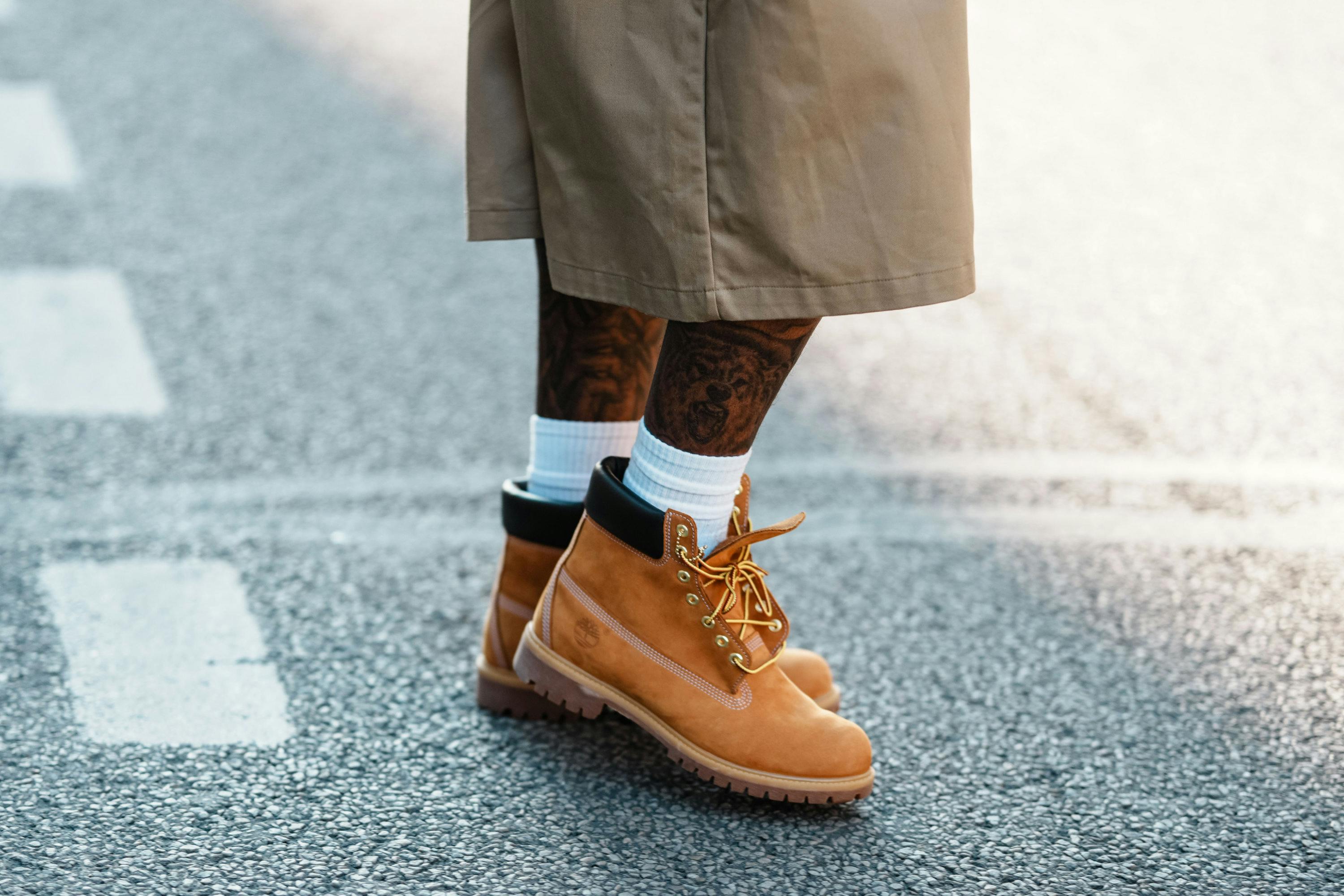
The perennial question of summer menswear — the appropriate length of a short — has found a new, more expansive answer. After years of the five-inch inseam dominating cultural discourse, the pendulum is swinging toward the dramatic. These are shorts that flirt with the definition of trousers, falling well past the knee in a silhouette reminiscent of late-1990s festival culture but refined for a contemporary, luxury context. The shift is not merely aesthetic; it signals a broader recalibration of how menswear balances comfort, proportion, and intent.
At Coachella, Justin Bieber demonstrated this new direction, pairing oversized LU'U DAN shorts with tall Loewe boots — a combination that elevated the casual ease of so-called "Adam Sandler-core" into something more deliberate and high-fashion. The look circulated widely, functioning less as celebrity gossip and more as a style thesis: volume, not brevity, is the new currency of warm-weather dressing.
Proportion as design language
The appeal of the long short lies in the manipulation of proportion. Where short-shorts offer athletic utility and a certain retro charm, the below-the-knee silhouette provides what might be called architectural weight — the ability to anchor an outfit visually, shifting the eye downward and creating a column of fabric that interacts with footwear in ways a five-inch inseam simply cannot.
This is not an entirely new idea. Menswear has cycled through longer hemlines before. The wide-leg, below-the-knee shorts of the early 2000s — driven by skateboarding culture, hip-hop, and brands like JNCO and Fubu — occupied a similar territory in terms of raw silhouette. What distinguishes the current iteration is context and fabrication. The garments appearing now tend to feature tailored details: cleaner seams, heavier drape fabrics, and deliberate proportional relationships with the rest of the outfit. The difference between a pair of cargo shorts from 2003 and a pair of oversized linen shorts from a luxury streetwear label is not just price — it is intentionality of cut.
The broader menswear landscape has been moving in this direction for several seasons. Oversized tailoring, relaxed trousers, and longer coats have steadily displaced the slim, cropped fits that defined the early-to-mid 2010s. The long short is, in some respects, the last holdout of that transition — the warm-weather garment finally catching up to the proportional logic already governing the rest of the wardrobe.
Low effort, high impact
Part of the long short's commercial promise is its versatility as a styling anchor. By shifting the visual center of gravity in an outfit, these garments allow simple pairings — a linen shirt, a basic tee, a loose knit — to feel curated rather than merely functional. The volume of the short does much of the aesthetic work, reducing the need for layering or accessorizing to achieve a deliberate look. In the heat of summer, that economy of effort carries real appeal.
There is also a cultural dimension worth noting. The line between "dressed up" and "dressed down" in menswear has been eroding for years, accelerated by remote work, the casualization of luxury retail, and a generation of consumers who view comfort and style as compatible rather than competing values. The long short sits precisely at that intersection — a garment that reads as relaxed but carries enough structural presence to register as considered.
Whether the trend sustains beyond a single season or becomes a permanent fixture in the menswear rotation depends on several forces in tension: the cyclical pull of fashion toward the next silhouette shift, the commercial appetite of luxury brands to invest in the category, and the willingness of consumers to abandon the short-shorts that still dominate mainstream retail. The five-inch inseam is not gone. But for the first time in years, it has genuine competition — and the competition is measured in fabric, not skin.
With reporting from Highsnobiety.
Source · Highsnobiety