Design discourse tends to oscillate between two poles: the speculative prototype that imagines a world not yet built, and the refined object that solves a problem already well understood. A recent cluster of industrial design stories — spanning concept automobiles, miniaturized climate hardware, and centuries-old Japanese woodcraft — lands squarely in the space between those poles, revealing how the discipline negotiates ambition with utility.
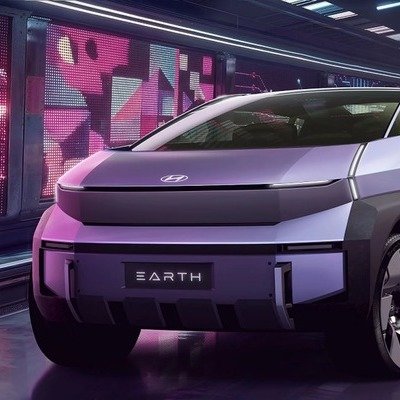
Hyundai's unveiling of two concept vehicles, dubbed "Venus" and "Earth," offers a case study in how automotive design is fragmenting along regional lines. Both cars were developed specifically for the Chinese market, a strategic choice that signals more than cosmetic localization. It suggests that the next generation of mobility platforms may be shaped less by universal engineering benchmarks and more by the infrastructure realities, regulatory environments, and aesthetic sensibilities of individual markets.
Localized Futures and Globalized Platforms
The automotive industry has long operated on a platform-sharing logic: develop a single architecture, then adapt it with minor trim and feature variations for different geographies. Hyundai's approach with Venus and Earth appears to push further, treating regional context as a primary design input rather than a downstream adjustment. China's electric vehicle market — the largest in the world by volume — has produced a generation of domestic competitors whose design language, software integration, and pricing strategies are calibrated to local expectations. For a Korean manufacturer to respond with region-specific concept vehicles is an acknowledgment that a single global design vocabulary may no longer suffice.
This kind of hyper-localization carries strategic tension. The more a manufacturer tailors products to a single market, the harder it becomes to amortize development costs across geographies. Yet the alternative — offering a generic global product — risks irrelevance in markets where domestic players already speak the local design dialect fluently. How major automakers navigate this trade-off will likely define competitive positioning in the coming years.
The Quiet Logic of Airflow and Analog Systems
At a smaller scale, Dyson's latest entry into handheld fan hardware extends the company's long-running investment in motor miniaturization and airflow engineering. Personal fans are a commodity category, dominated by inexpensive imports with minimal differentiation. Dyson's approach — applying the same aerodynamic rigor it brings to vacuums and bladeless tower fans — reframes the handheld fan as a serious exercise in personal climate control rather than a disposable seasonal accessory. Whether consumers will pay a premium for that reframing remains an open question, but the move is consistent with Dyson's broader pattern of entering mature product categories and attempting to redefine their performance ceiling.
On the domestic design front, industrial designer Daniel Barnes has directed attention toward an object most people never think twice about: the bathroom waste bin. His two-compartment design applies thoughtful material choices and functional separation to an artifact that typically receives zero design consideration. It is a small project, but it illustrates a principle that runs through much of industrial design history — that elevating the mundane often yields more practical impact than reimagining the extraordinary.
Perhaps the most resonant entry in this collection is a rediscovered pre-industrial Japanese sliding shutter system. Built entirely from wood, the mechanism achieves a level of mechanical sophistication — smooth operation, precise tolerances, durable construction — without any electronic or even metal components. It belongs to a tradition of Japanese joinery that has long fascinated designers and engineers for its ability to solve complex structural problems through material intelligence alone. In an era saturated with sensor-laden smart devices, the shutter system stands as a counterpoint: a reminder that durability and elegance do not require a power source.
Taken together, these projects trace a recurring question in design practice. When does complexity serve the user, and when does simplicity serve them better? Hyundai bets on specificity and regional intelligence. Dyson bets on engineered performance in a category that has historically settled for less. Barnes bets on material care applied to the overlooked. And a centuries-old Japanese shutter bets on nothing more than wood and gravity. The tension between these approaches is not one that resolves — it is one that productive design cultures learn to hold open.
With reporting from Core77.
Source · Core77