The traditional hierarchy of the male wardrobe has long placed the torso at its apex. For decades, the shirt, the jacket, or the coat served as the primary vehicle for personal expression, while the "bottom" remained a functional, often invisible, afterthought — usually a variation of the standard straight-leg jean or the utilitarian chino. But a shift in the marketplace suggests that the foundational architecture of men's style is migrating downward.
The skinny jean, which dominated men's fashion for much of the 2010s, has been in retreat for several years. In its place, a broader spectrum of silhouettes has emerged — wide-leg trousers, deep pleats, cropped hems, leather pants worn outside of subcultural contexts, and hybrid garments that borrow from both tailoring and streetwear. The result is a landscape where the trouser is no longer a neutral canvas but an active design statement.
From Default to Deliberate
For most of the twentieth century, men's legwear operated within narrow parameters. The suit trouser, the chino, and the five-pocket jean formed a near-exhaustive taxonomy. Variation existed — the zoot suit's exaggerated drape in the 1940s, the flared leg of the 1970s, the pleated dress pant of the 1980s — but these cycles tended to resolve back toward a conservative mean. The skinny jean's long dominance, roughly from the mid-2000s through the late 2010s, reinforced the idea that men's bottoms should recede: fitted, dark, unremarkable.
What distinguishes the current moment is not merely a pendulum swing toward volume — the kind of cyclical loosening that fashion has seen before — but a more fundamental expansion of the vocabulary available to the average consumer. Pleated trousers, once coded as either formal or anachronistic, now appear in casual contexts alongside sneakers and graphic tees. Leather and faux-leather pants, historically associated with rock subculture or high-fashion provocation, have migrated into mainstream retail. Cargo silhouettes, balloon hems, and drawstring waists coexist on the same shop floor. The operative change is not one trend replacing another but the simultaneous availability of many.
This pluralism tracks with broader shifts in men's retail. The decline of the "uniform" approach — where a single silhouette dominates across price points and demographics — has opened space for brands to differentiate through cut and textile rather than logo or colorway alone. When the top half of an outfit converges around a handful of familiar archetypes (the oversized hoodie, the boxy tee, the minimal jacket), the bottom half becomes the variable where identity is expressed.
Texture as Architecture
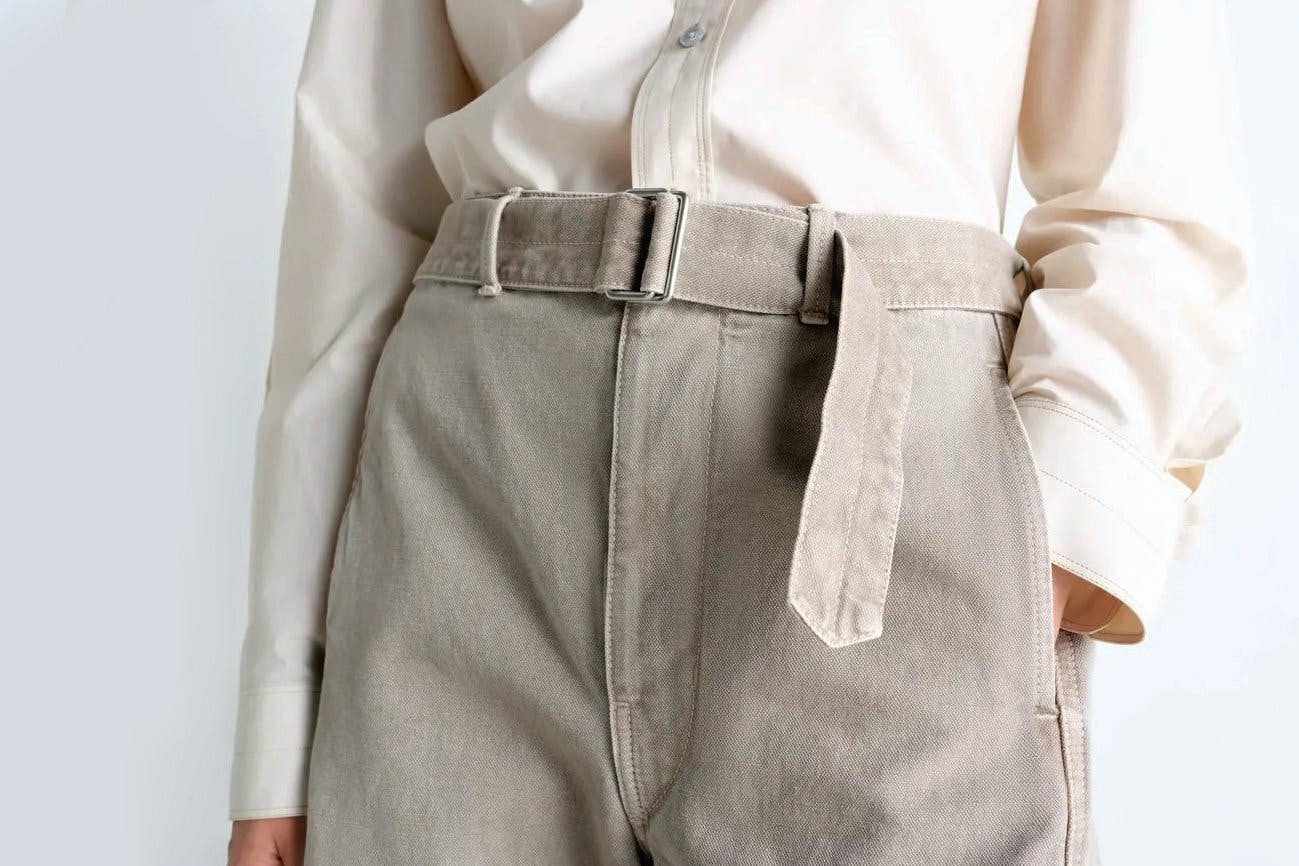
The emphasis on legwear also reflects a growing interest in materiality. Where the standard jean offered denim as a near-universal default fabric, the current landscape rewards variety: waxed cottons, technical nylons, heavyweight wools worn year-round, and blended textiles that resist easy categorization. The trouser becomes not just a shape but a surface — one that interacts with light, movement, and the rest of the outfit in ways that a pair of indigo Levi's, however iconic, does not.
This shift carries implications for how silhouettes are constructed from the ground up. If the pant is the defining element of an outfit, then footwear, outerwear, and proportion must respond to it rather than the reverse. The wide-leg trouser demands a different shoe than the tapered jogger; the leather pant sets a tonal register that the jacket must either match or deliberately counterpoint. The hierarchy of dressing, in other words, reorganizes itself around the leg.
Whether this represents a durable structural change or a cyclical moment of experimentation that will eventually contract remains an open question. The commercial incentives point in both directions: variety drives novelty purchases, but simplicity reduces production risk. What is clear is that the trouser — long treated as the silent partner in the male wardrobe — is, for now, doing most of the talking.
With reporting from Highsnobiety.
Source · Highsnobiety