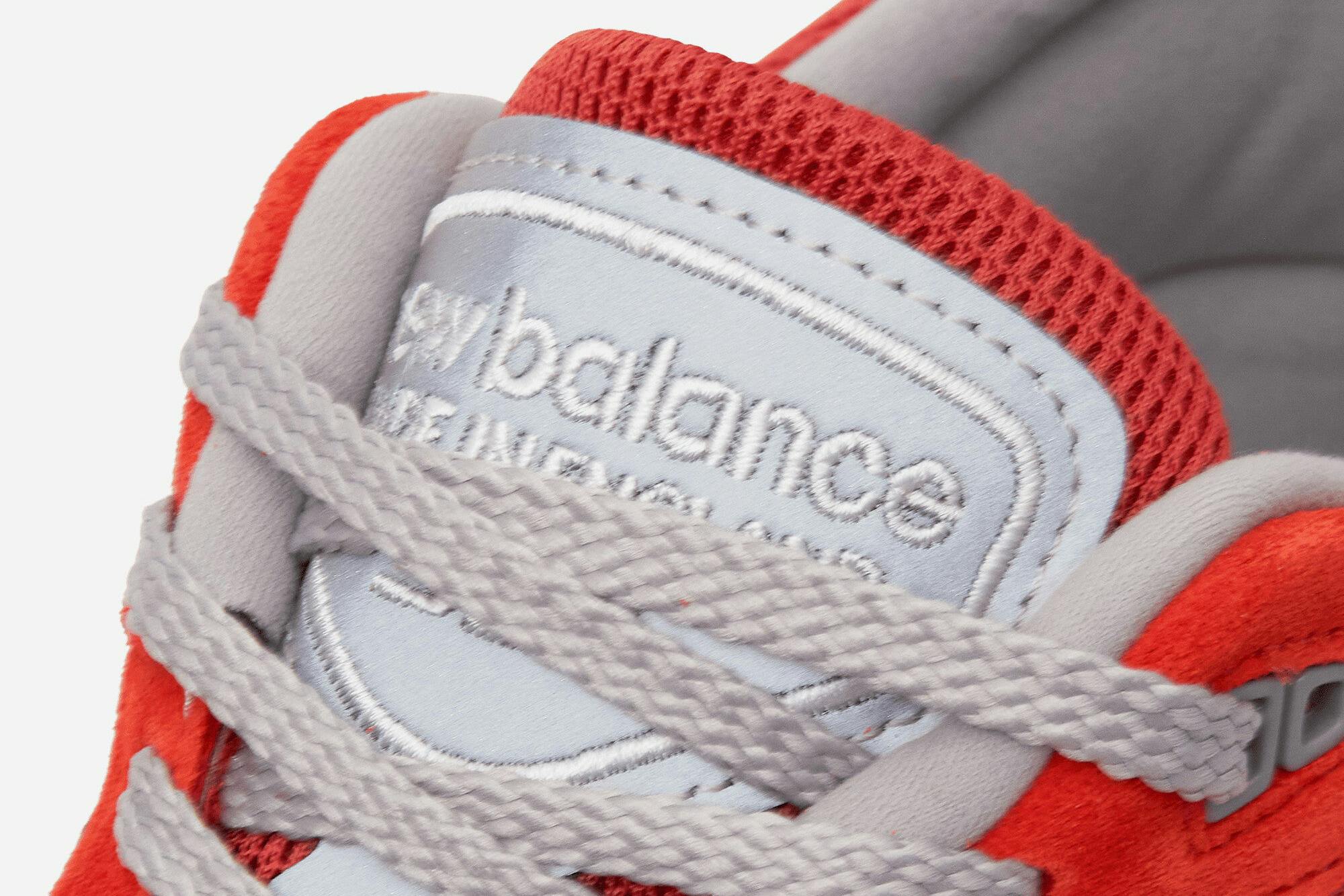
The New Balance 991v2, a silhouette rooted in the brand's long tradition of performance-oriented runners produced at its Flimby factory in Cumbria, England, has received a new colorway that signals a broader shift in how heritage footwear brands approach color and craft. The "Grenadine" edition — a deep, saturated red that takes its name from the pomegranate-derived syrup — arrives as the centerpiece of a "Vibrant Chroma" pack, paired with a "Limoges" blue counterpart. Together, the two colorways mark a deliberate departure from the muted palettes that have long defined the Made in U.K. line.
The release sits at $270, a price point that reflects the costs of regional manufacturing in England rather than the outsourced production that dominates the broader sneaker market. Construction follows the 991's established formula: high-grade suede and mesh uppers, the silhouette's signature grey accents, and the kind of hand-finished detailing that Flimby has built its reputation on over several decades.
Color as strategy in the heritage sneaker market
For much of its modern history, New Balance's Made in U.K. and Made in U.S.A. lines have traded on restraint. The 990 and 991 families became fixtures of a particular aesthetic — sometimes called "normcore," sometimes simply "dad shoe" — that valued grey, navy, and earth tones above all else. That palette served the brand well during the broader menswear shift toward understated, quality-driven wardrobe building. It also made New Balance a quiet beneficiary of the luxury sneaker boom, as consumers who might once have reached for European fashion houses began gravitating toward shoes with genuine manufacturing provenance.
The Grenadine colorway represents something different. A high-chroma red applied to a heritage silhouette is not without precedent in the industry — Nike and Adidas have long used bold color to refresh classic models — but it carries distinct implications for a brand whose identity is so closely tied to tonal subtlety. The pairing with the Limoges blue, framed as a "fire and ice" dichotomy, suggests this is less a one-off seasonal experiment and more a considered design study. If the pack sells well, it could open a lane for New Balance to expand the emotional range of its premium tier without diluting the craftsmanship narrative that justifies the price.
The timing is notable. The sneaker resale market has cooled considerably from its pandemic-era peaks, and hype-driven releases no longer guarantee sell-through the way they once did. Brands across the industry are recalibrating, placing greater emphasis on product quality, storytelling, and colorway strategy as tools for sustaining consumer interest. In that context, a bold color applied to a well-understood silhouette is a relatively low-risk move: it refreshes the product without requiring new tooling or a redesign.
Flimby's role in the provenance economy
The Flimby factory, which has produced New Balance footwear since the mid-1980s, occupies an unusual position in the global sneaker supply chain. At a time when the vast majority of athletic footwear is manufactured in East and Southeast Asia, Flimby's continued operation serves as both a production facility and a marketing asset. The "Made in U.K." designation functions as a quality signal, much the way Swiss-made labeling operates in watchmaking or Savile Row tailoring does in menswear. It allows New Balance to command a premium that would be difficult to justify on technical performance alone.
The Grenadine release tests whether that provenance story can stretch to accommodate more expressive design choices. Heritage manufacturing and bold color are not inherently in tension, but the consumer who pays $270 for a Flimby-made runner may not be the same consumer drawn to saturated reds. Whether those audiences overlap — or whether the Vibrant Chroma pack can attract new buyers to the Made in U.K. line without alienating its existing base — remains the open question.
The forces at work are clear enough: a heritage brand pushing against its own aesthetic conventions, a cooling market that rewards product substance over hype, and a factory whose continued relevance depends on the ability to evolve without losing what made it distinctive in the first place. How those forces resolve will say something not just about New Balance, but about the broader appetite for craft-driven footwear in a market still searching for its post-hype equilibrium.
With reporting from Highsnobiety.
Source · Highsnobiety