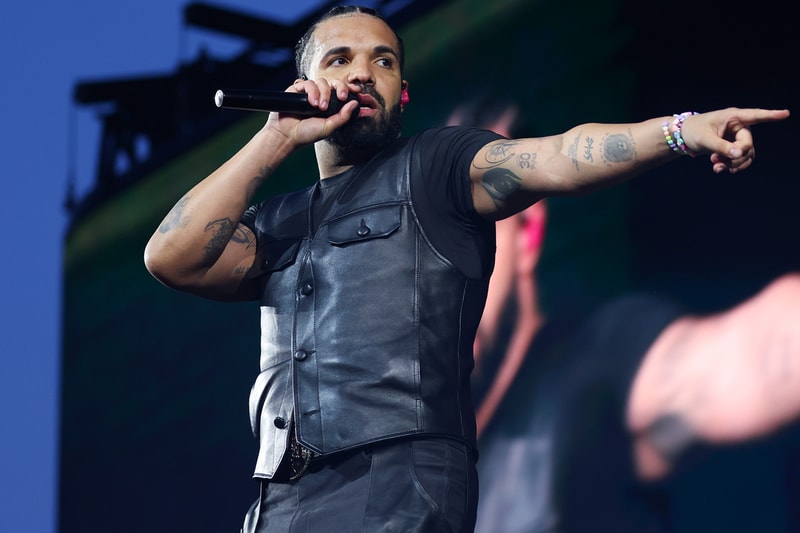
The modern album rollout has become as much a feat of engineering as it is a musical endeavor. Drake's current campaign for ICE MAN exemplifies this shift, moving through a series of high-visibility stunts — including diamond-encrusted courtside seats at a Toronto Raptors game and strategic music video leaks — toward a seemingly imminent release. A recent social media update from the artist suggests the project has finally been turned in, signaling the conclusion of a meticulously staged pre-release cycle.
The campaign is notable less for any single gesture than for the cumulative weight of its choreography. Each element — the courtside spectacle, the timed leaks, the social media breadcrumbs — functions as a discrete unit of attention, engineered to sustain interest across a news cycle that rarely grants more than forty-eight hours of relevance to any single cultural event. In an era where streaming platforms reward sustained listening over first-week spikes, the pre-release window has become the primary arena for generating narrative momentum.
The Architecture of Attention
Drake's approach to ICE MAN sits within a lineage of rollout strategies that have grown steadily more elaborate over the past decade. The surprise-drop model, popularized in the mid-2010s, briefly upended conventional release logic by collapsing the marketing cycle into a single moment of revelation. But the industry adapted. What emerged was a hybrid: campaigns that borrow the surprise drop's sense of event while layering in weeks of controlled information release. The result is a kind of narrative serialization, where each new detail — a tracklist hint, a visual teaser, a public appearance — functions as an episode in an ongoing story.
The economics behind this are straightforward. Streaming platforms compensate artists primarily on a per-stream basis, which means that sustained cultural presence translates more directly into revenue than a single burst of attention. A rollout that keeps an artist in the conversation for three or four weeks can generate meaningfully more streams in the long tail than one that peaks and fades within days. Drake, whose catalog already benefits from enormous passive listenership, has particular incentive to extend the window of active engagement.
Dean Blunt's trajectory with "478 freestyle" — originally uploaded to SoundCloud under a different title before migrating to major streaming platforms — illustrates a contrasting but equally deliberate logic. The track, featuring Celeste and production from Vegyn, began its life in the informal economy of SoundCloud, where rough mixes and loosies circulate without the gatekeeping of traditional distribution. Its subsequent appearance on Spotify and Apple Music reflects a pattern that has become increasingly common: artists using free or semi-public platforms as testing grounds, then formalizing releases that gain traction. The line between demo and finished product continues to thin, and the distinction matters less to listeners than it does to the metadata systems that govern royalty payments.
The Intimacy Calculus of Live Performance
Dominic Fike's announcement of his "Comedy Tragedy Parody Tour" — a limited 14-city run beginning this August in North Carolina and concluding in Los Angeles — speaks to a separate but related recalibration. The decision to stage an intimate series of performances rather than pursue a large-scale arena tour reflects a broader pattern among mid-career artists who have built dedicated but not stadium-filling audiences. Smaller venues offer higher per-ticket margins, more controlled production environments, and a sense of exclusivity that translates well to social media documentation by attendees.
There is also a risk-management dimension. The touring economy has grown more volatile in recent years, with rising production costs and unpredictable ticket demand making large-scale tours a significant financial gamble for artists outside the top tier. A tightly scoped run limits downside exposure while preserving the cultural signal of an active live presence.
Taken together, these three cases — Drake's maximalist campaign, Blunt's platform migration, Fike's controlled touring strategy — map the current terrain of music distribution. Each represents a different answer to the same underlying question: how to convert creative output into durable attention within systems that reward consistency over spectacle. Whether the balance tips further toward engineering or reverts toward spontaneity depends on forces that remain in tension — platform economics, audience fatigue, and the unpredictable appetite for novelty that no algorithm has yet fully modeled.
With reporting from Hypebeast.
Source · Hypebeast