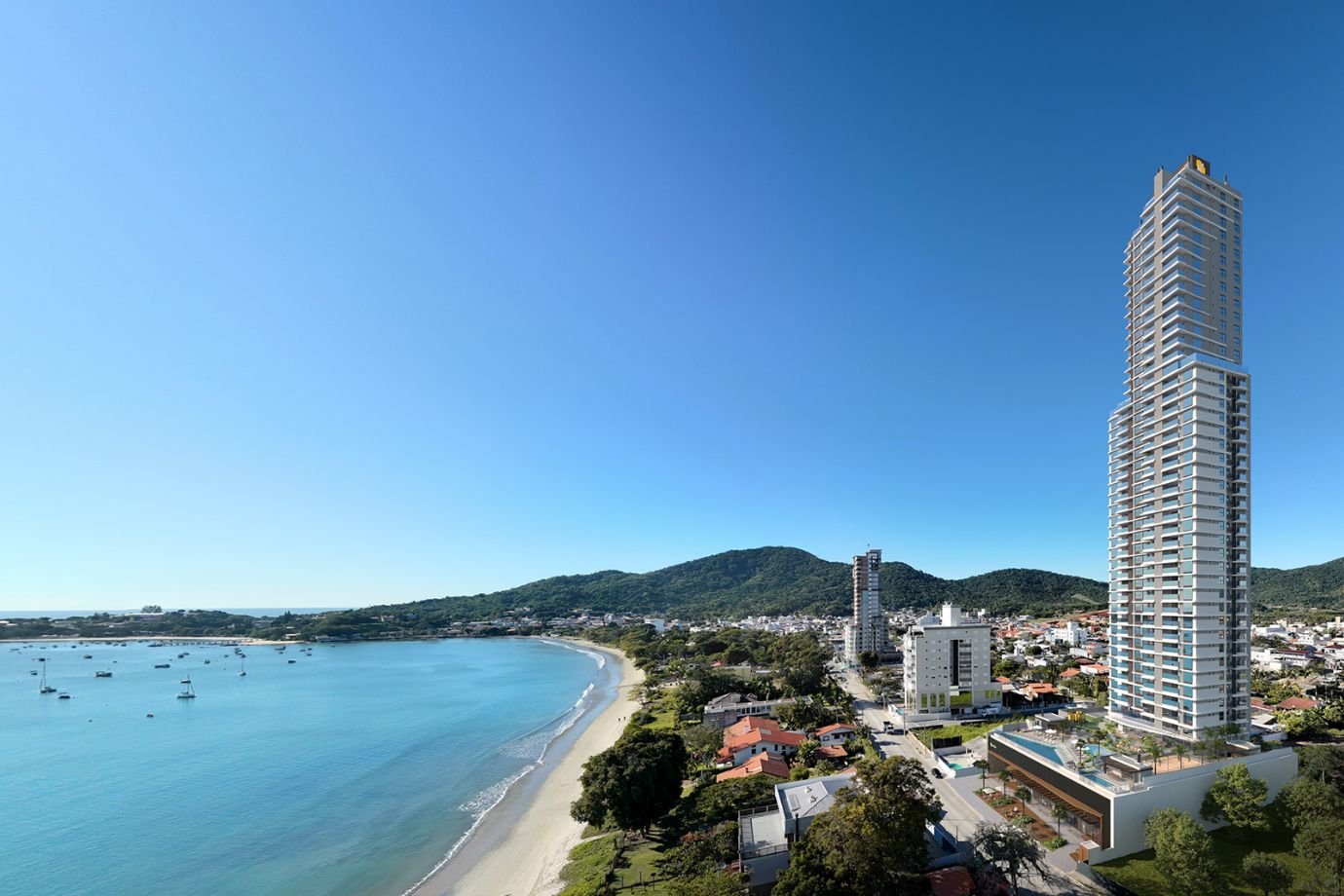
In the competitive landscape of Santa Catarina's coastline, the developer Vetter is betting that the most valuable real estate remains exactly where the land meets the Atlantic. Founded fifteen years ago in the industrial hub of Blumenau, the firm has refined its strategy to focus almost exclusively on high-end beachfront developments in the emerging coastal corridors of Balneário Piçarras and Penha. The company expects to generate R$ 500 million in revenue from this concentrated approach — a figure that reflects both the scale of its pipeline and the pricing power that oceanfront scarcity confers.
The pivot is deliberate. Rather than competing across multiple segments or geographies, Vetter has chosen vertical integration — acquiring land, overseeing architectural design, and handling sales internally — as its operating model. The logic is straightforward: controlling the entire chain in a supply-constrained market allows the developer to capture margin at every stage, from raw land appreciation through to the premium buyers are willing to pay for turnkey beachfront living.
From industrial hinterland to coastal premium
Vetter's trajectory mirrors a broader pattern in southern Brazil's real estate market. Santa Catarina's coast has long attracted development capital, but for decades the gravitational center was Balneário Camboriú, a city that became synonymous with vertical density and high-rise luxury. As Camboriú's skyline thickened and land prices climbed, developers began scanning adjacent municipalities for the next wave of opportunity. Towns like Balneário Piçarras and Penha — historically known for fishing, tourism, and, in Penha's case, the Beto Carrero World theme park — started appearing on investor radars as viable alternatives.
The shift is not purely speculative. Santa Catarina has consistently ranked among Brazil's top states in quality-of-life indices, and its northern coast benefits from relatively well-maintained infrastructure, proximity to Navegantes airport, and a climate that supports year-round occupancy. That last factor matters: the demand profile for coastal property in the region has been evolving from seasonal vacation homes toward primary residences, driven in part by remote-work flexibility and by retirees from wealthier southern states seeking a combination of lifestyle and asset preservation.
For a developer like Vetter, this demographic transition changes the product calculus. Units designed for full-time living command different specifications — larger floor plans, higher-grade finishes, dedicated home-office spaces — and, critically, higher price points. The willingness to pay a premium for permanent beachfront residence, rather than a two-week holiday apartment, is what underpins the revenue ambition.
Scarcity as strategy
The fundamental constraint in coastal development is geological: oceanfront land does not expand. In markets where zoning regulations further limit buildable area or impose height restrictions — as several Santa Catarina municipalities have done in recent years — the supply of new beachfront units is structurally capped. For developers already holding land banks in these corridors, the constraint functions as a natural moat.
Vetter's bet, then, is less about timing the cycle and more about owning the right parcels in the right towns before pricing becomes prohibitive. The strategy carries familiar risks. Luxury real estate is sensitive to interest-rate movements, and Brazil's monetary policy environment remains a variable that no regional developer can control. Macroeconomic headwinds — currency volatility, credit tightening, shifts in consumer confidence — can slow absorption rates even in supply-constrained markets. And the very exclusivity that drives pricing can limit the buyer pool, making sales cycles longer and more capital-intensive.
There is also the question of whether Piçarras and Penha can sustain the kind of premium positioning that Vetter envisions without the urban infrastructure — restaurants, healthcare, cultural amenities — that typically accompanies luxury markets. Balneário Camboriú built that ecosystem over decades. Whether smaller coastal towns can replicate it on a compressed timeline, or whether the appeal lies precisely in their relative quietness, remains an open question.
What is clear is that the economics of Brazilian coastal development increasingly favor operators who control scarce land and can deliver a finished product to a buyer segment less sensitive to rate fluctuations. Whether the R$ 500 million target proves conservative or aspirational will depend on how durably that buyer segment holds — and on whether the towns themselves evolve fast enough to match the ambitions being built along their shorelines.
With reporting from Exame Inovação.
Source · Exame Inovação