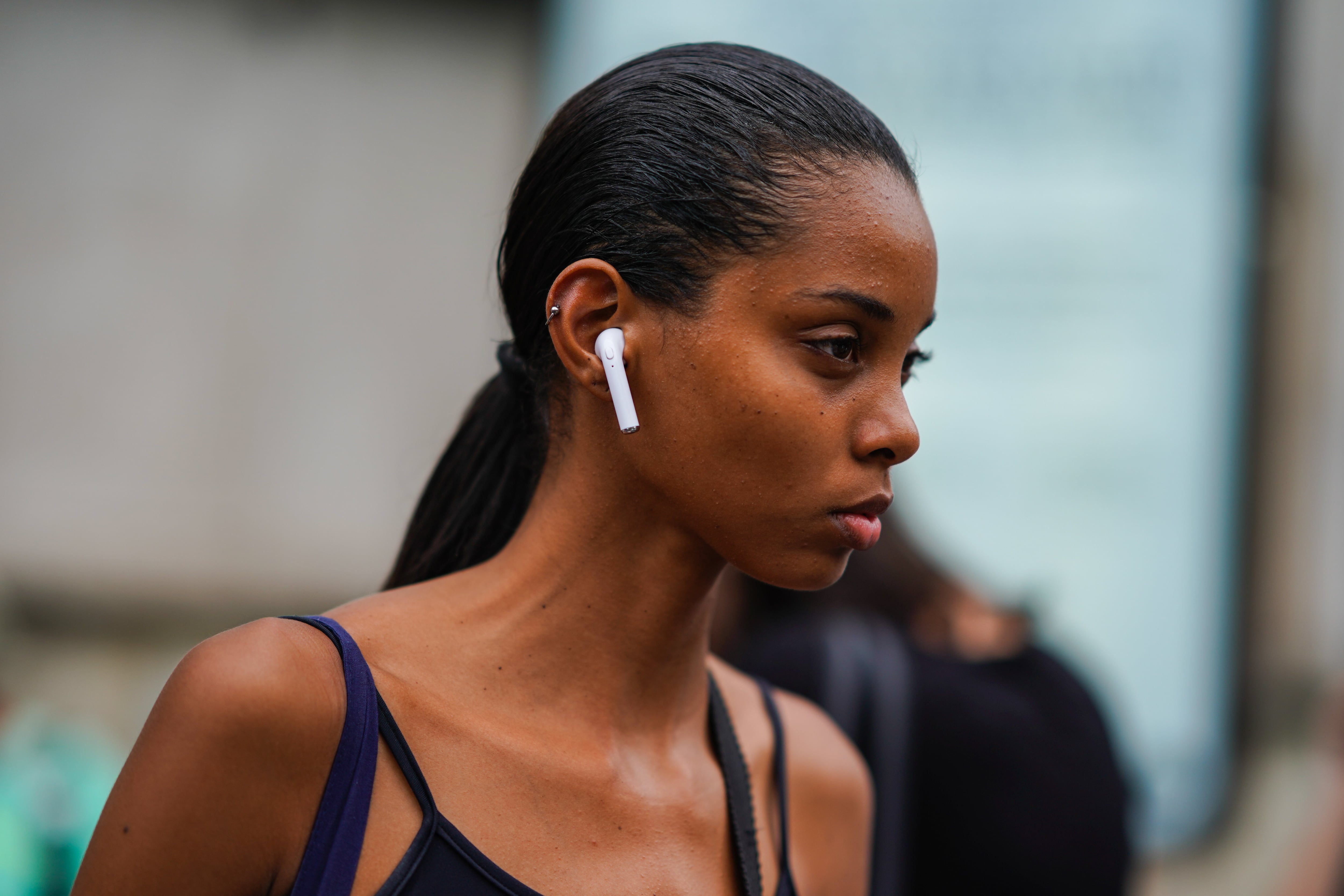
For years, the evolution of wireless headphones followed a predictable trajectory: longer battery life, smaller form factors, and deeper bass. But as the hardware has matured, the industry's focus is shifting from pure playback toward something more ambitious. The earbud is being reimagined not just as a speaker, but as a sophisticated wearable sensor capable of interpreting the world in real time. What was once a consumer electronics accessory defined by sound quality is becoming a platform for ambient intelligence — a device that listens not only to what its wearer wants to hear, but to the environment itself.
This shift is most evident in the refinement of noise cancellation. While early iterations of the technology sought to create a vacuum-like silence, the latest generation is increasingly contextual. These devices are learning to parse the acoustic environment, selectively filtering out the drone of an airplane engine while allowing for the specific frequencies of a human voice or an emergency siren. The goal is no longer isolation, but a curated, augmented reality of sound.
From Passive Playback to Active Interpretation
The trajectory mirrors a broader pattern in consumer hardware: the migration from single-purpose devices to multi-function platforms. Smartphones followed this arc, evolving from communication tools into cameras, wallets, and health monitors. Smartwatches repeated the cycle, moving from notification mirrors to FDA-cleared heart rhythm sensors. Earbuds appear to be entering the same phase transition.
The technical enabler is the miniaturization of on-device processing. Neural processing units small enough to fit inside an earbud casing now allow machine learning models to run locally, without relying on a round trip to the cloud. This matters for latency-sensitive tasks — filtering a specific frequency band in real time, or processing speech for translation within the narrow window that feels conversational rather than awkward. The computational floor required for these functions has dropped enough that it fits inside a device weighing a few grams.
Perhaps the most significant leap is the integration of real-time translation. By leveraging on-device processing and machine learning, these hearables are beginning to function as bridge devices, dissolving language barriers in live conversation. The concept is not new — Google demonstrated a translation feature for its Pixel Buds as early as 2017 — but the gap between demonstration and reliable daily use has been wide. Reducing that gap depends on improvements in speech recognition accuracy across accents and dialects, noise-robust microphone arrays, and translation models that handle the ambiguity of natural speech rather than rehearsed phrases.
The Stakes Beyond Sound Quality
As audio hardware merges with linguistic software, the headphone is transitioning from a passive entertainment peripheral into a tool for navigating a globalized environment. The implications extend beyond convenience. For international business travelers, field workers, healthcare providers serving multilingual populations, and migrants navigating unfamiliar bureaucracies, a reliable ear-worn translator would represent a material reduction in friction.
But the same capabilities that make these devices useful raise familiar questions about always-on listening. A device sophisticated enough to distinguish a siren from background chatter is, by definition, continuously analyzing its acoustic surroundings. The privacy architecture around this data — where it is processed, whether it is stored, who can access it — remains an area where industry practice has outpaced regulatory clarity. The European Union's AI Act, which classifies certain biometric and surveillance applications as high-risk, may eventually intersect with earbuds that perform continuous environmental audio analysis, though the boundaries are not yet well defined.
There is also the question of market structure. If the core value proposition of earbuds shifts from audio fidelity to AI capability, the competitive advantage migrates from acoustic engineering toward software and model quality. That favors companies with large language model infrastructure and vast multilingual training data — a profile that describes the major platform companies more than it describes traditional audio brands.
The earbud, in other words, may be the next arena where the tension between hardware craftsmanship and platform economics plays out. Whether legacy audio companies can compete on intelligence, or whether they become peripheral suppliers to the AI platforms that power the features consumers actually want, is a question the market has not yet answered.
With reporting from El País Tecnología.
Source · El País Tecnología