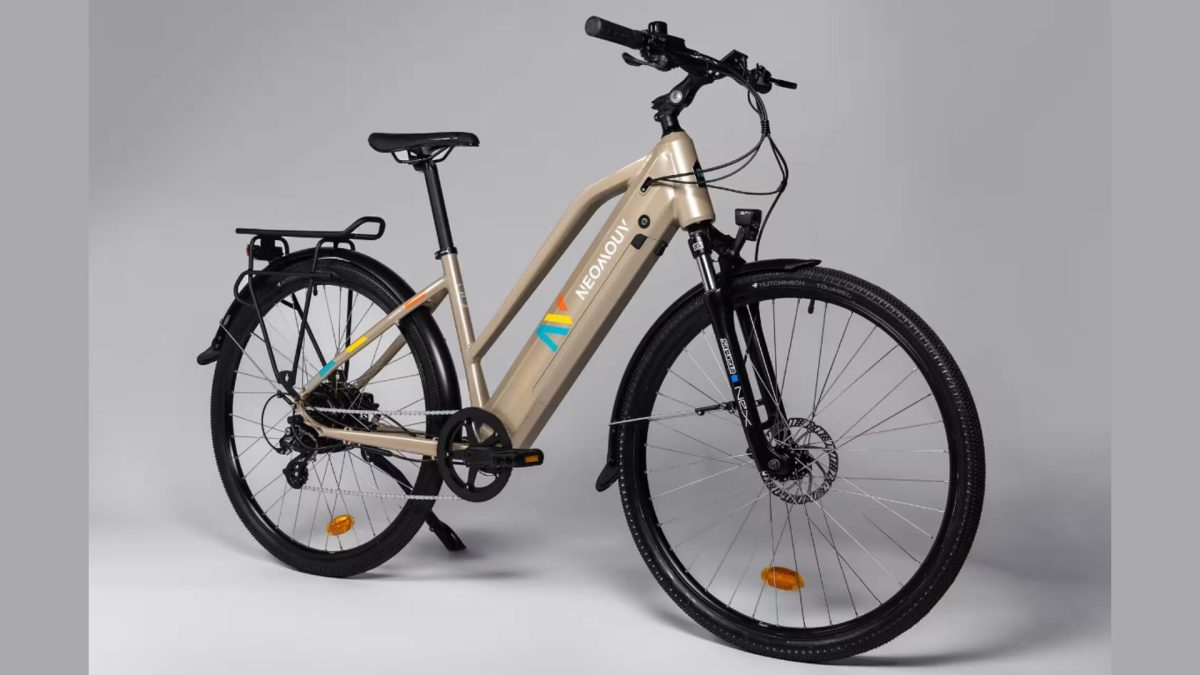
As the infrastructure for urban cycling matures across Europe, the hardware powering it is becoming increasingly specialized — and, at key moments, more accessible. Decathlon, the French sporting goods giant with thousands of stores worldwide, has applied significant discounts to the Neomouv Raipon series of electric bicycles, cutting prices by up to €350. The move places a versatile, mid-range e-bike within reach of a broader consumer base at a time when the economics of personal electric mobility remain a decisive factor in adoption.
The Raipon occupies a pragmatic middle ground in the e-bike market. It is designed to navigate the friction of daily city commutes — stop-and-go traffic, short climbs, variable road surfaces — while remaining robust enough for weekend excursions on unpaved trails. Neomouv, a French manufacturer that has built its reputation on practical electric bicycles rather than performance flagships, positions the Raipon around a concept it calls "autonomy": the ability to cover significant distances without the persistent anxiety of a depleted battery. The frame prioritizes rider comfort and versatile handling over racing geometry or carbon-fiber minimalism.
The mid-range gap in electric mobility
The e-bike market in Europe has, for several years, exhibited a structural gap. At the lower end, budget models from direct-to-consumer brands and marketplace sellers offer entry points below €1,000 but frequently compromise on battery longevity, motor integration, and after-sales support. At the upper end, premium manufacturers deliver refined engineering at prices that rival used automobiles. The segment between these poles — bikes that are durable enough for daily use, comfortable enough for longer rides, and priced within reach of a median household budget — has been slower to mature.
Decathlon's role in narrowing that gap is not incidental. The retailer has historically functioned as a democratizer of sporting equipment across categories, leveraging its vertically integrated supply chain and massive retail footprint to compress margins and drive volume. Its own-brand e-bikes, sold under the B'Twin and Riverside labels, already target the accessible end of the spectrum. Stocking and discounting a partner brand like Neomouv signals a complementary strategy: curating third-party products that fill specific niches — in this case, a trail-capable urban commuter — and using price promotions to accelerate turnover.
The timing aligns with broader dynamics in the European micro-mobility sector. Component costs for mid-range e-bikes have been gradually declining as battery cell production scales and motor suppliers diversify. Simultaneously, competition among retailers has intensified, with online platforms, specialty bike shops, and general sporting goods chains all vying for the same pool of first-time e-bike buyers. Discounting, in this context, functions less as clearance and more as market-making — an attempt to convert hesitant consumers who view the price gap between a conventional bicycle and an electric one as the primary obstacle.
Replacing the second car, not the first
The Raipon's design philosophy reflects a specific use case that urban planners and mobility researchers have identified as one of the highest-impact substitution opportunities: the second household vehicle. In many European suburban corridors, a second car serves primarily for short commutes, school runs, and errands — trips well within the range of a capable e-bike. The calculus becomes more favorable when the total cost of ownership is considered: no fuel, no insurance premiums, minimal maintenance, and negligible parking costs.
Yet the substitution is not purely economic. It depends on infrastructure — protected bike lanes, secure parking, workplace charging — and on the perceived reliability of the vehicle itself. A bike that handles both tarmac and gravel, that offers enough range to eliminate charging anxiety on a typical commuting day, and that comes from a brand accessible through a familiar retail channel lowers several of those barriers simultaneously.
Whether discounts of this magnitude represent a temporary promotional cycle or the beginning of a sustained repricing of the mid-range segment remains an open question. The forces pulling in both directions are real: raw material costs for lithium-ion cells remain subject to geopolitical volatility, while consumer expectations for range and build quality continue to rise. The tension between affordability and specification will define which manufacturers — and which retailers — capture the next wave of e-bike adoption across the continent.
With reporting from Numerama.
Source · Numerama