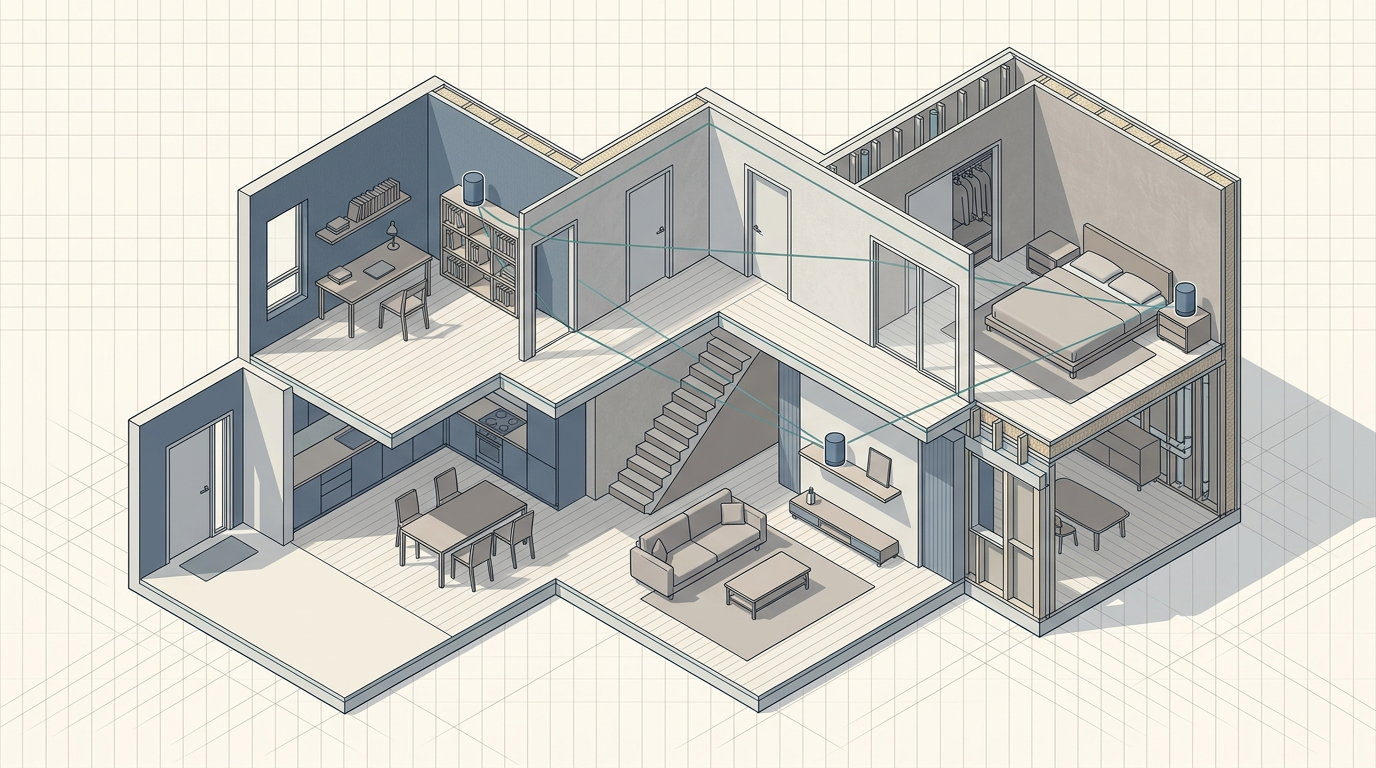
The domestic network has evolved from a peripheral utility into the essential architecture of modern life. As the number of connected devices per household climbs—ranging from smart thermostats and security cameras to high-fidelity streaming consoles and remote-work terminals—the limitations of the single, centralized router have become a significant infrastructure bottleneck. The industry's response is a decisive shift toward "mesh" topology: a distributed system that treats the home not as a single point of entry, but as a contiguous field of connectivity.
Recent hardware entries from manufacturers like TP-Link and Huawei highlight the accelerating transition to Wi-Fi 6 (802.11ax), a standard ratified by the Wi-Fi Alliance and engineered specifically for high-density environments. Systems such as the Deco X50 and the Huawei Mesh 3 utilize AI-driven roaming and proprietary protocols like HarmonyOS to manage traffic across multiple nodes. This architecture ensures that the handoff between access points remains invisible to the user, maintaining high-throughput speeds—often reaching 3000 Mbps—even as one moves through diverse architectural layouts.
From hub to fabric: the logic of mesh
The traditional home router operated on a hub-and-spoke model: a single device, typically placed near the point where the internet service provider's line entered the building, broadcast a signal that weakened with distance and obstruction. Walls, floors, and appliances created dead zones. For years, the consumer remedy was either a range extender—which introduced latency and halved bandwidth—or simply tolerating degraded service in far corners of the home.
Mesh networking replaces this model with a fabric of interconnected nodes, each acting as both a receiver and a transmitter. The concept is not new; enterprise and military networks have relied on mesh topologies for decades. What has changed is the cost curve. Consumer-grade mesh systems now occupy a price tier that was, until recently, the domain of single high-end routers. The economics have shifted enough that a three-node mesh kit competes directly with a standalone premium router, while delivering materially better coverage.
Wi-Fi 6 amplifies the advantage. The standard introduced technologies such as Orthogonal Frequency-Division Multiple Access (OFDMA), which allows a single transmission to serve multiple devices simultaneously, and Target Wake Time (TWT), which coordinates when devices wake to send and receive data, reducing battery drain on IoT endpoints. These are not incremental refinements; they represent a protocol-level rethinking of how wireless bandwidth is allocated in environments where dozens of devices compete for airtime.
The router as domestic gatekeeper
Beyond raw speed, mesh systems are increasingly serving as the primary management layer for the Internet of Things. With the capacity to support over 150 simultaneous connections and integrated features like granular parental controls and voice-assistant compatibility, the modern router has moved well beyond its origins as a simple modem bridge. It functions as a sophisticated gatekeeper of the domestic digital environment, prioritizing stability and coverage across footprints that can exceed 2,000 square feet.
This evolution carries implications that extend past convenience. As more household functions—door locks, appliance controls, health monitors—depend on persistent connectivity, the network itself becomes a single point of failure for physical security and daily routine. A mesh topology mitigates this risk through redundancy: if one node fails, traffic reroutes through the remaining nodes, a resilience model borrowed directly from enterprise infrastructure design.
The competitive landscape reflects the stakes. Established networking brands now face pressure from consumer-electronics conglomerates and telecom equipment makers entering the home segment with vertically integrated ecosystems. The router is no longer a commodity box; it is a platform, and the vendor that controls it gains a persistent presence in the household's digital life—managing firmware updates, collecting usage telemetry, and serving as the integration point for an expanding constellation of smart devices.
The tension ahead is structural. Consumers benefit from seamless, vendor-managed ecosystems, but that seamlessness comes at the cost of lock-in and data exposure. Whether the distributed home network remains an open infrastructure layer or consolidates into walled gardens controlled by a handful of platform companies is a question the market has not yet settled—and one worth watching closely.
With reporting from Olhar Digital.
Source · Olhar Digital