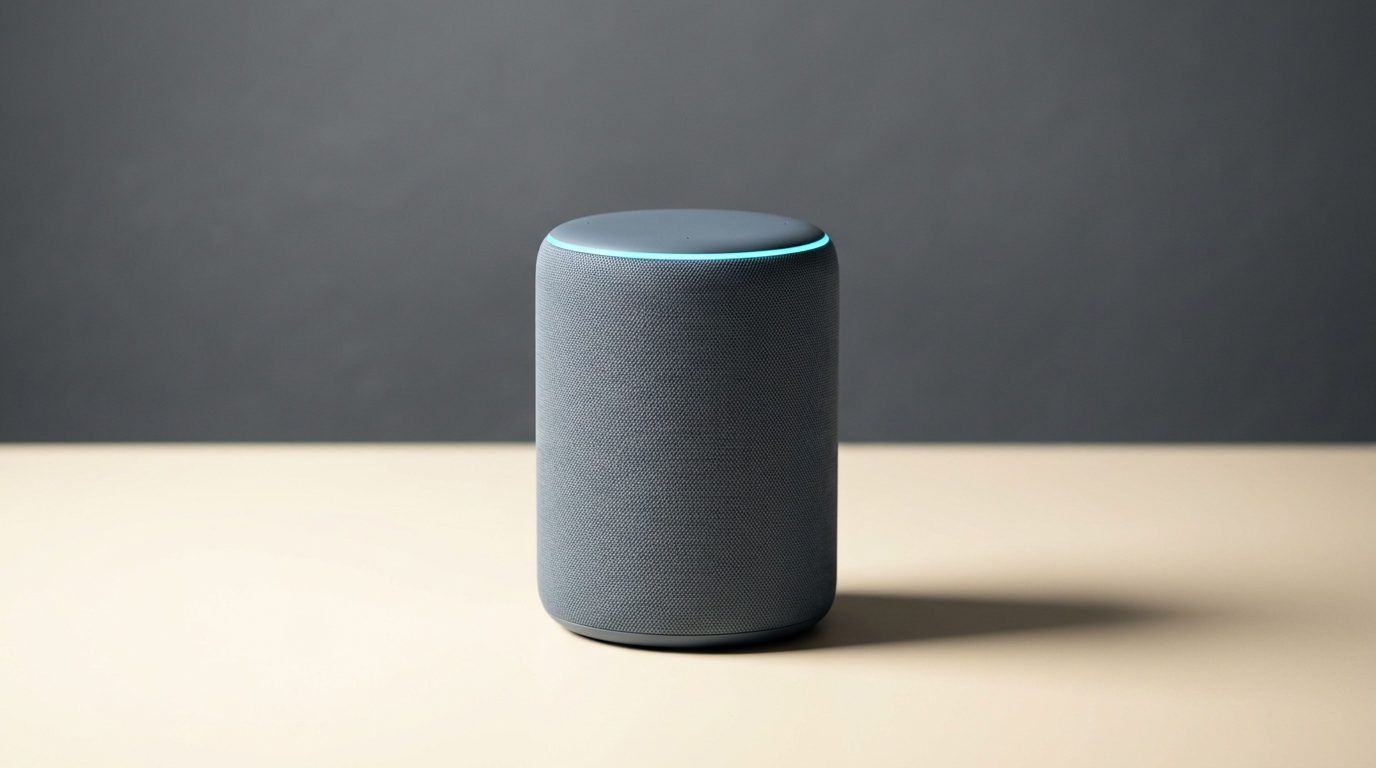
The transition from the rigid syntax of legacy voice assistants to the more fluid cadence of large language models took a significant step forward this week. Google has begun rolling out "continued conversations" for Gemini for Home, a feature that removes the need for users to repeat the "Hey Google" wake word during an ongoing dialogue. By keeping the microphone active for a brief window after each response—signaled by a pulsing light on the hardware—the system attempts to mirror the natural rhythm of human speech rather than the stilted call-and-response pattern that has defined smart speakers since their commercial debut over a decade ago.
The update is part of a broader effort to position Gemini as a more capable successor to the aging Google Assistant. Beyond the convenience of skipping repetitive prompts, the feature relies on the model's ability to maintain context over several conversational turns. In principle, this means users can ask follow-up questions without restating the subject, allowing the AI to function less like a search engine and more like a persistent digital interlocutor that tracks the thread of a discussion.
From command interface to conversational layer
The wake word has been the defining interaction paradigm of the smart home era. Amazon's Alexa, Apple's Siri, and Google's own Assistant all adopted variants of the same model: a keyword triggers attention, a command is processed, a response is delivered, and the device returns to a passive listening state. The pattern was designed as much for privacy reassurance as for technical necessity—it gave users a clear signal that the microphone was "off" between interactions.
Google's move to relax this boundary reflects a shift in what large language models make possible. Earlier assistants operated on intent classification: each utterance was parsed independently, matched to a predefined skill or action. Multi-turn context was limited and brittle. LLMs, by contrast, are architected around sequence—they process extended stretches of text (or speech) and generate responses conditioned on everything that came before. The continued conversation feature is, in this sense, an attempt to let the interface catch up with the underlying model's capabilities.
Amazon has explored similar territory with Alexa's own conversational modes over the years, and Apple has been gradually expanding Siri's contextual awareness. But the integration of a frontier-class LLM into the home hardware stack gives Google a distinct architectural advantage: Gemini's context window is substantially larger than what legacy assistant frameworks were designed to handle, which theoretically enables richer, longer exchanges.
The privacy equation grows more complex
The move toward an always-listening state, even in short bursts, inevitably revives long-standing anxieties about domestic surveillance. While Google states that Gemini can distinguish between direct commands and ambient background noise, the history of voice assistants is peppered with accidental activations and unintended recordings. Research and regulatory scrutiny over the past several years have repeatedly highlighted the gap between how companies describe their voice data practices and how users actually experience them.
For now, the feature remains opt-in, requiring users to manually enable it within the Google Home app settings. That design choice is significant—it places the burden of activation on the user rather than making fluid dialogue the default. Whether it stays that way as Google seeks broader adoption is an open question. The competitive logic of the smart home market tends to favor reducing friction, and an opt-in feature that most users never discover is, functionally, a feature that does not exist for the majority of the installed base.
There is a deeper tension at work. The utility of a conversational AI in the home increases with its availability and attentiveness—the fewer barriers between a user and a response, the more useful the system becomes. But that same attentiveness is precisely what makes privacy advocates uneasy. Each incremental step toward natural dialogue is also an incremental step toward a device that listens more, processes more, and retains more context about the patterns of domestic life.
Google's continued conversation rollout is a modest feature update in isolation. Read in context, it marks a point on a trajectory that the entire industry is following: the gradual dissolution of the hard boundary between a device that is listening and one that is not. How regulators, consumers, and competitors respond to that trajectory will shape the smart home's next chapter as much as any model improvement.
With reporting from Engadget.
Source · Engadget